

Flight 699N was launched out of Fort Sumner, NM on September 18, 2019 on
a Raven Aerostar ZPB of 821,000 m
3
(29 million ft
3
). It achieved an altitude of
35 km (116,000 ft), flew for 9 hours and 40 minutes, and garnered 64 GB of data.
NASA provided the main optical, mechanical, pointing, communications, and
gondola assemblies, as well as overall management and launch of the mission,
while KASI supplied the filter wheel, instrument computer, camera system and
other contributions. This BITSE balloon flight helped the team’s scientists and
engineers to fine tune their technology for future spaceflight.
For a 1:45 minute video of BITSE, go to:
https://youtu.be/MapRNOZltFo
7.3.2 BOOMERANG (also BOOMERanG)
In cosmology, the Balloon Observations Of Millimetric Extragalactic Radiation
ANd Geophysics (BOOMERANG) experiment was a stratospheric balloon that
measured the cosmic microwave background (CMB) radiation in a narrow patch
of the sky. It was the first experiment to obtain large, high-fidelity images of the
temperature anisotropies in the CMB; that is to say, how its properties vary with
direction.
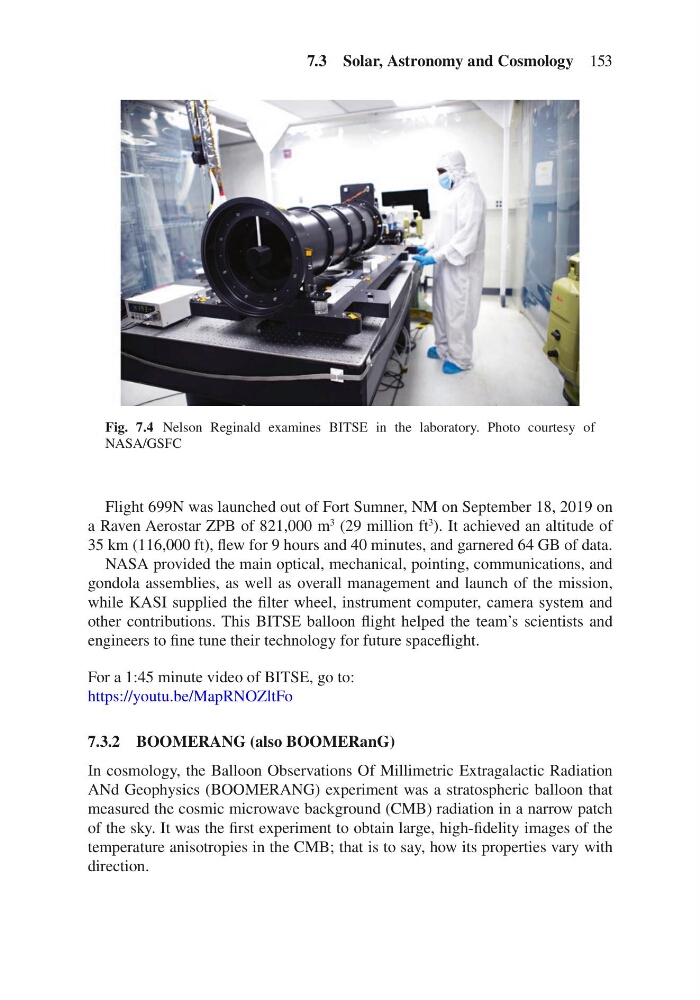
Fig. 7.4 Nelson Reginald examines BITSE in the laboratory. Photo courtesy of
NASA/GSFC
7.3 Solar, Astronomy and Cosmology 153
a Raven Aerostar ZPB of 821,000 m
3
(29 million ft
3
). It achieved an altitude of
35 km (116,000 ft), flew for 9 hours and 40 minutes, and garnered 64 GB of data.
NASA provided the main optical, mechanical, pointing, communications, and
gondola assemblies, as well as overall management and launch of the mission,
while KASI supplied the filter wheel, instrument computer, camera system and
other contributions. This BITSE balloon flight helped the team’s scientists and
engineers to fine tune their technology for future spaceflight.
For a 1:45 minute video of BITSE, go to:
https://youtu.be/MapRNOZltFo
7.3.2 BOOMERANG (also BOOMERanG)
In cosmology, the Balloon Observations Of Millimetric Extragalactic Radiation
ANd Geophysics (BOOMERANG) experiment was a stratospheric balloon that
measured the cosmic microwave background (CMB) radiation in a narrow patch
of the sky. It was the first experiment to obtain large, high-fidelity images of the
temperature anisotropies in the CMB; that is to say, how its properties vary with
direction.
Fig. 7.4 Nelson Reginald examines BITSE in the laboratory. Photo courtesy of
NASA/GSFC
7.3 Solar, Astronomy and Cosmology 153