

140
50 lost their lives because of the indirect consequences of the tsunami (e.g. in the
aftermath of the disaster some people died because they lost access to medicines
needed to treat chronic illnesses (Esteban et al. 2015). Regarding the damage, 3359
buildings were completely destroyed and another 713 suffered major or partial damage (Esteban et al. 2015).
It is worth noting that the town has a long history, and thus prior tsunamis have
been well documented, as it served as a provincial capital during the Edo era. By
1948 the central downtown area was concentrated on the side of one of the hills,
with the areas close to the sea left undeveloped, given that they were destroyed by
previous tsunamis such as the 1896 Meiji-Sanriku and 1933 Showa-Sanriku events,
and thus local inhabitants had a strong cultural memory of such types of disasters
(Esteban et al. 2015; Esteban et al. 2013). Nowadays, economic activities are based
around the service sector, with a significant contribution of salmon fishing, aquaculture of scallops and seaweed, and the fish processing industry to the local
economy.
Local authorities are aware that the tsunami walls protecting the town were
unsuccessful in stopping the tsunami wave, and that the only inhabitants that survived were those that evacuated or were in areas that were not at risk. Thus, this
classification of tsunami levels and the need to further emphasize evacuation were
accepted, as the ultimate objective should always be to preserve lives (Esteban et al.
2015). Nevertheless, the types of interventions that are currently being considered
can be classified into three different layers of protection:
Layer 1-Prevention: consists of breakwaters or dykes aimed at preventing seawater
from inundating the land;
Layer 2-Spatial Solutions: involves spatial planning and adapting buildings to mitigate losses if flooding does take place, and includes relocating important buildings to higher ground (which essentially means that areas closer to the sea should
be considered as sacrificial, and only dedicated to industrial buildings or parks)
Layer 3-Emergency Management: involves the use of disaster plans, risk maps,
early-warning systems, evacuation, and medical help, and mainly focuses on
measures that reduce risks to human life.
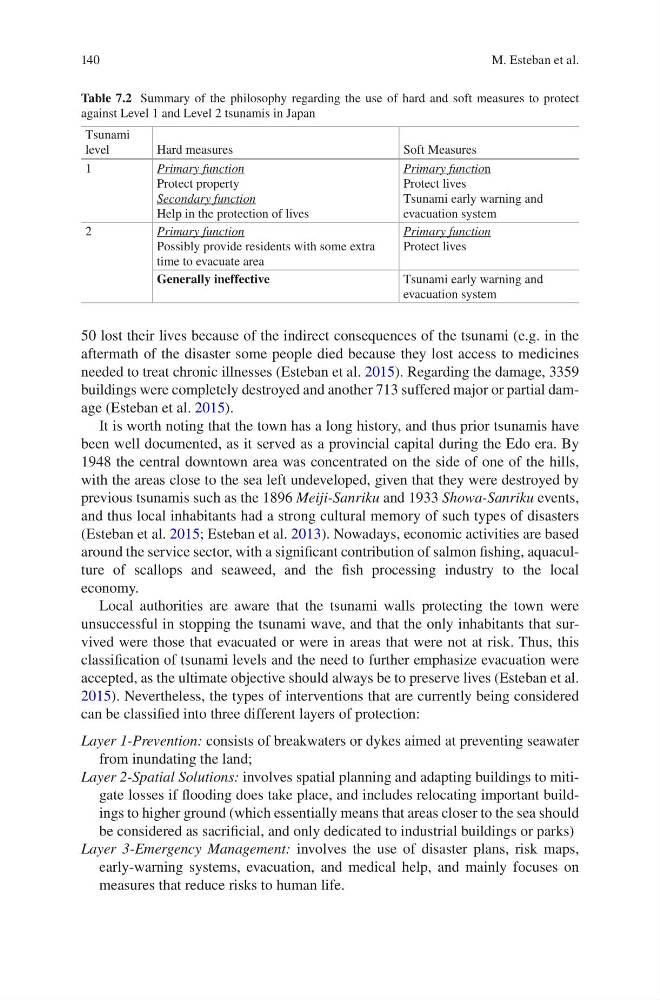
Table 7.2 Summary of the philosophy regarding the use of hard and soft measures to protect
against Level 1 and Level 2 tsunamis in Japan
Tsunami
level
Hard measures
Soft Measures
1
Primary function
Protect property
Secondary function
Help in the protection of lives
Primary function
Protect lives
Tsunami early warning and
evacuation system
2
Primary function
Possibly provide residents with some extra
time to evacuate area
Primary function
Protect lives
Generally ineffective
Tsunami early warning and
evacuation system
M. Esteban et al.
50 lost their lives because of the indirect consequences of the tsunami (e.g. in the
aftermath of the disaster some people died because they lost access to medicines
needed to treat chronic illnesses (Esteban et al. 2015). Regarding the damage, 3359
buildings were completely destroyed and another 713 suffered major or partial damage (Esteban et al. 2015).
It is worth noting that the town has a long history, and thus prior tsunamis have
been well documented, as it served as a provincial capital during the Edo era. By
1948 the central downtown area was concentrated on the side of one of the hills,
with the areas close to the sea left undeveloped, given that they were destroyed by
previous tsunamis such as the 1896 Meiji-Sanriku and 1933 Showa-Sanriku events,
and thus local inhabitants had a strong cultural memory of such types of disasters
(Esteban et al. 2015; Esteban et al. 2013). Nowadays, economic activities are based
around the service sector, with a significant contribution of salmon fishing, aquaculture of scallops and seaweed, and the fish processing industry to the local
economy.
Local authorities are aware that the tsunami walls protecting the town were
unsuccessful in stopping the tsunami wave, and that the only inhabitants that survived were those that evacuated or were in areas that were not at risk. Thus, this
classification of tsunami levels and the need to further emphasize evacuation were
accepted, as the ultimate objective should always be to preserve lives (Esteban et al.
2015). Nevertheless, the types of interventions that are currently being considered
can be classified into three different layers of protection:
Layer 1-Prevention: consists of breakwaters or dykes aimed at preventing seawater
from inundating the land;
Layer 2-Spatial Solutions: involves spatial planning and adapting buildings to mitigate losses if flooding does take place, and includes relocating important buildings to higher ground (which essentially means that areas closer to the sea should
be considered as sacrificial, and only dedicated to industrial buildings or parks)
Layer 3-Emergency Management: involves the use of disaster plans, risk maps,
early-warning systems, evacuation, and medical help, and mainly focuses on
measures that reduce risks to human life.
Table 7.2 Summary of the philosophy regarding the use of hard and soft measures to protect
against Level 1 and Level 2 tsunamis in Japan
Tsunami
level
Hard measures
Soft Measures
1
Primary function
Protect property
Secondary function
Help in the protection of lives
Primary function
Protect lives
Tsunami early warning and
evacuation system
2
Primary function
Possibly provide residents with some extra
time to evacuate area
Primary function
Protect lives
Generally ineffective
Tsunami early warning and
evacuation system
M. Esteban et al.