

135
for the case of tsunamis, the Chilean society is currently looking at records of tsunamis from the arrival of the Spanish in the sixteenth century (Aranguiz 2015), the
Japanese are usually going back until the seventh century (San Carlos et al. 2017),
and the Greeks are attempting to gain insights from as far back as the end of the
Minoan Civilization (2000–1400 BCE) and the volcanic eruption of Santorini (circa
1646 BCE) (Pareschi et al. 2006). Essentially, individuals currently alive think
about the consequences that these events will have on their descendants and on the
long-term survival of their culture and traditions, something that tends to weigh
quite heavily on the cultural conscience of many humans.
Finally, geological time scales are typically outside the calculations of even the
more advanced societies, and represent acts of society-level force majeure from
which it is thought impossible to protect or adapt, at least under present technology
levels. These are often disregarded by individuals, given the difficulty in relating to
the time scales involved.
The discussion of time scales in implementing effective disaster risk reduction is
particularly important, although not explicitly stated, in the most recent global
disaster risk reduction framework – the Sendai Framework for Disaster Risk
Reduction 2015–2030. The framework’s goal is to “prevent new and reduce existing
disaster risk through the implementation of integrated and inclusive economic,
structural, legal, social, health, cultural, educational, environmental, technological,
political and institutional measures that prevent and reduce hazard exposure and
vulnerability to disaster, increase preparedness for response and recovery, and thus
strengthen resilience” (UNISDR 2015). The framework promotes that societies
should understand their risks and then plan and act accordingly, in order to absorb
known and unknown shocks and disturbances. This involves understanding the retrospective and prospective intricacies of risk across time scales.
The framework has four priorities for action: (1) understanding disaster risk, (2)
strengthening disaster risk governance to manage disaster risk, (3) investing in
disaster risk reduction for resilience, and (4) enhancing disaster preparedness for
effective response and to “Build Back Better” in recovery, rehabilitation, and reconstruction (UNISDR 2015). All four priorities are to be implemented at the local,
national, and global scales with emphasis on promoting long-term resilience towards
disasters. The time scales in which disasters could occur enable the proper framing
of preventative actions and strategies in implementing these priorities for action.
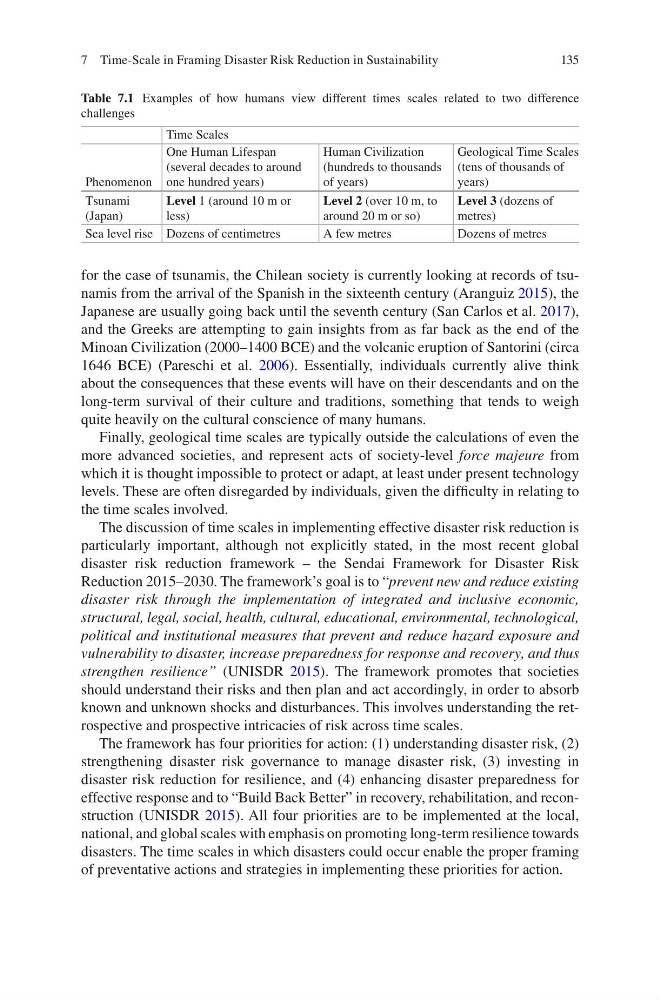
Table 7.1 Examples of how humans view different times scales related to two difference
challenges
Time Scales
Phenomenon
One Human Lifespan
(several decades to around
one hundred years)
Human Civilization
(hundreds to thousands
of years)
Geological Time Scales
(tens of thousands of
years)
Tsunami
(Japan)
Level 1 (around 10 m or
less)
Level 2 (over 10 m, to
around 20 m or so)
Level 3 (dozens of
metres)
Sea level rise Dozens of centimetres
A few metres
Dozens of metres
7 Time-Scale in Framing Disaster Risk Reduction in Sustainability
for the case of tsunamis, the Chilean society is currently looking at records of tsunamis from the arrival of the Spanish in the sixteenth century (Aranguiz 2015), the
Japanese are usually going back until the seventh century (San Carlos et al. 2017),
and the Greeks are attempting to gain insights from as far back as the end of the
Minoan Civilization (2000–1400 BCE) and the volcanic eruption of Santorini (circa
1646 BCE) (Pareschi et al. 2006). Essentially, individuals currently alive think
about the consequences that these events will have on their descendants and on the
long-term survival of their culture and traditions, something that tends to weigh
quite heavily on the cultural conscience of many humans.
Finally, geological time scales are typically outside the calculations of even the
more advanced societies, and represent acts of society-level force majeure from
which it is thought impossible to protect or adapt, at least under present technology
levels. These are often disregarded by individuals, given the difficulty in relating to
the time scales involved.
The discussion of time scales in implementing effective disaster risk reduction is
particularly important, although not explicitly stated, in the most recent global
disaster risk reduction framework – the Sendai Framework for Disaster Risk
Reduction 2015–2030. The framework’s goal is to “prevent new and reduce existing
disaster risk through the implementation of integrated and inclusive economic,
structural, legal, social, health, cultural, educational, environmental, technological,
political and institutional measures that prevent and reduce hazard exposure and
vulnerability to disaster, increase preparedness for response and recovery, and thus
strengthen resilience” (UNISDR 2015). The framework promotes that societies
should understand their risks and then plan and act accordingly, in order to absorb
known and unknown shocks and disturbances. This involves understanding the retrospective and prospective intricacies of risk across time scales.
The framework has four priorities for action: (1) understanding disaster risk, (2)
strengthening disaster risk governance to manage disaster risk, (3) investing in
disaster risk reduction for resilience, and (4) enhancing disaster preparedness for
effective response and to “Build Back Better” in recovery, rehabilitation, and reconstruction (UNISDR 2015). All four priorities are to be implemented at the local,
national, and global scales with emphasis on promoting long-term resilience towards
disasters. The time scales in which disasters could occur enable the proper framing
of preventative actions and strategies in implementing these priorities for action.
Table 7.1 Examples of how humans view different times scales related to two difference
challenges
Time Scales
Phenomenon
One Human Lifespan
(several decades to around
one hundred years)
Human Civilization
(hundreds to thousands
of years)
Geological Time Scales
(tens of thousands of
years)
Tsunami
(Japan)
Level 1 (around 10 m or
less)
Level 2 (over 10 m, to
around 20 m or so)
Level 3 (dozens of
metres)
Sea level rise Dozens of centimetres
A few metres
Dozens of metres
7 Time-Scale in Framing Disaster Risk Reduction in Sustainability