

122
can cultivate decreases and the amount of unused farm land increases. Once fertile
and productive farm land gets abandoned and the real function of the land is lost,
and the natural environment is laid to waste. Attempts to revive rice fields that have
been dried out and farmland that has been badly neglected is much more trouble
than trying to continue farming and is not a problem that can be solved in a short
time. It bears a striking resemblance to the decline in forestry.
However, agriculture is now facing a new phase through the participation of
corporations. Both for Ito En and Vegetalia, the corporate activities of their own
companies are of primary importance but they could not exist if not for a healthy
natural environment. Their corporate activities are synonymous with environmental
conservation and coexistence with nature. Both are excellent examples of how business and activities contributing to society can be linked together.
Farming must be a commercially practicable industry in order to promote the
participation of corporations. To that end, improving agricultural production by
using ICT is a prerequisite condition. Japanese agriculture is not particularly efficient when compared on a global level. This is especially difficult in respect to
growing rice. The gross output for one hectare of farm land for vegetables is
4,300,000 yen while for rice it is a mere 950,000 yen, making it about one quarter
that for vegetables. This needs to be improved.
Improving productivity will contribute to the promotion of agriculture and a
reduction in abandoned farm land, as well as leading to environmental conservation
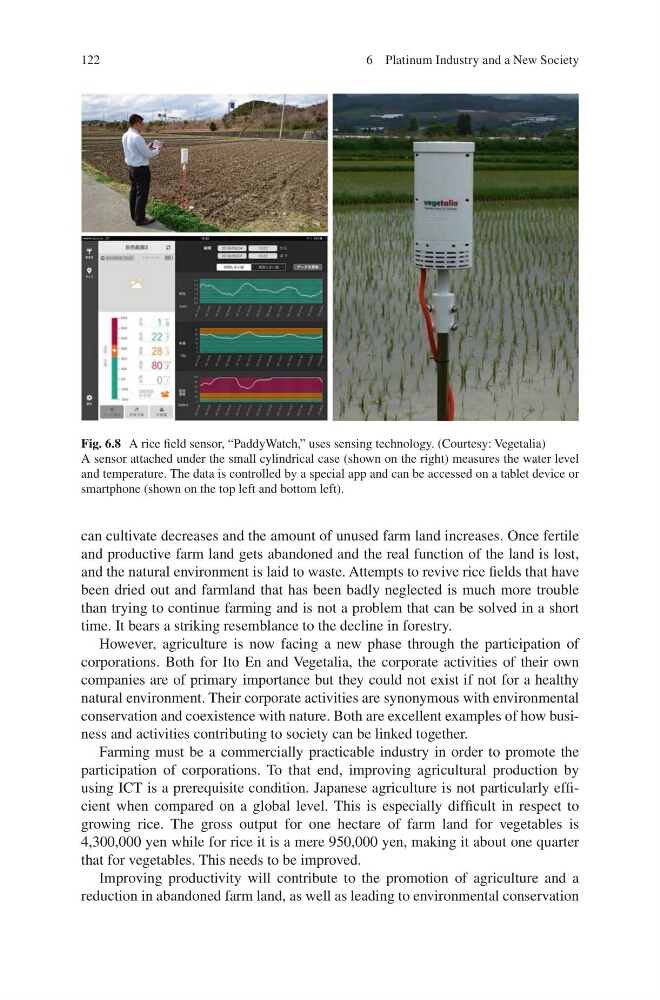
Fig. 6.8 A rice field sensor, “PaddyWatch,” uses sensing technology. (Courtesy: Vegetalia)
A sensor attached under the small cylindrical case (shown on the right) measures the water level
and temperature. The data is controlled by a special app and can be accessed on a tablet device or
smartphone (shown on the top left and bottom left).
6 Platinum Industry and a New Society
can cultivate decreases and the amount of unused farm land increases. Once fertile
and productive farm land gets abandoned and the real function of the land is lost,
and the natural environment is laid to waste. Attempts to revive rice fields that have
been dried out and farmland that has been badly neglected is much more trouble
than trying to continue farming and is not a problem that can be solved in a short
time. It bears a striking resemblance to the decline in forestry.
However, agriculture is now facing a new phase through the participation of
corporations. Both for Ito En and Vegetalia, the corporate activities of their own
companies are of primary importance but they could not exist if not for a healthy
natural environment. Their corporate activities are synonymous with environmental
conservation and coexistence with nature. Both are excellent examples of how business and activities contributing to society can be linked together.
Farming must be a commercially practicable industry in order to promote the
participation of corporations. To that end, improving agricultural production by
using ICT is a prerequisite condition. Japanese agriculture is not particularly efficient when compared on a global level. This is especially difficult in respect to
growing rice. The gross output for one hectare of farm land for vegetables is
4,300,000 yen while for rice it is a mere 950,000 yen, making it about one quarter
that for vegetables. This needs to be improved.
Improving productivity will contribute to the promotion of agriculture and a
reduction in abandoned farm land, as well as leading to environmental conservation
Fig. 6.8 A rice field sensor, “PaddyWatch,” uses sensing technology. (Courtesy: Vegetalia)
A sensor attached under the small cylindrical case (shown on the right) measures the water level
and temperature. The data is controlled by a special app and can be accessed on a tablet device or
smartphone (shown on the top left and bottom left).
6 Platinum Industry and a New Society