

24
2.5.1.1 Vertical Compacting
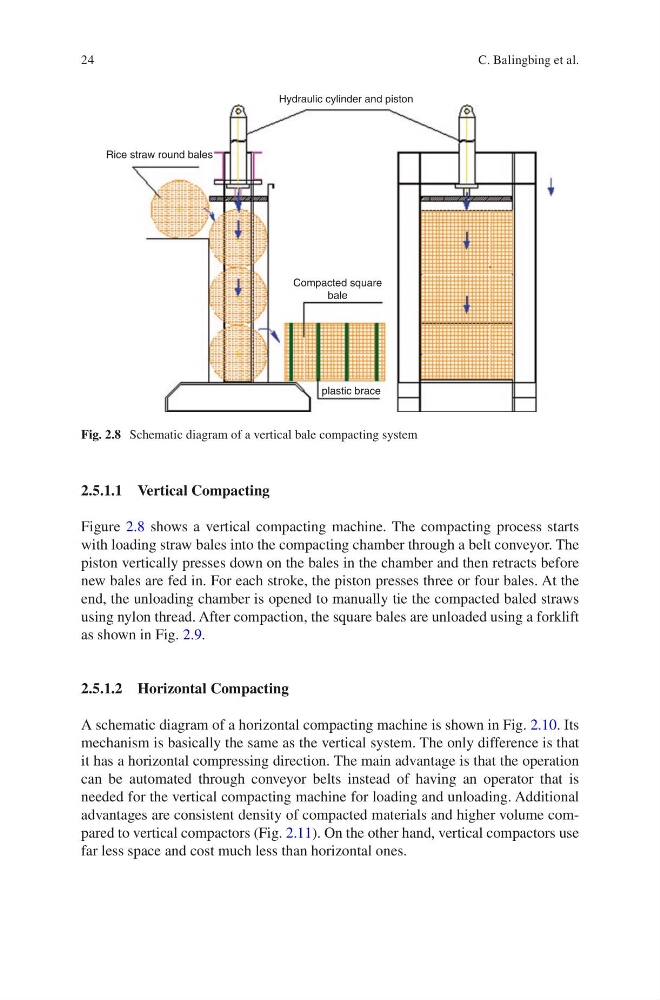
Figure 2.8 shows a vertical compacting machine. The compacting process starts
with loading straw bales into the compacting chamber through a belt conveyor. The
piston vertically presses down on the bales in the chamber and then retracts before
new bales are fed in. For each stroke, the piston presses three or four bales. At the
end, the unloading chamber is opened to manually tie the compacted baled straws
using nylon thread. After compaction, the square bales are unloaded using a forklift
as shown in Fig. 2.9.
2.5.1.2 Horizontal Compacting
A schematic diagram of a horizontal compacting machine is shown in Fig. 2.10. Its
mechanism is basically the same as the vertical system. The only difference is that
it has a horizontal compressing direction. The main advantage is that the operation
can be automated through conveyor belts instead of having an operator that is
needed for the vertical compacting machine for loading and unloading. Additional
advantages are consistent density of compacted materials and higher volume compared to vertical compactors (Fig. 2.11). On the other hand, vertical compactors use
far less space and cost much less than horizontal ones.
Rice straw round bales
Hydraulic cylinder and piston
Compacted square
bale
plastic brace
Fig. 2.8 Schematic diagram of a vertical bale compacting system
C. Balingbing et al.
2.5.1.1 Vertical Compacting
Figure 2.8 shows a vertical compacting machine. The compacting process starts
with loading straw bales into the compacting chamber through a belt conveyor. The
piston vertically presses down on the bales in the chamber and then retracts before
new bales are fed in. For each stroke, the piston presses three or four bales. At the
end, the unloading chamber is opened to manually tie the compacted baled straws
using nylon thread. After compaction, the square bales are unloaded using a forklift
as shown in Fig. 2.9.
2.5.1.2 Horizontal Compacting
A schematic diagram of a horizontal compacting machine is shown in Fig. 2.10. Its
mechanism is basically the same as the vertical system. The only difference is that
it has a horizontal compressing direction. The main advantage is that the operation
can be automated through conveyor belts instead of having an operator that is
needed for the vertical compacting machine for loading and unloading. Additional
advantages are consistent density of compacted materials and higher volume compared to vertical compactors (Fig. 2.11). On the other hand, vertical compactors use
far less space and cost much less than horizontal ones.
Rice straw round bales
Hydraulic cylinder and piston
Compacted square
bale
plastic brace
Fig. 2.8 Schematic diagram of a vertical bale compacting system
C. Balingbing et al.