

42
D. de Paulis
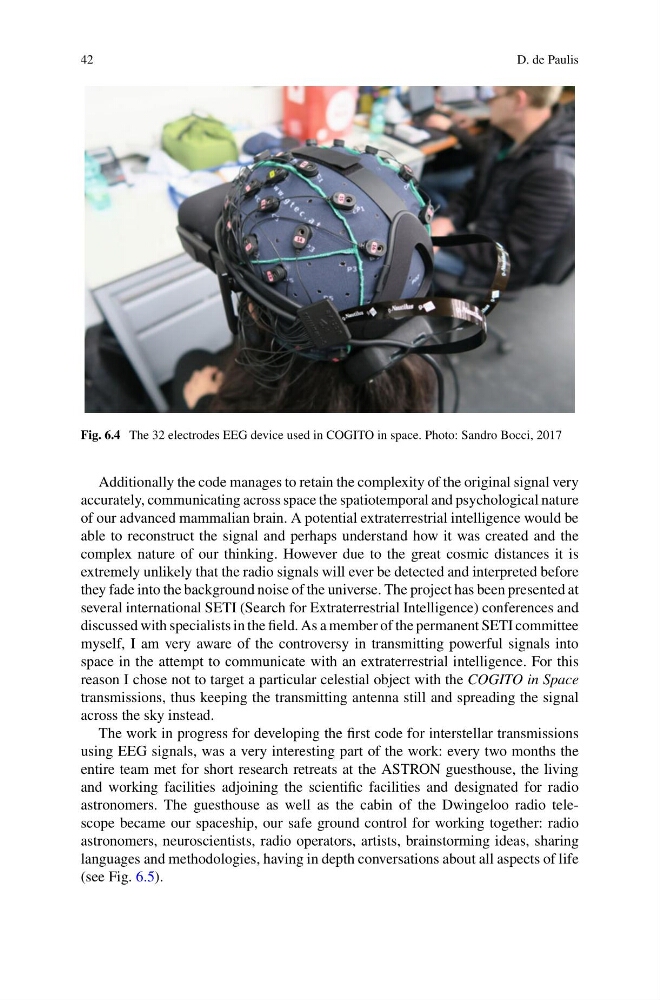
Fig. 6.4 The 32 electrodes EEG device used in COGITO in space. Photo: Sandro Bocci, 2017
Additionally the code manages to retain the complexity of the original signal very
accurately, communicating across space the spatiotemporal and psychological nature
of our advanced mammalian brain. A potential extraterrestrial intelligence would be
able to reconstruct the signal and perhaps understand how it was created and the
complex nature of our thinking. However due to the great cosmic distances it is
extremely unlikely that the radio signals will ever be detected and interpreted before
they fade into the background noise of the universe. The project has been presented at
several international SETI (Search for Extraterrestrial Intelligence) conferences and
discussed with specialists in the field. As a member of the permanent SETI committee
myself, I am very aware of the controversy in transmitting powerful signals into
space in the attempt to communicate with an extraterrestrial intelligence. For this
reason I chose not to target a particular celestial object with the COGITO in Space
transmissions, thus keeping the transmitting antenna still and spreading the signal
across the sky instead.
The work in progress for developing the first code for interstellar transmissions
using EEG signals, was a very interesting part of the work: every two months the
entire team met for short research retreats at the ASTRON guesthouse, the living
and working facilities adjoining the scientific facilities and designated for radio
astronomers. The guesthouse as well as the cabin of the Dwingeloo radio telescope became our spaceship, our safe ground control for working together: radio
astronomers, neuroscientists, radio operators, artists, brainstorming ideas, sharing
languages and methodologies, having in depth conversations about all aspects of life
(see Fig. 6.5).
D. de Paulis
Fig. 6.4 The 32 electrodes EEG device used in COGITO in space. Photo: Sandro Bocci, 2017
Additionally the code manages to retain the complexity of the original signal very
accurately, communicating across space the spatiotemporal and psychological nature
of our advanced mammalian brain. A potential extraterrestrial intelligence would be
able to reconstruct the signal and perhaps understand how it was created and the
complex nature of our thinking. However due to the great cosmic distances it is
extremely unlikely that the radio signals will ever be detected and interpreted before
they fade into the background noise of the universe. The project has been presented at
several international SETI (Search for Extraterrestrial Intelligence) conferences and
discussed with specialists in the field. As a member of the permanent SETI committee
myself, I am very aware of the controversy in transmitting powerful signals into
space in the attempt to communicate with an extraterrestrial intelligence. For this
reason I chose not to target a particular celestial object with the COGITO in Space
transmissions, thus keeping the transmitting antenna still and spreading the signal
across the sky instead.
The work in progress for developing the first code for interstellar transmissions
using EEG signals, was a very interesting part of the work: every two months the
entire team met for short research retreats at the ASTRON guesthouse, the living
and working facilities adjoining the scientific facilities and designated for radio
astronomers. The guesthouse as well as the cabin of the Dwingeloo radio telescope became our spaceship, our safe ground control for working together: radio
astronomers, neuroscientists, radio operators, artists, brainstorming ideas, sharing
languages and methodologies, having in depth conversations about all aspects of life
(see Fig. 6.5).