

118
R. Orosei
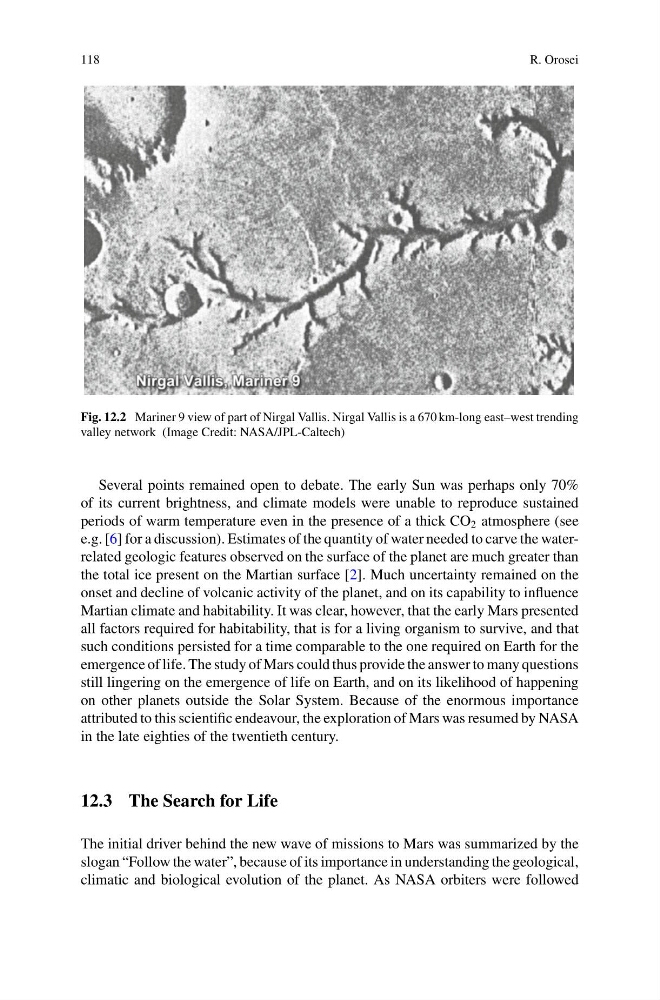
Fig. 12.2 Mariner 9 view of part of Nirgal Vallis. Nirgal Vallis is a 670 km-long east–west trending
valley network (Image Credit: NASA/JPL-Caltech)
Several points remained open to debate. The early Sun was perhaps only 70%
of its current brightness, and climate models were unable to reproduce sustained
periods of warm temperature even in the presence of a thick CO 2 atmosphere (see
e.g. [6] for a discussion). Estimates of the quantity of water needed to carve the waterrelated geologic features observed on the surface of the planet are much greater than
the total ice present on the Martian surface [2]. Much uncertainty remained on the
onset and decline of volcanic activity of the planet, and on its capability to influence
Martian climate and habitability. It was clear, however, that the early Mars presented
all factors required for habitability, that is for a living organism to survive, and that
such conditions persisted for a time comparable to the one required on Earth for the
emergence of life. The study of Mars could thus provide the answer to many questions
still lingering on the emergence of life on Earth, and on its likelihood of happening
on other planets outside the Solar System. Because of the enormous importance
attributed to this scientific endeavour, the exploration of Mars was resumed by NASA
in the late eighties of the twentieth century.
12.3 The Search for Life
The initial driver behind the new wave of missions to Mars was summarized by the
slogan “Follow the water”, because of its importance in understanding the geological,
climatic and biological evolution of the planet. As NASA orbiters were followed
R. Orosei
Fig. 12.2 Mariner 9 view of part of Nirgal Vallis. Nirgal Vallis is a 670 km-long east–west trending
valley network (Image Credit: NASA/JPL-Caltech)
Several points remained open to debate. The early Sun was perhaps only 70%
of its current brightness, and climate models were unable to reproduce sustained
periods of warm temperature even in the presence of a thick CO 2 atmosphere (see
e.g. [6] for a discussion). Estimates of the quantity of water needed to carve the waterrelated geologic features observed on the surface of the planet are much greater than
the total ice present on the Martian surface [2]. Much uncertainty remained on the
onset and decline of volcanic activity of the planet, and on its capability to influence
Martian climate and habitability. It was clear, however, that the early Mars presented
all factors required for habitability, that is for a living organism to survive, and that
such conditions persisted for a time comparable to the one required on Earth for the
emergence of life. The study of Mars could thus provide the answer to many questions
still lingering on the emergence of life on Earth, and on its likelihood of happening
on other planets outside the Solar System. Because of the enormous importance
attributed to this scientific endeavour, the exploration of Mars was resumed by NASA
in the late eighties of the twentieth century.
12.3 The Search for Life
The initial driver behind the new wave of missions to Mars was summarized by the
slogan “Follow the water”, because of its importance in understanding the geological,
climatic and biological evolution of the planet. As NASA orbiters were followed