

102
A. Melis et al.
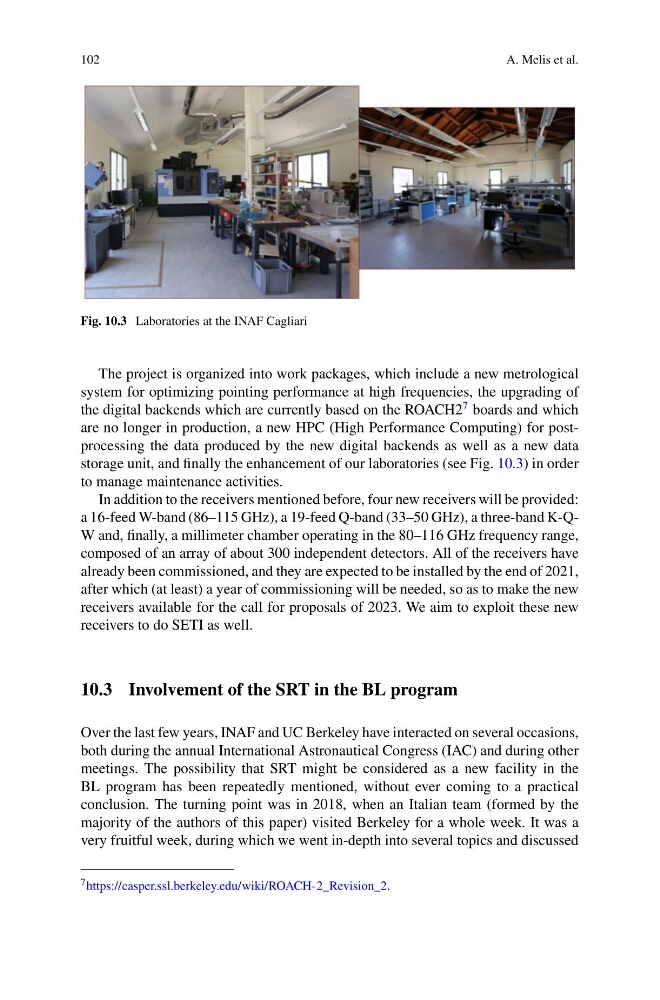
Fig. 10.3 Laboratories at the INAF Cagliari
The project is organized into work packages, which include a new metrological
system for optimizing pointing performance at high frequencies, the upgrading of
the digital backends which are currently based on the ROACH2
7 boards and which
are no longer in production, a new HPC (High Performance Computing) for postprocessing the data produced by the new digital backends as well as a new data
storage unit, and finally the enhancement of our laboratories (see Fig. 10.3) in order
to manage maintenance activities.
In addition to the receivers mentioned before, four new receivers will be provided:
a 16-feed W-band (86–115 GHz), a 19-feed Q-band (33–50 GHz), a three-band K-QW and, finally, a millimeter chamber operating in the 80–116 GHz frequency range,
composed of an array of about 300 independent detectors. All of the receivers have
already been commissioned, and they are expected to be installed by the end of 2021,
after which (at least) a year of commissioning will be needed, so as to make the new
receivers available for the call for proposals of 2023. We aim to exploit these new
receivers to do SETI as well.
10.3 Involvement of the SRT in the BL program
Over the last few years, INAF and UC Berkeley have interacted on several occasions,
both during the annual International Astronautical Congress (IAC) and during other
meetings. The possibility that SRT might be considered as a new facility in the
BL program has been repeatedly mentioned, without ever coming to a practical
conclusion. The turning point was in 2018, when an Italian team (formed by the
majority of the authors of this paper) visited Berkeley for a whole week. It was a
very fruitful week, during which we went in-depth into several topics and discussed
7 https://casper.ssl.berkeley.edu/wiki/ROACH-2_Revision_2.
A. Melis et al.
Fig. 10.3 Laboratories at the INAF Cagliari
The project is organized into work packages, which include a new metrological
system for optimizing pointing performance at high frequencies, the upgrading of
the digital backends which are currently based on the ROACH2
7 boards and which
are no longer in production, a new HPC (High Performance Computing) for postprocessing the data produced by the new digital backends as well as a new data
storage unit, and finally the enhancement of our laboratories (see Fig. 10.3) in order
to manage maintenance activities.
In addition to the receivers mentioned before, four new receivers will be provided:
a 16-feed W-band (86–115 GHz), a 19-feed Q-band (33–50 GHz), a three-band K-QW and, finally, a millimeter chamber operating in the 80–116 GHz frequency range,
composed of an array of about 300 independent detectors. All of the receivers have
already been commissioned, and they are expected to be installed by the end of 2021,
after which (at least) a year of commissioning will be needed, so as to make the new
receivers available for the call for proposals of 2023. We aim to exploit these new
receivers to do SETI as well.
10.3 Involvement of the SRT in the BL program
Over the last few years, INAF and UC Berkeley have interacted on several occasions,
both during the annual International Astronautical Congress (IAC) and during other
meetings. The possibility that SRT might be considered as a new facility in the
BL program has been repeatedly mentioned, without ever coming to a practical
conclusion. The turning point was in 2018, when an Italian team (formed by the
majority of the authors of this paper) visited Berkeley for a whole week. It was a
very fruitful week, during which we went in-depth into several topics and discussed
7 https://casper.ssl.berkeley.edu/wiki/ROACH-2_Revision_2.