

The three thirds principle implies different budgeting and funding structures,
so that appropriate levels of resources are allocated to capacity building, communications and engagement with the wide range of different partners likely to be
needed. These elements need to be budgeted for explicitly within a project lifecycle, rather than as an after-thought. At the same time, there is still much work to
be done on how to monitor outcomes effectively, evaluate the real share of
contribution towards the observed change, and assess value for money. Similarly,
delivery of outcomes, especially at scale, may take time for research-for-development programs. Longer funding cycles could be expected to facilitate this
considerably.
The CCAFS experience has highlighted several operational principles for
programmatic RBM. First, there is a need to focus on people and users, on
utilizing M&E as a tool to help achieve outcomes, and on accountability – it is
the people within organizations that make behavioral and practice changes happen.
Second, there should be an emphasis on learning through M&E activities. Robust
knowledge needs to be generated that can feed into developmental policy and
investment decision making, and this in turn requires a cumulative and catholic
approach to choice of impact assessment methods at different levels (Maredia
2009). Third, adaptive management needs to be encouraged, as a key element of
RBM. As a tool that is based on learning processes, it can improve long-run
management outcomes. The challenge in using it is to find the balance between
gaining knowledge to improve management in the future and achieving the best
short-term outcome based on current knowledge. Fourth, the development and
implementation of an online platform is a great investment for capacity development. Planning, reporting and evaluation procedures need to be as simple as
possible while still providing (most of) the information needed for effective and
timely management.
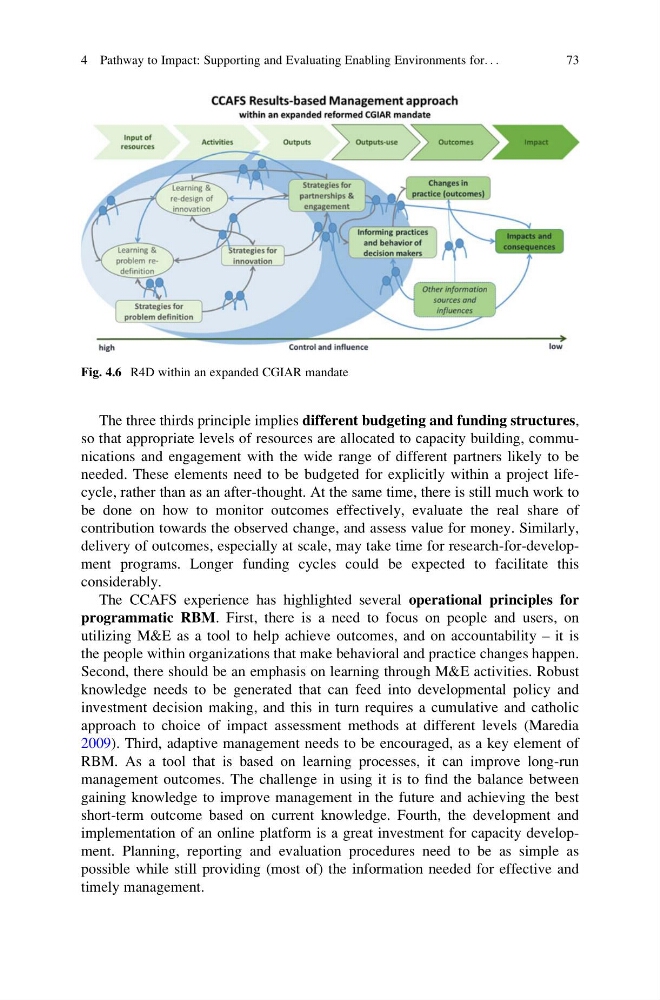
Fig. 4.6 R4D within an expanded CGIAR mandate
4 Pathway to Impact: Supporting and Evaluating Enabling Environments for. . .
73
so that appropriate levels of resources are allocated to capacity building, communications and engagement with the wide range of different partners likely to be
needed. These elements need to be budgeted for explicitly within a project lifecycle, rather than as an after-thought. At the same time, there is still much work to
be done on how to monitor outcomes effectively, evaluate the real share of
contribution towards the observed change, and assess value for money. Similarly,
delivery of outcomes, especially at scale, may take time for research-for-development programs. Longer funding cycles could be expected to facilitate this
considerably.
The CCAFS experience has highlighted several operational principles for
programmatic RBM. First, there is a need to focus on people and users, on
utilizing M&E as a tool to help achieve outcomes, and on accountability – it is
the people within organizations that make behavioral and practice changes happen.
Second, there should be an emphasis on learning through M&E activities. Robust
knowledge needs to be generated that can feed into developmental policy and
investment decision making, and this in turn requires a cumulative and catholic
approach to choice of impact assessment methods at different levels (Maredia
2009). Third, adaptive management needs to be encouraged, as a key element of
RBM. As a tool that is based on learning processes, it can improve long-run
management outcomes. The challenge in using it is to find the balance between
gaining knowledge to improve management in the future and achieving the best
short-term outcome based on current knowledge. Fourth, the development and
implementation of an online platform is a great investment for capacity development. Planning, reporting and evaluation procedures need to be as simple as
possible while still providing (most of) the information needed for effective and
timely management.
Fig. 4.6 R4D within an expanded CGIAR mandate
4 Pathway to Impact: Supporting and Evaluating Enabling Environments for. . .
73