

to ascertain as to whether households actually received this information and how
they used it.
The CAPC also collected livestock data and information to support the development of the Isiolo livestock strategy. They also conducted a workshop to integrate climate change into the Isiolo CIDP. These activities aimed at improving
county coordination and planning activities climate change adaptation.
Some outcomes depicted in the integrated ToC (Fig. 15.1) have already been
realised with an increase in number of projects targeting infrastructure, agriculture,
health, water and sanitation, food security and income generation as well as number
of climate change projects financed through county budget allocation.
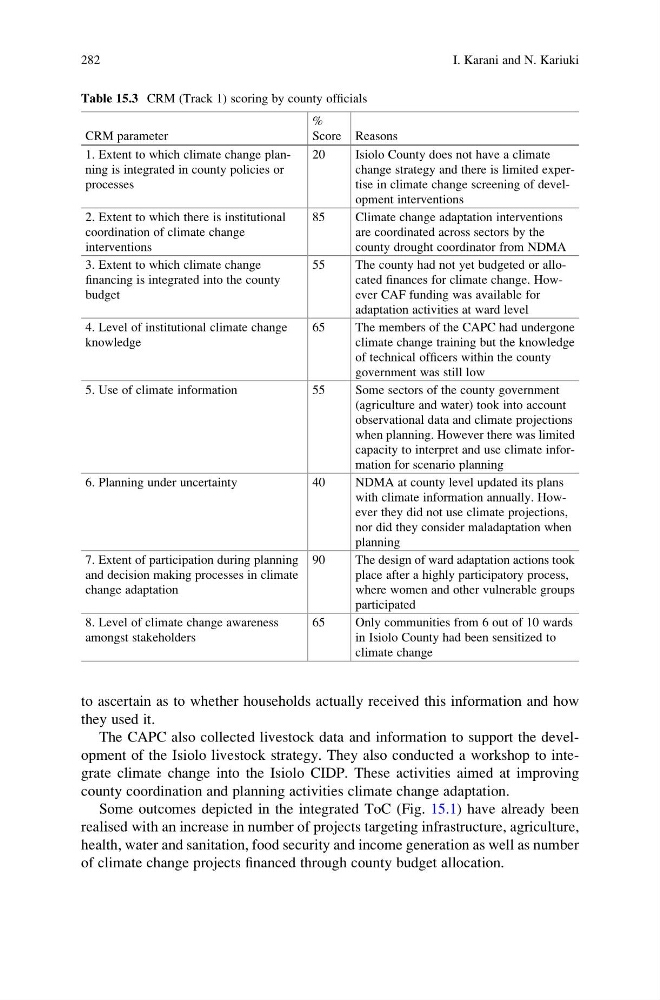
Table 15.3 CRM (Track 1) scoring by county officials
CRM parameter
%
Score Reasons
1. Extent to which climate change planning is integrated in county policies or
processes
20
Isiolo County does not have a climate
change strategy and there is limited expertise in climate change screening of development interventions
2. Extent to which there is institutional
coordination of climate change
interventions
85
Climate change adaptation interventions
are coordinated across sectors by the
county drought coordinator from NDMA
3. Extent to which climate change
financing is integrated into the county
budget
55
The county had not yet budgeted or allocated finances for climate change. However CAF funding was available for
adaptation activities at ward level
4. Level of institutional climate change
knowledge
65
The members of the CAPC had undergone
climate change training but the knowledge
of technical officers within the county
government was still low
5. Use of climate information
55
Some sectors of the county government
(agriculture and water) took into account
observational data and climate projections
when planning. However there was limited
capacity to interpret and use climate information for scenario planning
6. Planning under uncertainty
40
NDMA at county level updated its plans
with climate information annually. However they did not use climate projections,
nor did they consider maladaptation when
planning
7. Extent of participation during planning
and decision making processes in climate
change adaptation
90
The design of ward adaptation actions took
place after a highly participatory process,
where women and other vulnerable groups
participated
8. Level of climate change awareness
amongst stakeholders
65
Only communities from 6 out of 10 wards
in Isiolo County had been sensitized to
climate change
282
I. Karani and N. Kariuki
they used it.
The CAPC also collected livestock data and information to support the development of the Isiolo livestock strategy. They also conducted a workshop to integrate climate change into the Isiolo CIDP. These activities aimed at improving
county coordination and planning activities climate change adaptation.
Some outcomes depicted in the integrated ToC (Fig. 15.1) have already been
realised with an increase in number of projects targeting infrastructure, agriculture,
health, water and sanitation, food security and income generation as well as number
of climate change projects financed through county budget allocation.
Table 15.3 CRM (Track 1) scoring by county officials
CRM parameter
%
Score Reasons
1. Extent to which climate change planning is integrated in county policies or
processes
20
Isiolo County does not have a climate
change strategy and there is limited expertise in climate change screening of development interventions
2. Extent to which there is institutional
coordination of climate change
interventions
85
Climate change adaptation interventions
are coordinated across sectors by the
county drought coordinator from NDMA
3. Extent to which climate change
financing is integrated into the county
budget
55
The county had not yet budgeted or allocated finances for climate change. However CAF funding was available for
adaptation activities at ward level
4. Level of institutional climate change
knowledge
65
The members of the CAPC had undergone
climate change training but the knowledge
of technical officers within the county
government was still low
5. Use of climate information
55
Some sectors of the county government
(agriculture and water) took into account
observational data and climate projections
when planning. However there was limited
capacity to interpret and use climate information for scenario planning
6. Planning under uncertainty
40
NDMA at county level updated its plans
with climate information annually. However they did not use climate projections,
nor did they consider maladaptation when
planning
7. Extent of participation during planning
and decision making processes in climate
change adaptation
90
The design of ward adaptation actions took
place after a highly participatory process,
where women and other vulnerable groups
participated
8. Level of climate change awareness
amongst stakeholders
65
Only communities from 6 out of 10 wards
in Isiolo County had been sensitized to
climate change
282
I. Karani and N. Kariuki