

involving men and women in the process of developing climate-smart agriculture
has changed attitudes of both men and women to on-farm tree planting and
management. Similar changes were mentioned in the Ghanaian women’s group
discussions (not reported in detail here). For example, a group of women of the
Doggoh community in Ghana said they did not know before that women can plant
trees, as they had not seen any women in the community doing it before the CCAFS
program’s intervention. This had restricted the access of women in most rural
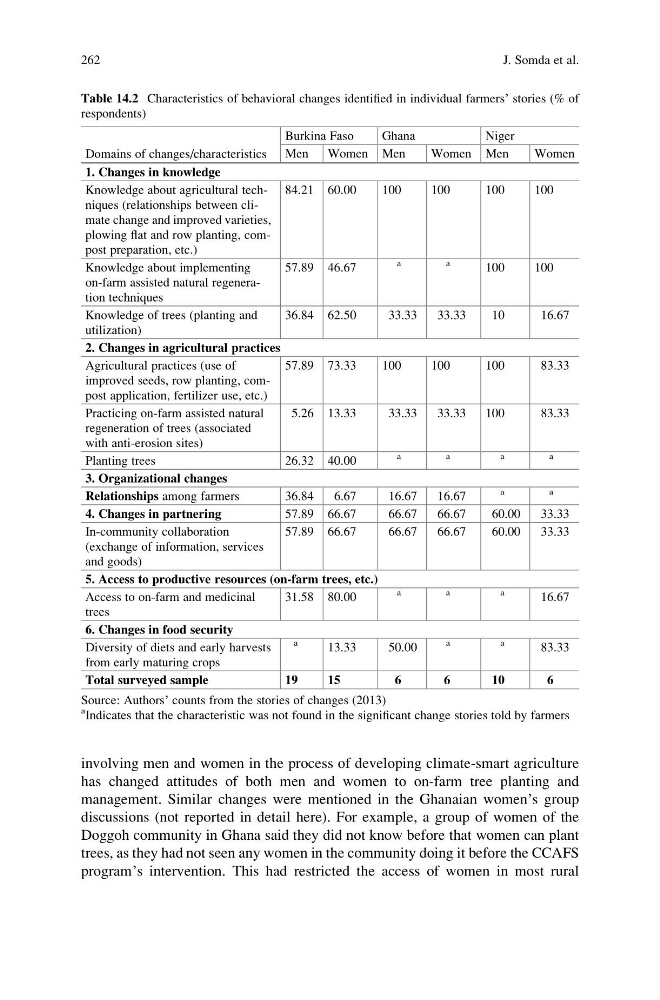
Table 14.2 Characteristics of behavioral changes identified in individual farmers’ stories (% of
respondents)
Domains of changes/characteristics
Burkina Faso
Ghana
Niger
Men
Women Men
Women Men
Women
1. Changes in knowledge
Knowledge about agricultural techniques (relationships between climate change and improved varieties,
plowing flat and row planting, compost preparation, etc.)
84.21 60.00
100
100
100
100
Knowledge about implementing
on-farm assisted natural regeneration techniques
57.89 46.67
a
a
100
100
Knowledge of trees (planting and
utilization)
36.84 62.50
33.33
33.33
10
16.67
2. Changes in agricultural practices
Agricultural practices (use of
improved seeds, row planting, compost application, fertilizer use, etc.)
57.89 73.33
100
100
100
83.33
Practicing on-farm assisted natural
regeneration of trees (associated
with anti-erosion sites)
5.26 13.33
33.33
33.33
100
83.33
Planting trees
26.32 40.00
a
a
a
a
3. Organizational changes
Relationships among farmers
36.84
6.67
16.67
16.67
a
a
4. Changes in partnering
57.89 66.67
66.67
66.67
60.00
33.33
In-community collaboration
(exchange of information, services
and goods)
57.89 66.67
66.67
66.67
60.00
33.33
5. Access to productive resources (on-farm trees, etc.)
Access to on-farm and medicinal
trees
31.58 80.00
a
a
a
16.67
6. Changes in food security
Diversity of diets and early harvests
from early maturing crops
a
13.33
50.00
a
a
83.33
Total surveyed sample
19
15
6
6
10
6
Source: Authors’ counts from the stories of changes (2013)
a
Indicates that the characteristic was not found in the significant change stories told by farmers
262
J. Somda et al.
has changed attitudes of both men and women to on-farm tree planting and
management. Similar changes were mentioned in the Ghanaian women’s group
discussions (not reported in detail here). For example, a group of women of the
Doggoh community in Ghana said they did not know before that women can plant
trees, as they had not seen any women in the community doing it before the CCAFS
program’s intervention. This had restricted the access of women in most rural
Table 14.2 Characteristics of behavioral changes identified in individual farmers’ stories (% of
respondents)
Domains of changes/characteristics
Burkina Faso
Ghana
Niger
Men
Women Men
Women Men
Women
1. Changes in knowledge
Knowledge about agricultural techniques (relationships between climate change and improved varieties,
plowing flat and row planting, compost preparation, etc.)
84.21 60.00
100
100
100
100
Knowledge about implementing
on-farm assisted natural regeneration techniques
57.89 46.67
a
a
100
100
Knowledge of trees (planting and
utilization)
36.84 62.50
33.33
33.33
10
16.67
2. Changes in agricultural practices
Agricultural practices (use of
improved seeds, row planting, compost application, fertilizer use, etc.)
57.89 73.33
100
100
100
83.33
Practicing on-farm assisted natural
regeneration of trees (associated
with anti-erosion sites)
5.26 13.33
33.33
33.33
100
83.33
Planting trees
26.32 40.00
a
a
a
a
3. Organizational changes
Relationships among farmers
36.84
6.67
16.67
16.67
a
a
4. Changes in partnering
57.89 66.67
66.67
66.67
60.00
33.33
In-community collaboration
(exchange of information, services
and goods)
57.89 66.67
66.67
66.67
60.00
33.33
5. Access to productive resources (on-farm trees, etc.)
Access to on-farm and medicinal
trees
31.58 80.00
a
a
a
16.67
6. Changes in food security
Diversity of diets and early harvests
from early maturing crops
a
13.33
50.00
a
a
83.33
Total surveyed sample
19
15
6
6
10
6
Source: Authors’ counts from the stories of changes (2013)
a
Indicates that the characteristic was not found in the significant change stories told by farmers
262
J. Somda et al.