

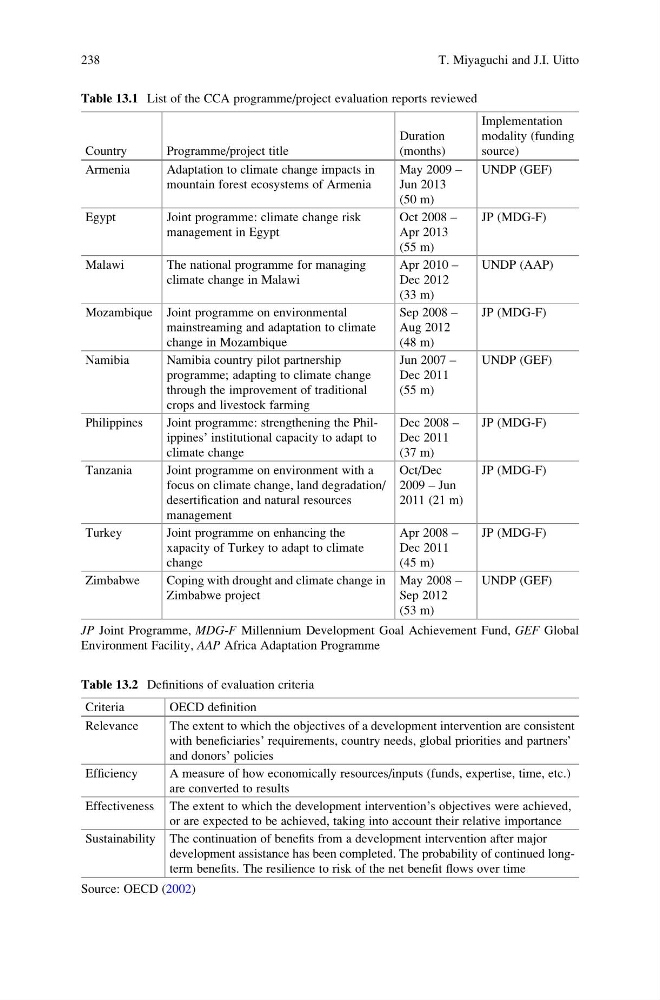
Table 13.1 List of the CCA programme/project evaluation reports reviewed
Country
Programme/project title
Duration
(months)
Implementation
modality (funding
source)
Armenia
Adaptation to climate change impacts in
mountain forest ecosystems of Armenia
May 2009 –
Jun 2013
(50 m)
UNDP (GEF)
Egypt
Joint programme: climate change risk
management in Egypt
Oct 2008 –
Apr 2013
(55 m)
JP (MDG-F)
Malawi
The national programme for managing
climate change in Malawi
Apr 2010 –
Dec 2012
(33 m)
UNDP (AAP)
Mozambique Joint programme on environmental
mainstreaming and adaptation to climate
change in Mozambique
Sep 2008 –
Aug 2012
(48 m)
JP (MDG-F)
Namibia
Namibia country pilot partnership
programme; adapting to climate change
through the improvement of traditional
crops and livestock farming
Jun 2007 –
Dec 2011
(55 m)
UNDP (GEF)
Philippines
Joint programme: strengthening the Philippines’ institutional capacity to adapt to
climate change
Dec 2008 –
Dec 2011
(37 m)
JP (MDG-F)
Tanzania
Joint programme on environment with a
focus on climate change, land degradation/
desertification and natural resources
management
Oct/Dec
2009 – Jun
2011 (21 m)
JP (MDG-F)
Turkey
Joint programme on enhancing the
xapacity of Turkey to adapt to climate
change
Apr 2008 –
Dec 2011
(45 m)
JP (MDG-F)
Zimbabwe
Coping with drought and climate change in
Zimbabwe project
May 2008 –
Sep 2012
(53 m)
UNDP (GEF)
JP Joint Programme, MDG-F Millennium Development Goal Achievement Fund, GEF Global
Environment Facility, AAP Africa Adaptation Programme
Table 13.2 Definitions of evaluation criteria
Criteria
OECD definition
Relevance
The extent to which the objectives of a development intervention are consistent
with beneficiaries’ requirements, country needs, global priorities and partners’
and donors’ policies
Efficiency
A measure of how economically resources/inputs (funds, expertise, time, etc.)
are converted to results
Effectiveness The extent to which the development intervention’s objectives were achieved,
or are expected to be achieved, taking into account their relative importance
Sustainability The continuation of benefits from a development intervention after major
development assistance has been completed. The probability of continued longterm benefits. The resilience to risk of the net benefit flows over time
Source: OECD (2002)
238
T. Miyaguchi and J.I. Uitto
Country
Programme/project title
Duration
(months)
Implementation
modality (funding
source)
Armenia
Adaptation to climate change impacts in
mountain forest ecosystems of Armenia
May 2009 –
Jun 2013
(50 m)
UNDP (GEF)
Egypt
Joint programme: climate change risk
management in Egypt
Oct 2008 –
Apr 2013
(55 m)
JP (MDG-F)
Malawi
The national programme for managing
climate change in Malawi
Apr 2010 –
Dec 2012
(33 m)
UNDP (AAP)
Mozambique Joint programme on environmental
mainstreaming and adaptation to climate
change in Mozambique
Sep 2008 –
Aug 2012
(48 m)
JP (MDG-F)
Namibia
Namibia country pilot partnership
programme; adapting to climate change
through the improvement of traditional
crops and livestock farming
Jun 2007 –
Dec 2011
(55 m)
UNDP (GEF)
Philippines
Joint programme: strengthening the Philippines’ institutional capacity to adapt to
climate change
Dec 2008 –
Dec 2011
(37 m)
JP (MDG-F)
Tanzania
Joint programme on environment with a
focus on climate change, land degradation/
desertification and natural resources
management
Oct/Dec
2009 – Jun
2011 (21 m)
JP (MDG-F)
Turkey
Joint programme on enhancing the
xapacity of Turkey to adapt to climate
change
Apr 2008 –
Dec 2011
(45 m)
JP (MDG-F)
Zimbabwe
Coping with drought and climate change in
Zimbabwe project
May 2008 –
Sep 2012
(53 m)
UNDP (GEF)
JP Joint Programme, MDG-F Millennium Development Goal Achievement Fund, GEF Global
Environment Facility, AAP Africa Adaptation Programme
Table 13.2 Definitions of evaluation criteria
Criteria
OECD definition
Relevance
The extent to which the objectives of a development intervention are consistent
with beneficiaries’ requirements, country needs, global priorities and partners’
and donors’ policies
Efficiency
A measure of how economically resources/inputs (funds, expertise, time, etc.)
are converted to results
Effectiveness The extent to which the development intervention’s objectives were achieved,
or are expected to be achieved, taking into account their relative importance
Sustainability The continuation of benefits from a development intervention after major
development assistance has been completed. The probability of continued longterm benefits. The resilience to risk of the net benefit flows over time
Source: OECD (2002)
238
T. Miyaguchi and J.I. Uitto