

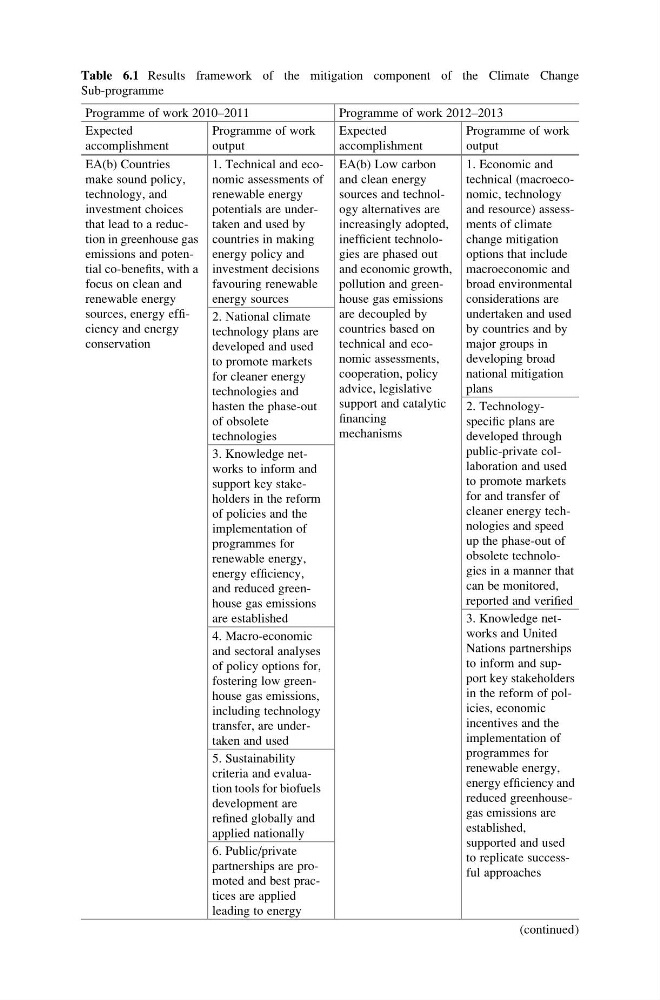
Table 6.1 Results framework of the mitigation component of the Climate Change
Sub-programme
Programme of work 2010–2011
Programme of work 2012–2013
Expected
accomplishment
Programme of work
output
Expected
accomplishment
Programme of work
output
EA(b) Countries
make sound policy,
technology, and
investment choices
that lead to a reduction in greenhouse gas
emissions and potential co-benefits, with a
focus on clean and
renewable energy
sources, energy efficiency and energy
conservation
1. Technical and economic assessments of
renewable energy
potentials are undertaken and used by
countries in making
energy policy and
investment decisions
favouring renewable
energy sources
EA(b) Low carbon
and clean energy
sources and technology alternatives are
increasingly adopted,
inefficient technologies are phased out
and economic growth,
pollution and greenhouse gas emissions
are decoupled by
countries based on
technical and economic assessments,
cooperation, policy
advice, legislative
support and catalytic
financing
mechanisms
1. Economic and
technical (macroeconomic, technology
and resource) assessments of climate
change mitigation
options that include
macroeconomic and
broad environmental
considerations are
undertaken and used
by countries and by
major groups in
developing broad
national mitigation
plans
2. National climate
technology plans are
developed and used
to promote markets
for cleaner energy
technologies and
hasten the phase-out
of obsolete
technologies
2. Technologyspecific plans are
developed through
public-private collaboration and used
to promote markets
for and transfer of
cleaner energy technologies and speed
up the phase-out of
obsolete technologies in a manner that
can be monitored,
reported and verified
3. Knowledge networks to inform and
support key stakeholders in the reform
of policies and the
implementation of
programmes for
renewable energy,
energy efficiency,
and reduced greenhouse gas emissions
are established
3. Knowledge networks and United
Nations partnerships
to inform and support key stakeholders
in the reform of policies, economic
incentives and the
implementation of
programmes for
renewable energy,
energy efficiency and
reduced greenhousegas emissions are
established,
supported and used
to replicate successful approaches
4. Macro-economic
and sectoral analyses
of policy options for,
fostering low greenhouse gas emissions,
including technology
transfer, are undertaken and used
5. Sustainability
criteria and evaluation tools for biofuels
development are
refined globally and
applied nationally
6. Public/private
partnerships are promoted and best practices are applied
leading to energy
(continued)
Sub-programme
Programme of work 2010–2011
Programme of work 2012–2013
Expected
accomplishment
Programme of work
output
Expected
accomplishment
Programme of work
output
EA(b) Countries
make sound policy,
technology, and
investment choices
that lead to a reduction in greenhouse gas
emissions and potential co-benefits, with a
focus on clean and
renewable energy
sources, energy efficiency and energy
conservation
1. Technical and economic assessments of
renewable energy
potentials are undertaken and used by
countries in making
energy policy and
investment decisions
favouring renewable
energy sources
EA(b) Low carbon
and clean energy
sources and technology alternatives are
increasingly adopted,
inefficient technologies are phased out
and economic growth,
pollution and greenhouse gas emissions
are decoupled by
countries based on
technical and economic assessments,
cooperation, policy
advice, legislative
support and catalytic
financing
mechanisms
1. Economic and
technical (macroeconomic, technology
and resource) assessments of climate
change mitigation
options that include
macroeconomic and
broad environmental
considerations are
undertaken and used
by countries and by
major groups in
developing broad
national mitigation
plans
2. National climate
technology plans are
developed and used
to promote markets
for cleaner energy
technologies and
hasten the phase-out
of obsolete
technologies
2. Technologyspecific plans are
developed through
public-private collaboration and used
to promote markets
for and transfer of
cleaner energy technologies and speed
up the phase-out of
obsolete technologies in a manner that
can be monitored,
reported and verified
3. Knowledge networks to inform and
support key stakeholders in the reform
of policies and the
implementation of
programmes for
renewable energy,
energy efficiency,
and reduced greenhouse gas emissions
are established
3. Knowledge networks and United
Nations partnerships
to inform and support key stakeholders
in the reform of policies, economic
incentives and the
implementation of
programmes for
renewable energy,
energy efficiency and
reduced greenhousegas emissions are
established,
supported and used
to replicate successful approaches
4. Macro-economic
and sectoral analyses
of policy options for,
fostering low greenhouse gas emissions,
including technology
transfer, are undertaken and used
5. Sustainability
criteria and evaluation tools for biofuels
development are
refined globally and
applied nationally
6. Public/private
partnerships are promoted and best practices are applied
leading to energy
(continued)