

12
1 Introduction: The Digital Society
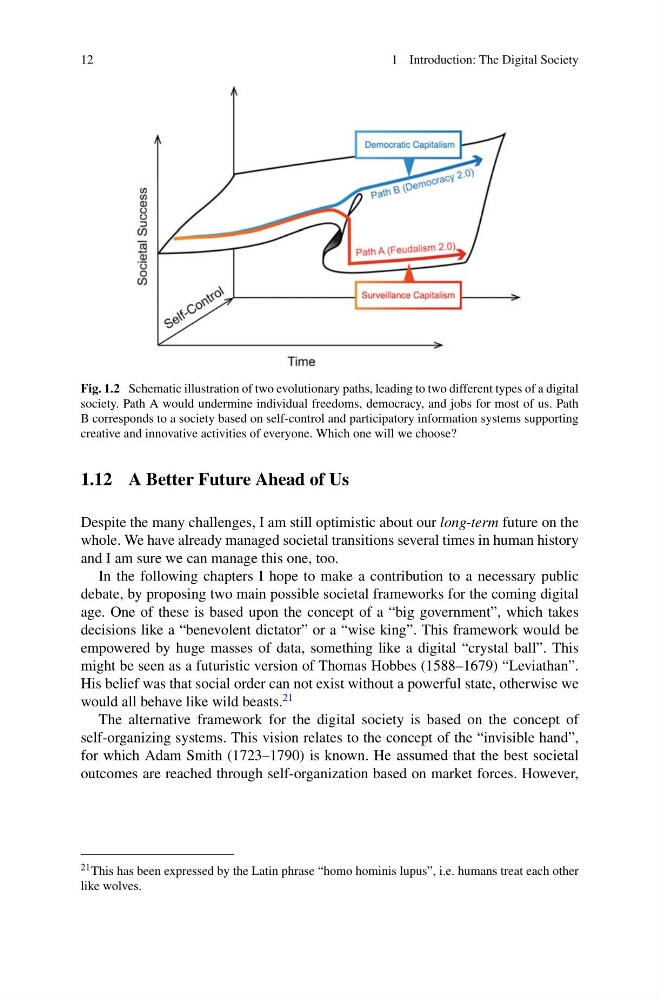
Fig. 1.2 Schematic illustration of two evolutionary paths, leading to two different types of a digital
society. Path A would undermine individual freedoms, democracy, and jobs for most of us. Path
B corresponds to a society based on self-control and participatory information systems supporting
creative and innovative activities of everyone. Which one will we choose?
1.12 A Better Future Ahead of Us
Despite the many challenges, I am still optimistic about our long-term future on the
whole. We have already managed societal transitions several times in human history
and I am sure we can manage this one, too.
In the following chapters I hope to make a contribution to a necessary public
debate, by proposing two main possible societal frameworks for the coming digital
age. One of these is based upon the concept of a “big government”, which takes
decisions like a “benevolent dictator” or a “wise king”. This framework would be
empowered by huge masses of data, something like a digital “crystal ball”. This
might be seen as a futuristic version of Thomas Hobbes (1588–1679) “Leviathan”.
His belief was that social order can not exist without a powerful state, otherwise we
would all behave like wild beasts.
21
The alternative framework for the digital society is based on the concept of
self-organizing systems. This vision relates to the concept of the “invisible hand”,
for which Adam Smith (1723–1790) is known. He assumed that the best societal
outcomes are reached through self-organization based on market forces. However,
21 This has been expressed by the Latin phrase “homo hominis lupus”, i.e. humans treat each other
like wolves.
1 Introduction: The Digital Society
Fig. 1.2 Schematic illustration of two evolutionary paths, leading to two different types of a digital
society. Path A would undermine individual freedoms, democracy, and jobs for most of us. Path
B corresponds to a society based on self-control and participatory information systems supporting
creative and innovative activities of everyone. Which one will we choose?
1.12 A Better Future Ahead of Us
Despite the many challenges, I am still optimistic about our long-term future on the
whole. We have already managed societal transitions several times in human history
and I am sure we can manage this one, too.
In the following chapters I hope to make a contribution to a necessary public
debate, by proposing two main possible societal frameworks for the coming digital
age. One of these is based upon the concept of a “big government”, which takes
decisions like a “benevolent dictator” or a “wise king”. This framework would be
empowered by huge masses of data, something like a digital “crystal ball”. This
might be seen as a futuristic version of Thomas Hobbes (1588–1679) “Leviathan”.
His belief was that social order can not exist without a powerful state, otherwise we
would all behave like wild beasts.
21
The alternative framework for the digital society is based on the concept of
self-organizing systems. This vision relates to the concept of the “invisible hand”,
for which Adam Smith (1723–1790) is known. He assumed that the best societal
outcomes are reached through self-organization based on market forces. However,
21 This has been expressed by the Latin phrase “homo hominis lupus”, i.e. humans treat each other
like wolves.