

302
14 Summary: What’s Wrong with AI?
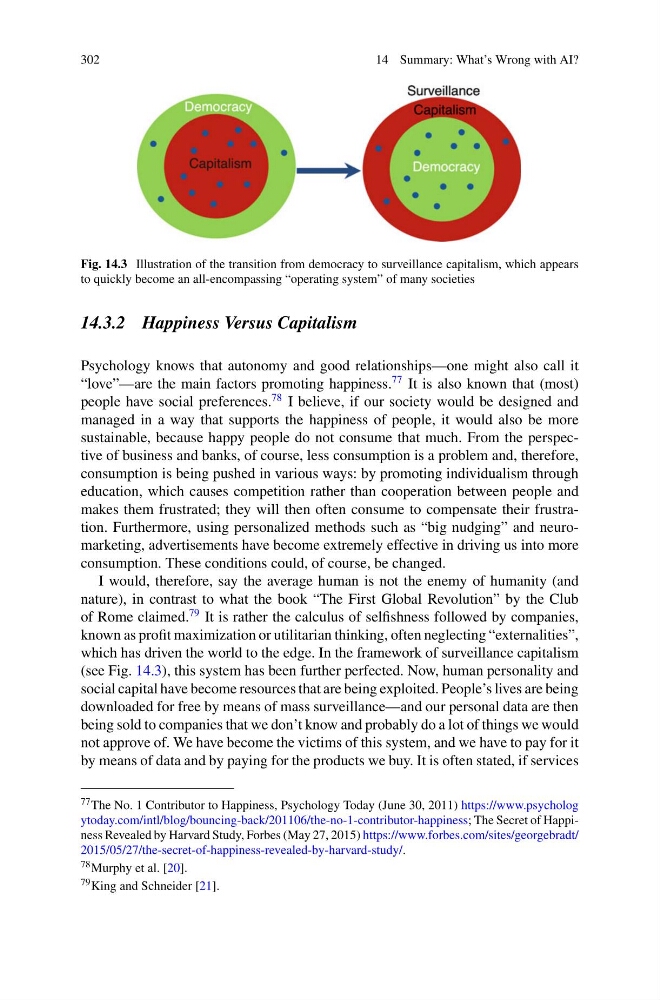
Fig. 14.3 Illustration of the transition from democracy to surveillance capitalism, which appears
to quickly become an all-encompassing “operating system” of many societies
14.3.2 Happiness Versus Capitalism
Psychology knows that autonomy and good relationships—one might also call it
“love”—are the main factors promoting happiness.
77 It is also known that (most)
people have social preferences.
78 I believe, if our society would be designed and
managed in a way that supports the happiness of people, it would also be more
sustainable, because happy people do not consume that much. From the perspective of business and banks, of course, less consumption is a problem and, therefore,
consumption is being pushed in various ways: by promoting individualism through
education, which causes competition rather than cooperation between people and
makes them frustrated; they will then often consume to compensate their frustration. Furthermore, using personalized methods such as “big nudging” and neuromarketing, advertisements have become extremely effective in driving us into more
consumption. These conditions could, of course, be changed.
I would, therefore, say the average human is not the enemy of humanity (and
nature), in contrast to what the book “The First Global Revolution” by the Club
of Rome claimed.
79 It is rather the calculus of selfishness followed by companies,
known as profit maximization or utilitarian thinking, often neglecting “externalities”,
which has driven the world to the edge. In the framework of surveillance capitalism
(see Fig. 14.3), this system has been further perfected. Now, human personality and
social capital have become resources that are being exploited. People’s lives are being
downloaded for free by means of mass surveillance—and our personal data are then
being sold to companies that we don’t know and probably do a lot of things we would
not approve of. We have become the victims of this system, and we have to pay for it
by means of data and by paying for the products we buy. It is often stated, if services
77 The No. 1 Contributor to Happiness, Psychology Today (June 30, 2011) https://www.psycholog
ytoday.com/intl/blog/bouncing-back/201106/the-no-1-contributor-happiness; The Secret of Happiness Revealed by Harvard Study, Forbes (May 27, 2015) https://www.forbes.com/sites/georgebradt/
2015/05/27/the-secret-of-happiness-revealed-by-harvard-study/.
78 Murphy et al. [20].
79 King and Schneider [21].
14 Summary: What’s Wrong with AI?
Fig. 14.3 Illustration of the transition from democracy to surveillance capitalism, which appears
to quickly become an all-encompassing “operating system” of many societies
14.3.2 Happiness Versus Capitalism
Psychology knows that autonomy and good relationships—one might also call it
“love”—are the main factors promoting happiness.
77 It is also known that (most)
people have social preferences.
78 I believe, if our society would be designed and
managed in a way that supports the happiness of people, it would also be more
sustainable, because happy people do not consume that much. From the perspective of business and banks, of course, less consumption is a problem and, therefore,
consumption is being pushed in various ways: by promoting individualism through
education, which causes competition rather than cooperation between people and
makes them frustrated; they will then often consume to compensate their frustration. Furthermore, using personalized methods such as “big nudging” and neuromarketing, advertisements have become extremely effective in driving us into more
consumption. These conditions could, of course, be changed.
I would, therefore, say the average human is not the enemy of humanity (and
nature), in contrast to what the book “The First Global Revolution” by the Club
of Rome claimed.
79 It is rather the calculus of selfishness followed by companies,
known as profit maximization or utilitarian thinking, often neglecting “externalities”,
which has driven the world to the edge. In the framework of surveillance capitalism
(see Fig. 14.3), this system has been further perfected. Now, human personality and
social capital have become resources that are being exploited. People’s lives are being
downloaded for free by means of mass surveillance—and our personal data are then
being sold to companies that we don’t know and probably do a lot of things we would
not approve of. We have become the victims of this system, and we have to pay for it
by means of data and by paying for the products we buy. It is often stated, if services
77 The No. 1 Contributor to Happiness, Psychology Today (June 30, 2011) https://www.psycholog
ytoday.com/intl/blog/bouncing-back/201106/the-no-1-contributor-happiness; The Secret of Happiness Revealed by Harvard Study, Forbes (May 27, 2015) https://www.forbes.com/sites/georgebradt/
2015/05/27/the-secret-of-happiness-revealed-by-harvard-study/.
78 Murphy et al. [20].
79 King and Schneider [21].