

392
C. Thorn and A. Shore
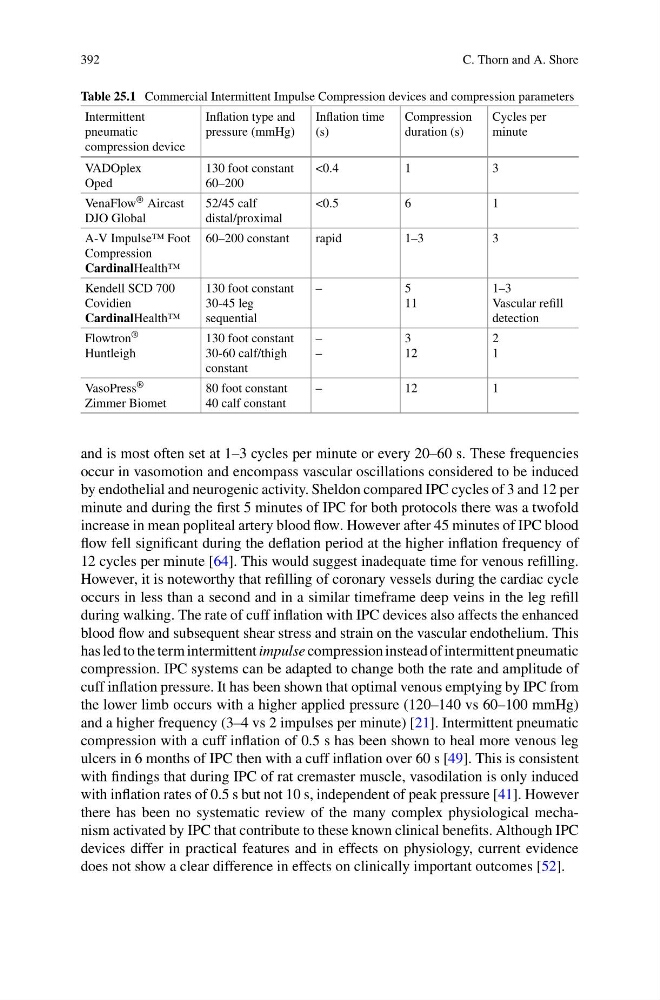
Table 25.1 Commercial Intermittent Impulse Compression devices and compression parameters
Intermittent
pneumatic
compression device
Inflation type and
pressure (mmHg)
Inflation time
(s)
Compression
duration (s)
Cycles per
minute
VADOplex
Oped
130 foot constant
60–200
<0.4
1
3
VenaFlow ® Aircast
DJO Global
52/45 calf
distal/proximal
<0.5
6
1
A-V Impulse™ Foot
Compression
CardinalHealth™
60–200 constant
rapid
1–3
3
Kendell SCD 700
Covidien
CardinalHealth™
130 foot constant
30-45 leg
sequential
–
5
11
1–3
Vascular refill
detection
Flowtron ®
Huntleigh
130 foot constant
30-60 calf/thigh
constant
–
–
3
12
2
1
VasoPress ®
Zimmer Biomet
80 foot constant
40 calf constant
–
12
1
and is most often set at 1–3 cycles per minute or every 20–60 s. These frequencies
occur in vasomotion and encompass vascular oscillations considered to be induced
by endothelial and neurogenic activity. Sheldon compared IPC cycles of 3 and 12 per
minute and during the first 5 minutes of IPC for both protocols there was a twofold
increase in mean popliteal artery blood flow. However after 45 minutes of IPC blood
flow fell significant during the deflation period at the higher inflation frequency of
12 cycles per minute [64]. This would suggest inadequate time for venous refilling.
However, it is noteworthy that refilling of coronary vessels during the cardiac cycle
occurs in less than a second and in a similar timeframe deep veins in the leg refill
during walking. The rate of cuff inflation with IPC devices also affects the enhanced
blood flow and subsequent shear stress and strain on the vascular endothelium. This
has led to the term intermittent impulse compression instead of intermittent pneumatic
compression. IPC systems can be adapted to change both the rate and amplitude of
cuff inflation pressure. It has been shown that optimal venous emptying by IPC from
the lower limb occurs with a higher applied pressure (120–140 vs 60–100 mmHg)
and a higher frequency (3–4 vs 2 impulses per minute) [21]. Intermittent pneumatic
compression with a cuff inflation of 0.5 s has been shown to heal more venous leg
ulcers in 6 months of IPC then with a cuff inflation over 60 s [49]. This is consistent
with findings that during IPC of rat cremaster muscle, vasodilation is only induced
with inflation rates of 0.5 s but not 10 s, independent of peak pressure [41]. However
there has been no systematic review of the many complex physiological mechanism activated by IPC that contribute to these known clinical benefits. Although IPC
devices differ in practical features and in effects on physiology, current evidence
does not show a clear difference in effects on clinically important outcomes [52].
C. Thorn and A. Shore
Table 25.1 Commercial Intermittent Impulse Compression devices and compression parameters
Intermittent
pneumatic
compression device
Inflation type and
pressure (mmHg)
Inflation time
(s)
Compression
duration (s)
Cycles per
minute
VADOplex
Oped
130 foot constant
60–200
<0.4
1
3
VenaFlow ® Aircast
DJO Global
52/45 calf
distal/proximal
<0.5
6
1
A-V Impulse™ Foot
Compression
CardinalHealth™
60–200 constant
rapid
1–3
3
Kendell SCD 700
Covidien
CardinalHealth™
130 foot constant
30-45 leg
sequential
–
5
11
1–3
Vascular refill
detection
Flowtron ®
Huntleigh
130 foot constant
30-60 calf/thigh
constant
–
–
3
12
2
1
VasoPress ®
Zimmer Biomet
80 foot constant
40 calf constant
–
12
1
and is most often set at 1–3 cycles per minute or every 20–60 s. These frequencies
occur in vasomotion and encompass vascular oscillations considered to be induced
by endothelial and neurogenic activity. Sheldon compared IPC cycles of 3 and 12 per
minute and during the first 5 minutes of IPC for both protocols there was a twofold
increase in mean popliteal artery blood flow. However after 45 minutes of IPC blood
flow fell significant during the deflation period at the higher inflation frequency of
12 cycles per minute [64]. This would suggest inadequate time for venous refilling.
However, it is noteworthy that refilling of coronary vessels during the cardiac cycle
occurs in less than a second and in a similar timeframe deep veins in the leg refill
during walking. The rate of cuff inflation with IPC devices also affects the enhanced
blood flow and subsequent shear stress and strain on the vascular endothelium. This
has led to the term intermittent impulse compression instead of intermittent pneumatic
compression. IPC systems can be adapted to change both the rate and amplitude of
cuff inflation pressure. It has been shown that optimal venous emptying by IPC from
the lower limb occurs with a higher applied pressure (120–140 vs 60–100 mmHg)
and a higher frequency (3–4 vs 2 impulses per minute) [21]. Intermittent pneumatic
compression with a cuff inflation of 0.5 s has been shown to heal more venous leg
ulcers in 6 months of IPC then with a cuff inflation over 60 s [49]. This is consistent
with findings that during IPC of rat cremaster muscle, vasodilation is only induced
with inflation rates of 0.5 s but not 10 s, independent of peak pressure [41]. However
there has been no systematic review of the many complex physiological mechanism activated by IPC that contribute to these known clinical benefits. Although IPC
devices differ in practical features and in effects on physiology, current evidence
does not show a clear difference in effects on clinically important outcomes [52].