

15 Glycolytic Oscillations in Cancer Cells
247
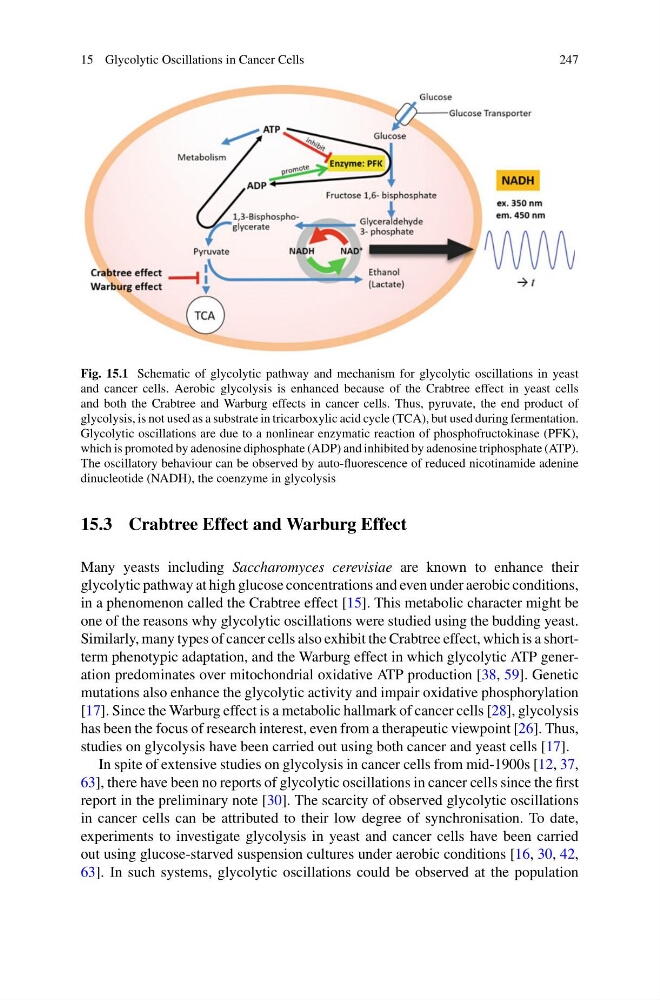
Fig. 15.1 Schematic of glycolytic pathway and mechanism for glycolytic oscillations in yeast
and cancer cells. Aerobic glycolysis is enhanced because of the Crabtree effect in yeast cells
and both the Crabtree and Warburg effects in cancer cells. Thus, pyruvate, the end product of
glycolysis, is not used as a substrate in tricarboxylic acid cycle (TCA), but used during fermentation.
Glycolytic oscillations are due to a nonlinear enzymatic reaction of phosphofructokinase (PFK),
which is promoted by adenosine diphosphate (ADP) and inhibited by adenosine triphosphate (ATP).
The oscillatory behaviour can be observed by auto-fluorescence of reduced nicotinamide adenine
dinucleotide (NADH), the coenzyme in glycolysis
15.3 Crabtree Effect and Warburg Effect
Many yeasts including Saccharomyces cerevisiae are known to enhance their
glycolytic pathway at high glucose concentrations and even under aerobic conditions,
in a phenomenon called the Crabtree effect [15]. This metabolic character might be
one of the reasons why glycolytic oscillations were studied using the budding yeast.
Similarly, many types of cancer cells also exhibit the Crabtree effect, which is a shortterm phenotypic adaptation, and the Warburg effect in which glycolytic ATP generation predominates over mitochondrial oxidative ATP production [38, 59]. Genetic
mutations also enhance the glycolytic activity and impair oxidative phosphorylation
[17]. Since the Warburg effect is a metabolic hallmark of cancer cells [28], glycolysis
has been the focus of research interest, even from a therapeutic viewpoint [26]. Thus,
studies on glycolysis have been carried out using both cancer and yeast cells [17].
In spite of extensive studies on glycolysis in cancer cells from mid-1900s [12, 37,
63], there have been no reports of glycolytic oscillations in cancer cells since the first
report in the preliminary note [30]. The scarcity of observed glycolytic oscillations
in cancer cells can be attributed to their low degree of synchronisation. To date,
experiments to investigate glycolysis in yeast and cancer cells have been carried
out using glucose-starved suspension cultures under aerobic conditions [16, 30, 42,
63]. In such systems, glycolytic oscillations could be observed at the population
247
Fig. 15.1 Schematic of glycolytic pathway and mechanism for glycolytic oscillations in yeast
and cancer cells. Aerobic glycolysis is enhanced because of the Crabtree effect in yeast cells
and both the Crabtree and Warburg effects in cancer cells. Thus, pyruvate, the end product of
glycolysis, is not used as a substrate in tricarboxylic acid cycle (TCA), but used during fermentation.
Glycolytic oscillations are due to a nonlinear enzymatic reaction of phosphofructokinase (PFK),
which is promoted by adenosine diphosphate (ADP) and inhibited by adenosine triphosphate (ATP).
The oscillatory behaviour can be observed by auto-fluorescence of reduced nicotinamide adenine
dinucleotide (NADH), the coenzyme in glycolysis
15.3 Crabtree Effect and Warburg Effect
Many yeasts including Saccharomyces cerevisiae are known to enhance their
glycolytic pathway at high glucose concentrations and even under aerobic conditions,
in a phenomenon called the Crabtree effect [15]. This metabolic character might be
one of the reasons why glycolytic oscillations were studied using the budding yeast.
Similarly, many types of cancer cells also exhibit the Crabtree effect, which is a shortterm phenotypic adaptation, and the Warburg effect in which glycolytic ATP generation predominates over mitochondrial oxidative ATP production [38, 59]. Genetic
mutations also enhance the glycolytic activity and impair oxidative phosphorylation
[17]. Since the Warburg effect is a metabolic hallmark of cancer cells [28], glycolysis
has been the focus of research interest, even from a therapeutic viewpoint [26]. Thus,
studies on glycolysis have been carried out using both cancer and yeast cells [17].
In spite of extensive studies on glycolysis in cancer cells from mid-1900s [12, 37,
63], there have been no reports of glycolytic oscillations in cancer cells since the first
report in the preliminary note [30]. The scarcity of observed glycolytic oscillations
in cancer cells can be attributed to their low degree of synchronisation. To date,
experiments to investigate glycolysis in yeast and cancer cells have been carried
out using glucose-starved suspension cultures under aerobic conditions [16, 30, 42,
63]. In such systems, glycolytic oscillations could be observed at the population