

11 Coupling Functions in Neuroscience
183
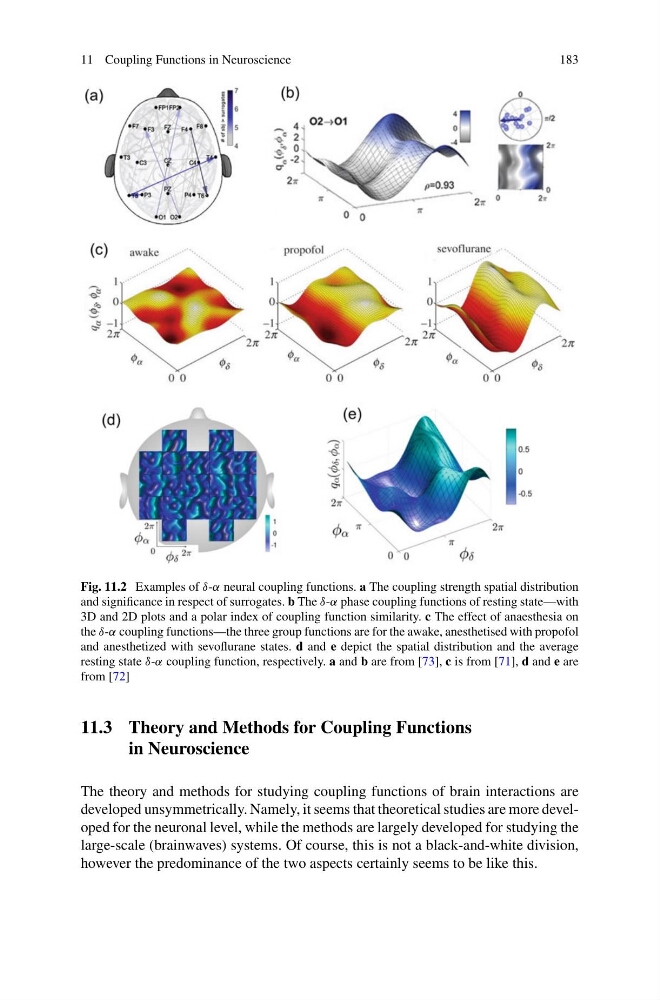
Fig. 11.2 Examples of δ-α neural coupling functions. a The coupling strength spatial distribution
and significance in respect of surrogates. b The δ-α phase coupling functions of resting state—with
3D and 2D plots and a polar index of coupling function similarity. c The effect of anaesthesia on
the δ-α coupling functions—the three group functions are for the awake, anesthetised with propofol
and anesthetized with sevoflurane states. d and e depict the spatial distribution and the average
resting state δ-α coupling function, respectively. a and b are from [73], c is from [71], d and e are
from [72]
11.3 Theory and Methods for Coupling Functions
in Neuroscience
The theory and methods for studying coupling functions of brain interactions are
developed unsymmetrically. Namely, it seems that theoretical studies are more developed for the neuronal level, while the methods are largely developed for studying the
large-scale (brainwaves) systems. Of course, this is not a black-and-white division,
however the predominance of the two aspects certainly seems to be like this.
183
Fig. 11.2 Examples of δ-α neural coupling functions. a The coupling strength spatial distribution
and significance in respect of surrogates. b The δ-α phase coupling functions of resting state—with
3D and 2D plots and a polar index of coupling function similarity. c The effect of anaesthesia on
the δ-α coupling functions—the three group functions are for the awake, anesthetised with propofol
and anesthetized with sevoflurane states. d and e depict the spatial distribution and the average
resting state δ-α coupling function, respectively. a and b are from [73], c is from [71], d and e are
from [72]
11.3 Theory and Methods for Coupling Functions
in Neuroscience
The theory and methods for studying coupling functions of brain interactions are
developed unsymmetrically. Namely, it seems that theoretical studies are more developed for the neuronal level, while the methods are largely developed for studying the
large-scale (brainwaves) systems. Of course, this is not a black-and-white division,
however the predominance of the two aspects certainly seems to be like this.