

boreo-montane species: Ronikier et al. 2008b; Kramp et al. 2009). Although genetic
data from the western Balkan mountains are generally scarce, it is worth noting that
the south-eastern Alps—western Balkan mountains link is frequently supported by
the existence of taxa that only occur in these two regions (e.g. Holdhaus 1954;
Varga and Schmitt 2008; Schönswetter and Schneeweiss 2009; Tshikolovets 2011).
Focussing now on the smaller mountain ranges of Europe and their biogeographic links, we start with the Massif Central in France. This mountain range
sometimes even possesses its own endemic genetic lineages, supporting the idea of
independent glacial refugia in its geographic proximity without recent genetic
exchange, neither with the western Alps nor with the Pyrenees (e.g. Pauls et al.
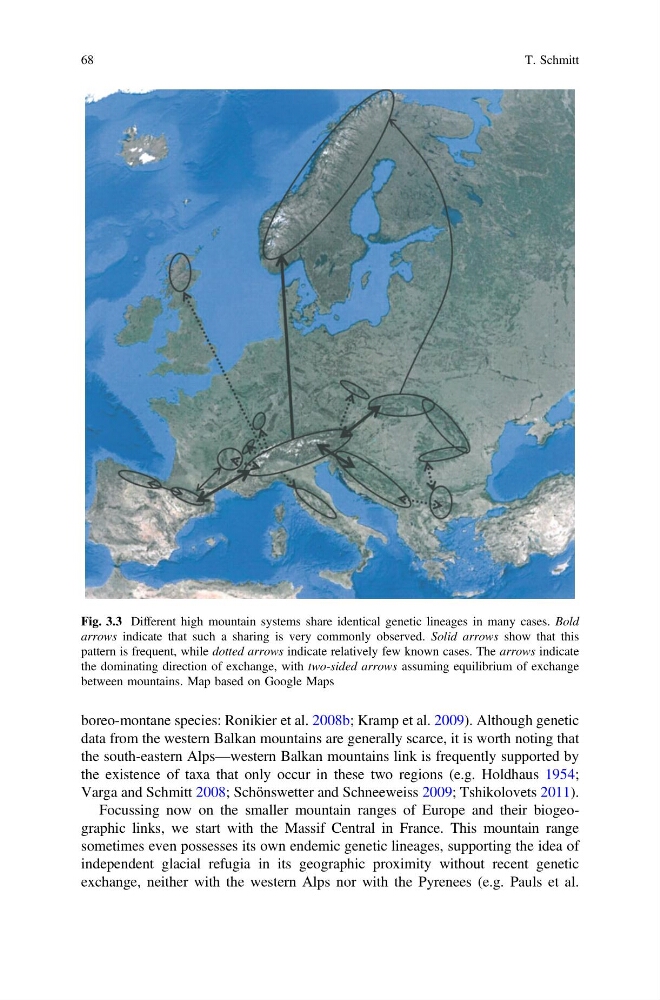
Fig. 3.3 Different high mountain systems share identical genetic lineages in many cases. Bold
arrows indicate that such a sharing is very commonly observed. Solid arrows show that this
pattern is frequent, while dotted arrows indicate relatively few known cases. The arrows indicate
the dominating direction of exchange, with two-sided arrows assuming equilibrium of exchange
between mountains. Map based on Google Maps
68
T. Schmitt
data from the western Balkan mountains are generally scarce, it is worth noting that
the south-eastern Alps—western Balkan mountains link is frequently supported by
the existence of taxa that only occur in these two regions (e.g. Holdhaus 1954;
Varga and Schmitt 2008; Schönswetter and Schneeweiss 2009; Tshikolovets 2011).
Focussing now on the smaller mountain ranges of Europe and their biogeographic links, we start with the Massif Central in France. This mountain range
sometimes even possesses its own endemic genetic lineages, supporting the idea of
independent glacial refugia in its geographic proximity without recent genetic
exchange, neither with the western Alps nor with the Pyrenees (e.g. Pauls et al.
Fig. 3.3 Different high mountain systems share identical genetic lineages in many cases. Bold
arrows indicate that such a sharing is very commonly observed. Solid arrows show that this
pattern is frequent, while dotted arrows indicate relatively few known cases. The arrows indicate
the dominating direction of exchange, with two-sided arrows assuming equilibrium of exchange
between mountains. Map based on Google Maps
68
T. Schmitt