

and genetic richness (Blanco-Pastor et al. 2013). Ad hoc studies may be helpful,
before expending efforts in a wrong direction.
1.5.3 Functional Versus Phylogenetic Conservation
Criticism to estimated excessive effort on conservation actions towards preserving
genetic variability and details in phylogeography issues advocates that conservation
should aim to maintain functional diversity rather than to pay attention to taxonomic and phylogenetic details. This appears to be a false debate. It primarily
depends on where one stops defining functional traits. The more detail we gain in
functional attributes, the more we approach function to phylogenetic structures
(Flynn et al. 2011). Trait convergence among scarcely related phylogenetic groups
is a fact; however, convergence in some characters does not invalidate differences
in others. So, in the end, any species is phylogenetically and ecologically unique.
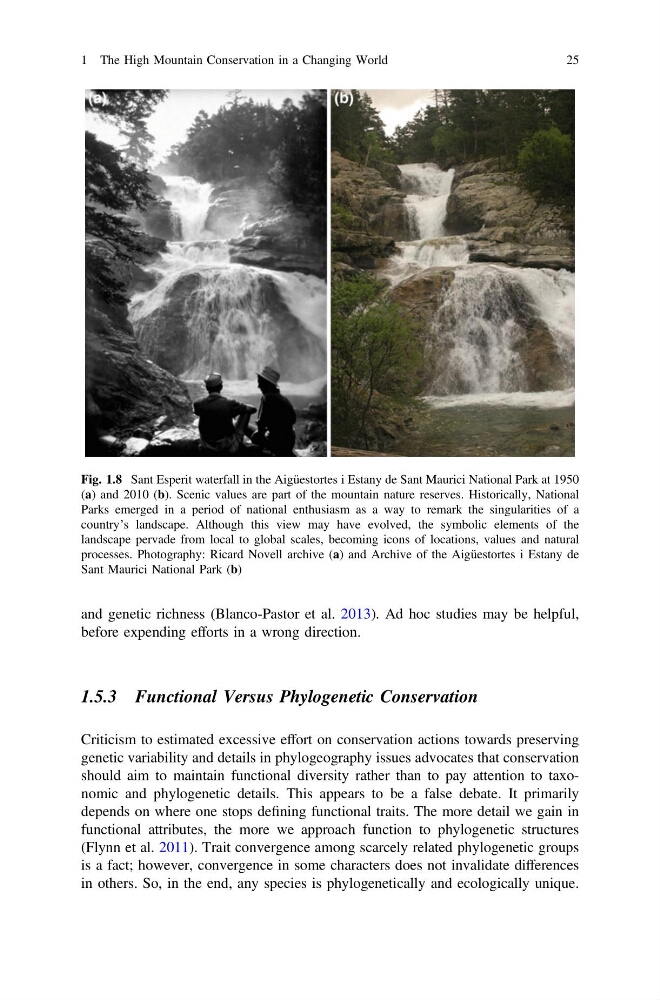
Fig. 1.8 Sant Esperit waterfall in the Aigüestortes i Estany de Sant Maurici National Park at 1950
(a) and 2010 (b). Scenic values are part of the mountain nature reserves. Historically, National
Parks emerged in a period of national enthusiasm as a way to remark the singularities of a
country’s landscape. Although this view may have evolved, the symbolic elements of the
landscape pervade from local to global scales, becoming icons of locations, values and natural
processes. Photography: Ricard Novell archive (a) and Archive of the Aigüestortes i Estany de
Sant Maurici National Park (b)
1 The High Mountain Conservation in a Changing World
25
before expending efforts in a wrong direction.
1.5.3 Functional Versus Phylogenetic Conservation
Criticism to estimated excessive effort on conservation actions towards preserving
genetic variability and details in phylogeography issues advocates that conservation
should aim to maintain functional diversity rather than to pay attention to taxonomic and phylogenetic details. This appears to be a false debate. It primarily
depends on where one stops defining functional traits. The more detail we gain in
functional attributes, the more we approach function to phylogenetic structures
(Flynn et al. 2011). Trait convergence among scarcely related phylogenetic groups
is a fact; however, convergence in some characters does not invalidate differences
in others. So, in the end, any species is phylogenetically and ecologically unique.
Fig. 1.8 Sant Esperit waterfall in the Aigüestortes i Estany de Sant Maurici National Park at 1950
(a) and 2010 (b). Scenic values are part of the mountain nature reserves. Historically, National
Parks emerged in a period of national enthusiasm as a way to remark the singularities of a
country’s landscape. Although this view may have evolved, the symbolic elements of the
landscape pervade from local to global scales, becoming icons of locations, values and natural
processes. Photography: Ricard Novell archive (a) and Archive of the Aigüestortes i Estany de
Sant Maurici National Park (b)
1 The High Mountain Conservation in a Changing World
25