

On the other hand, molecular studies may identify priority areas for conservation of
the genetic resources of endangered species (Petit et al. 1998).
Conservation has a strong imprinting of the habitat concept. It has been useful
for mapping, and a great effort has been put in habitat classification. Patterns of
habitat invasions are consistent between regions and some of the high mountain
habitats are among the less susceptible to invasion [e.g., heathlands and
high-mountain grasslands (Chytry et al. 2008)]. However, about the habitat concept
and the interaction between species in general, there is a marked influence of the
Franciscan conservation view. Habitats are sometimes erroneously thought as
places to be filled with particular species. In fact, it may be argued the opposed, the
species make the habitat (Rosenzweig 1995). One may recognize different habitats
because they hold different species but would not make any distinction if the same
species, or a subgroup of them, were filling the space. The distribution of species
will certainly change at a different pace, thus rearranging the current interactions at
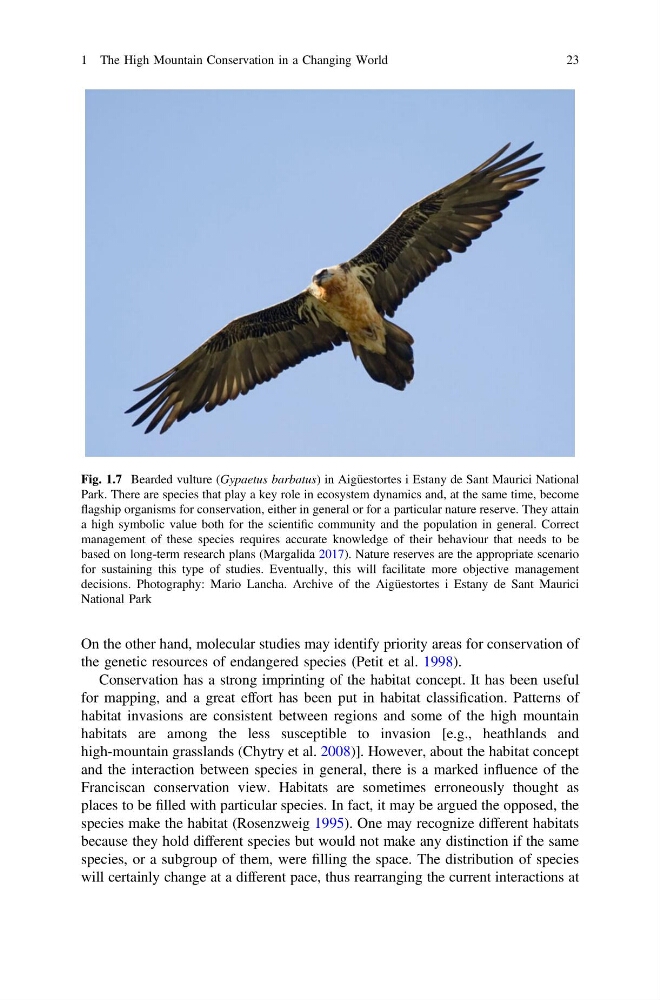
Fig. 1.7 Bearded vulture (Gypaetus barbatus) in Aigüestortes i Estany de Sant Maurici National
Park. There are species that play a key role in ecosystem dynamics and, at the same time, become
flagship organisms for conservation, either in general or for a particular nature reserve. They attain
a high symbolic value both for the scientific community and the population in general. Correct
management of these species requires accurate knowledge of their behaviour that needs to be
based on long-term research plans (Margalida 2017). Nature reserves are the appropriate scenario
for sustaining this type of studies. Eventually, this will facilitate more objective management
decisions. Photography: Mario Lancha. Archive of the Aigüestortes i Estany de Sant Maurici
National Park
1 The High Mountain Conservation in a Changing World
23
the genetic resources of endangered species (Petit et al. 1998).
Conservation has a strong imprinting of the habitat concept. It has been useful
for mapping, and a great effort has been put in habitat classification. Patterns of
habitat invasions are consistent between regions and some of the high mountain
habitats are among the less susceptible to invasion [e.g., heathlands and
high-mountain grasslands (Chytry et al. 2008)]. However, about the habitat concept
and the interaction between species in general, there is a marked influence of the
Franciscan conservation view. Habitats are sometimes erroneously thought as
places to be filled with particular species. In fact, it may be argued the opposed, the
species make the habitat (Rosenzweig 1995). One may recognize different habitats
because they hold different species but would not make any distinction if the same
species, or a subgroup of them, were filling the space. The distribution of species
will certainly change at a different pace, thus rearranging the current interactions at
Fig. 1.7 Bearded vulture (Gypaetus barbatus) in Aigüestortes i Estany de Sant Maurici National
Park. There are species that play a key role in ecosystem dynamics and, at the same time, become
flagship organisms for conservation, either in general or for a particular nature reserve. They attain
a high symbolic value both for the scientific community and the population in general. Correct
management of these species requires accurate knowledge of their behaviour that needs to be
based on long-term research plans (Margalida 2017). Nature reserves are the appropriate scenario
for sustaining this type of studies. Eventually, this will facilitate more objective management
decisions. Photography: Mario Lancha. Archive of the Aigüestortes i Estany de Sant Maurici
National Park
1 The High Mountain Conservation in a Changing World
23