

happens near supplementary feeding points (see Sesé et al. 2005; Margalida et al.
2011a)—may increase the time being spent in agonistic encounters and, therefore,
reduce breeding success. Moreover, conspecific crowding can be a significant
stressor that may alter glucocorticosteroid release, causing both physiological and
behavioural changes that may affect population dynamics (Rotllant et al. 1998;
Creel 2001; Romero 2004).
In conclusion, these results suggest that vulture populations are regulated as
postulated by the site-dependency hypothesis: as the population increases, average
productivity decreases because progressively poorer territories are used. The
combined effects of the shrinkage of territories and the presence of floaters around
supplementary feeding points seem to be the main causes of productivity decline
and are therefore the main determinants of territory quality. This has conservation
implications, especially concerning the role of supplementary feeding points.
15.5.4 Management Implications for Conservation Plans
The establishment of supplementary feeding points for the management of vulture
populations has been used during reintroduction programmes to maintain birds
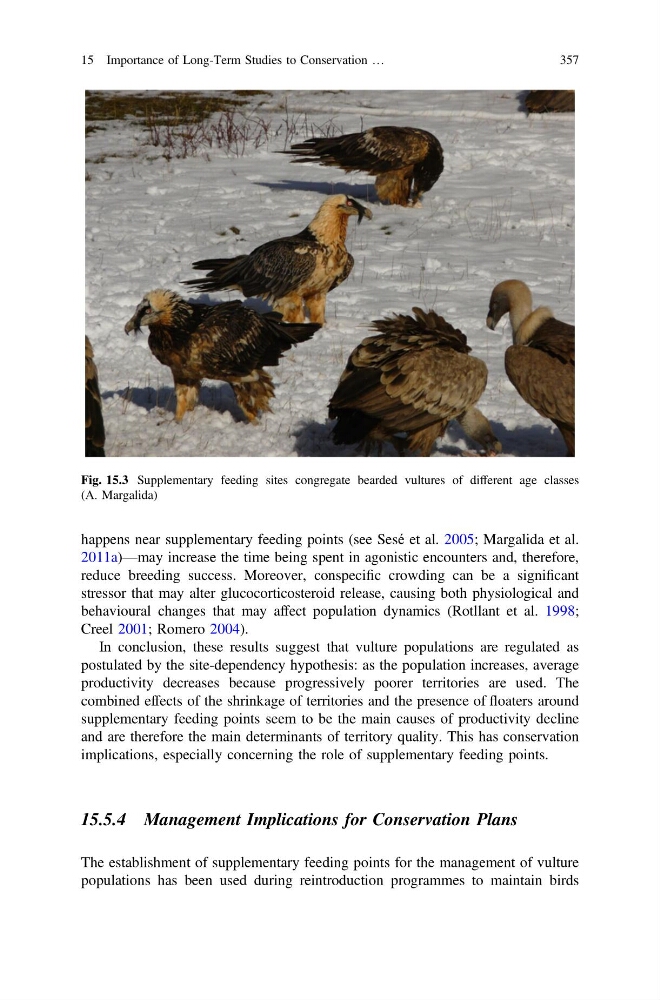
Fig. 15.3 Supplementary feeding sites congregate bearded vultures of different age classes
(A. Margalida)
15 Importance of Long-Term Studies to Conservation …
357
2011a)—may increase the time being spent in agonistic encounters and, therefore,
reduce breeding success. Moreover, conspecific crowding can be a significant
stressor that may alter glucocorticosteroid release, causing both physiological and
behavioural changes that may affect population dynamics (Rotllant et al. 1998;
Creel 2001; Romero 2004).
In conclusion, these results suggest that vulture populations are regulated as
postulated by the site-dependency hypothesis: as the population increases, average
productivity decreases because progressively poorer territories are used. The
combined effects of the shrinkage of territories and the presence of floaters around
supplementary feeding points seem to be the main causes of productivity decline
and are therefore the main determinants of territory quality. This has conservation
implications, especially concerning the role of supplementary feeding points.
15.5.4 Management Implications for Conservation Plans
The establishment of supplementary feeding points for the management of vulture
populations has been used during reintroduction programmes to maintain birds
Fig. 15.3 Supplementary feeding sites congregate bearded vultures of different age classes
(A. Margalida)
15 Importance of Long-Term Studies to Conservation …
357