

The social implications of prohibiting fishing would not be relevant if the prohibition is implemented in those lakes that are at present fishless (at the moment
there is the paradox that some lakes have fishing rights while never being stocked
with fish). It could also be implemented in some particular lakes or groups of lakes
that are especially important for the conservation of some animal groups (e.g.
Pyrenean newt C. asper). Finally, prohibition on fishing a proportion of the lakes
has already been performed in the Aigüestortes i Estany de Sant Maurici National
Park, with no documented adverse social impact: basically local citizens realised
that the social benefits of nature preservation (through higher tourism) have been
greater than those that were obtained via fishing.
8.6.2 Restoration Projects: Techniques Used and Successful
Cases
Due to the substantial reduction in habitat size directly associated with fish introductions, different protected areas of the world have started restoration projects with
the aim to eradicate trout in high altitude lakes. The method most widely used in
lentic systems is gill netting (e.g. Knapp and Matthews 1998; Parker et al. 2001;
Vredenburg 2004; Knapp et al. 2007; Pacas and Taylor 2015). The most successful
ones at removing non-native fishes have focused in relatively small lakes (e.g.
Knapp and Matthews 1998; Parker et al. 2001; Vredenburg 2004; Knapp et al.
2007), but this technique demonstrated to be effective also in relatively large high
altitude lakes (Pacas and Taylor 2015). The use of gill netting is often
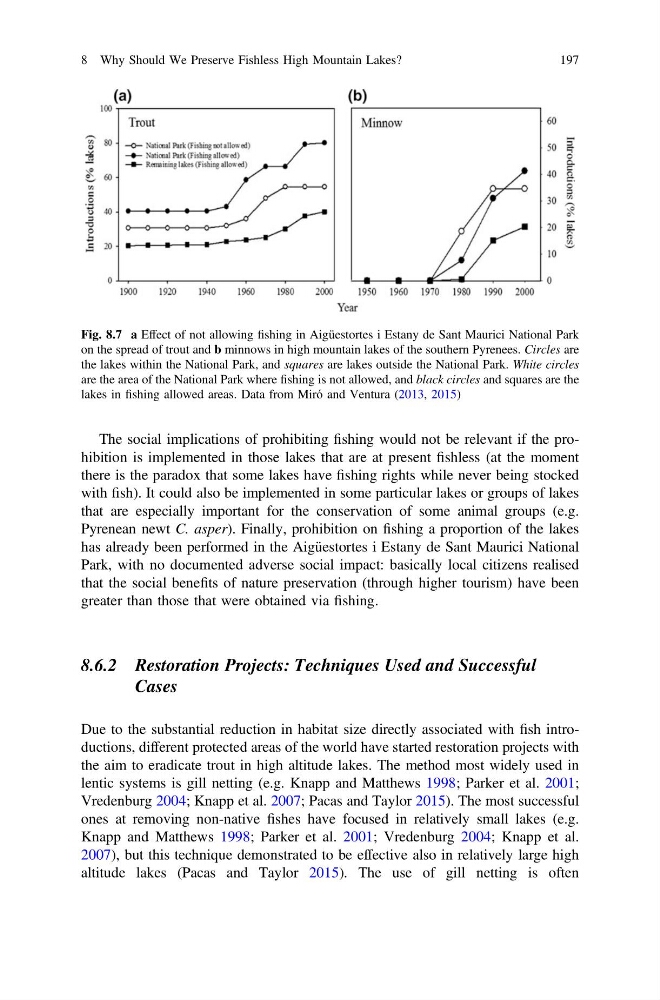
Fig. 8.7 a Effect of not allowing fishing in Aigüestortes i Estany de Sant Maurici National Park
on the spread of trout and b minnows in high mountain lakes of the southern Pyrenees. Circles are
the lakes within the National Park, and squares are lakes outside the National Park. White circles
are the area of the National Park where fishing is not allowed, and black circles and squares are the
lakes in fishing allowed areas. Data from Miró and Ventura (2013, 2015)
8 Why Should We Preserve Fishless High Mountain Lakes?
197
there is the paradox that some lakes have fishing rights while never being stocked
with fish). It could also be implemented in some particular lakes or groups of lakes
that are especially important for the conservation of some animal groups (e.g.
Pyrenean newt C. asper). Finally, prohibition on fishing a proportion of the lakes
has already been performed in the Aigüestortes i Estany de Sant Maurici National
Park, with no documented adverse social impact: basically local citizens realised
that the social benefits of nature preservation (through higher tourism) have been
greater than those that were obtained via fishing.
8.6.2 Restoration Projects: Techniques Used and Successful
Cases
Due to the substantial reduction in habitat size directly associated with fish introductions, different protected areas of the world have started restoration projects with
the aim to eradicate trout in high altitude lakes. The method most widely used in
lentic systems is gill netting (e.g. Knapp and Matthews 1998; Parker et al. 2001;
Vredenburg 2004; Knapp et al. 2007; Pacas and Taylor 2015). The most successful
ones at removing non-native fishes have focused in relatively small lakes (e.g.
Knapp and Matthews 1998; Parker et al. 2001; Vredenburg 2004; Knapp et al.
2007), but this technique demonstrated to be effective also in relatively large high
altitude lakes (Pacas and Taylor 2015). The use of gill netting is often
Fig. 8.7 a Effect of not allowing fishing in Aigüestortes i Estany de Sant Maurici National Park
on the spread of trout and b minnows in high mountain lakes of the southern Pyrenees. Circles are
the lakes within the National Park, and squares are lakes outside the National Park. White circles
are the area of the National Park where fishing is not allowed, and black circles and squares are the
lakes in fishing allowed areas. Data from Miró and Ventura (2013, 2015)
8 Why Should We Preserve Fishless High Mountain Lakes?
197