

techniques adopted, or it might be influenced by the reoccupation over time of the
same site, making difficult to discern prehistoric phases from medieval and modern
ones, especially in open-air sites. However, a detailed analysis of this aspect is
beyond the scope of the present chapter.
4.4 Conclusions
This study can be summed up briefly because, in a certain way, in itself, it has
presented a series of main findings of the research carried out in high areas of the
Pyrenees during the last 15–20 years. The archaeological records that fieldworks
have generated have been described in chronological terms; Upper Palaeolithic
presence in the high mountain areas of the Pyrenees appears remarkably reduced.
Most of the evidence suggests the occupation of large caves (ca. 19000–8000 year
BC), rock-shelters and open-air sites in the peripheral areas of the mountain, at
lower and mid-altitudes; higher altitudes were not occupied probably because of
harsh climate conditions, glaciers presence and the subsequent lack of attractive
food options. Starting from the Holocene, the situation would change with a
gradually, even if discontinuously, increasing human pressure high on mountain
environments. Three sites, a rock-shelter and two open-air occupations, testify the
presence of Mesolithic groups (ca. 8000–6500 year BC) in the alpine areas of
the Pyrenees. Despite being very partial and limited data, they might indicate the
occasional exploitation of high-altitudes by groups of hunter-gatherers; evidence for
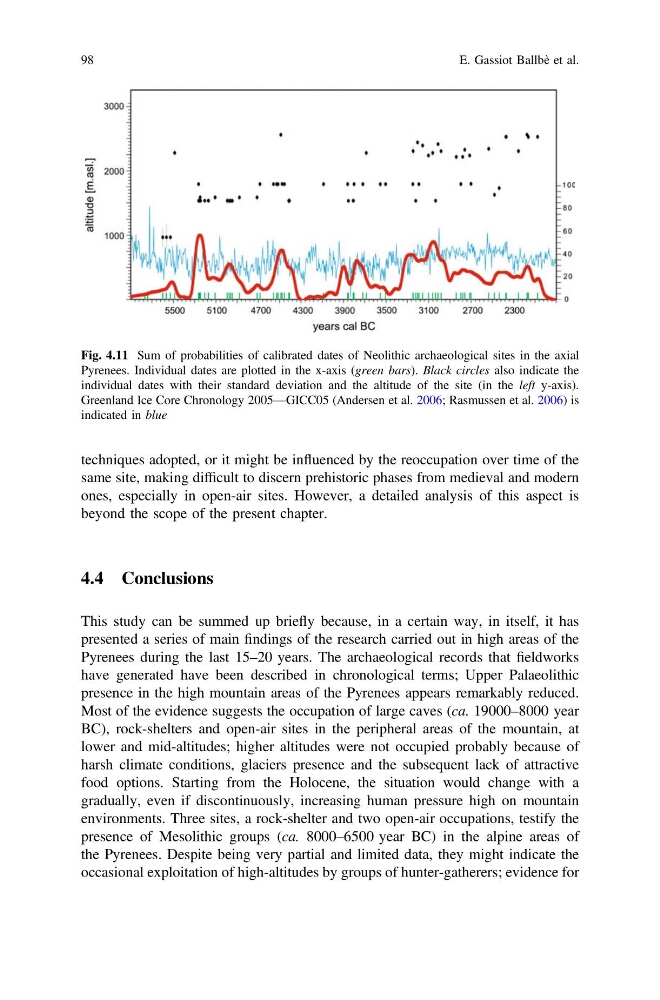
Fig. 4.11 Sum of probabilities of calibrated dates of Neolithic archaeological sites in the axial
Pyrenees. Individual dates are plotted in the x-axis (green bars). Black circles also indicate the
individual dates with their standard deviation and the altitude of the site (in the left y-axis).
Greenland Ice Core Chronology 2005—GICC05 (Andersen et al. 2006; Rasmussen et al. 2006) is
indicated in blue
98
E. Gassiot Ballbè et al.
same site, making difficult to discern prehistoric phases from medieval and modern
ones, especially in open-air sites. However, a detailed analysis of this aspect is
beyond the scope of the present chapter.
4.4 Conclusions
This study can be summed up briefly because, in a certain way, in itself, it has
presented a series of main findings of the research carried out in high areas of the
Pyrenees during the last 15–20 years. The archaeological records that fieldworks
have generated have been described in chronological terms; Upper Palaeolithic
presence in the high mountain areas of the Pyrenees appears remarkably reduced.
Most of the evidence suggests the occupation of large caves (ca. 19000–8000 year
BC), rock-shelters and open-air sites in the peripheral areas of the mountain, at
lower and mid-altitudes; higher altitudes were not occupied probably because of
harsh climate conditions, glaciers presence and the subsequent lack of attractive
food options. Starting from the Holocene, the situation would change with a
gradually, even if discontinuously, increasing human pressure high on mountain
environments. Three sites, a rock-shelter and two open-air occupations, testify the
presence of Mesolithic groups (ca. 8000–6500 year BC) in the alpine areas of
the Pyrenees. Despite being very partial and limited data, they might indicate the
occasional exploitation of high-altitudes by groups of hunter-gatherers; evidence for
Fig. 4.11 Sum of probabilities of calibrated dates of Neolithic archaeological sites in the axial
Pyrenees. Individual dates are plotted in the x-axis (green bars). Black circles also indicate the
individual dates with their standard deviation and the altitude of the site (in the left y-axis).
Greenland Ice Core Chronology 2005—GICC05 (Andersen et al. 2006; Rasmussen et al. 2006) is
indicated in blue
98
E. Gassiot Ballbè et al.