

124
H. Elnaggar et al.
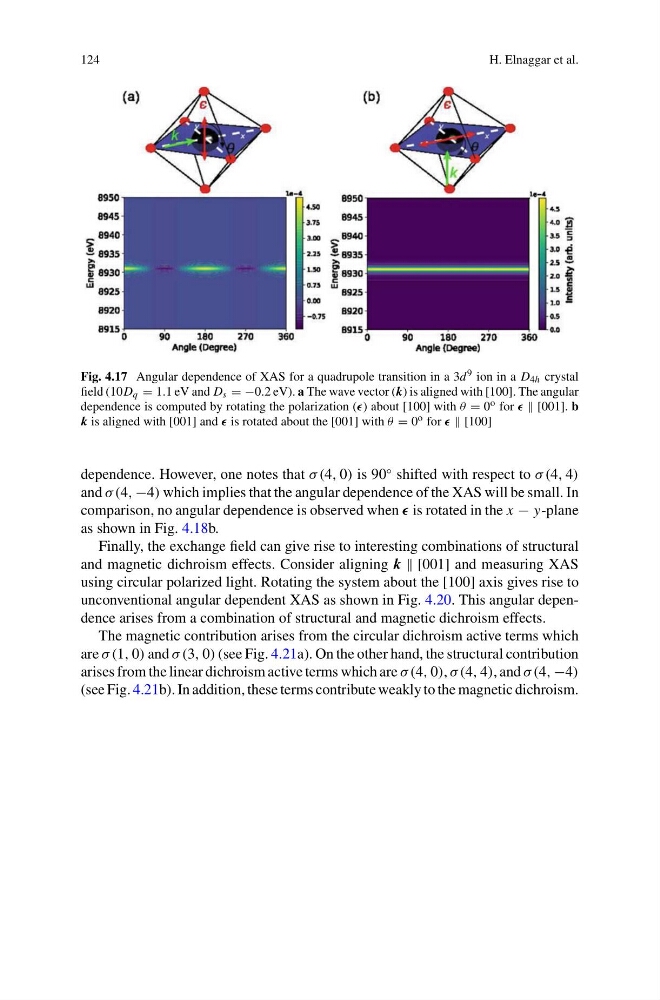
Fig. 4.17 Angular dependence of XAS for a quadrupole transition in a 3d 9 ion in a D 4h crystal
field (10D q = 1.1 eV and D s = −0.2 eV). a The wave vector (k) is aligned with [100]. The angular
dependence is computed by rotating the polarization () about [100] with θ = 0 o for [001]. b
k is aligned with [001] and is rotated about the [001] with θ = 0 o for [100]
dependence. However, one notes that σ (4, 0) is 90
◦ shifted with respect to σ (4, 4)
and σ (4, −4) which implies that the angular dependence of the XAS will be small. In
comparison, no angular dependence is observed when is rotated in the x − y-plane
as shown in Fig. 4.18b.
Finally, the exchange field can give rise to interesting combinations of structural
and magnetic dichroism effects. Consider aligning k [001] and measuring XAS
using circular polarized light. Rotating the system about the [100] axis gives rise to
unconventional angular dependent XAS as shown in Fig. 4.20. This angular dependence arises from a combination of structural and magnetic dichroism effects.
The magnetic contribution arises from the circular dichroism active terms which
are σ (1, 0) and σ (3, 0) (see Fig. 4.21a). On the other hand, the structural contribution
arises from the linear dichroism active terms which are σ (4, 0), σ (4, 4), and σ (4, −4)
(see Fig. 4.21b). In addition, these terms contribute weakly to the magnetic dichroism.
H. Elnaggar et al.
Fig. 4.17 Angular dependence of XAS for a quadrupole transition in a 3d 9 ion in a D 4h crystal
field (10D q = 1.1 eV and D s = −0.2 eV). a The wave vector (k) is aligned with [100]. The angular
dependence is computed by rotating the polarization () about [100] with θ = 0 o for [001]. b
k is aligned with [001] and is rotated about the [001] with θ = 0 o for [100]
dependence. However, one notes that σ (4, 0) is 90
◦ shifted with respect to σ (4, 4)
and σ (4, −4) which implies that the angular dependence of the XAS will be small. In
comparison, no angular dependence is observed when is rotated in the x − y-plane
as shown in Fig. 4.18b.
Finally, the exchange field can give rise to interesting combinations of structural
and magnetic dichroism effects. Consider aligning k [001] and measuring XAS
using circular polarized light. Rotating the system about the [100] axis gives rise to
unconventional angular dependent XAS as shown in Fig. 4.20. This angular dependence arises from a combination of structural and magnetic dichroism effects.
The magnetic contribution arises from the circular dichroism active terms which
are σ (1, 0) and σ (3, 0) (see Fig. 4.21a). On the other hand, the structural contribution
arises from the linear dichroism active terms which are σ (4, 0), σ (4, 4), and σ (4, −4)
(see Fig. 4.21b). In addition, these terms contribute weakly to the magnetic dichroism.