

104
H. Elnaggar et al.
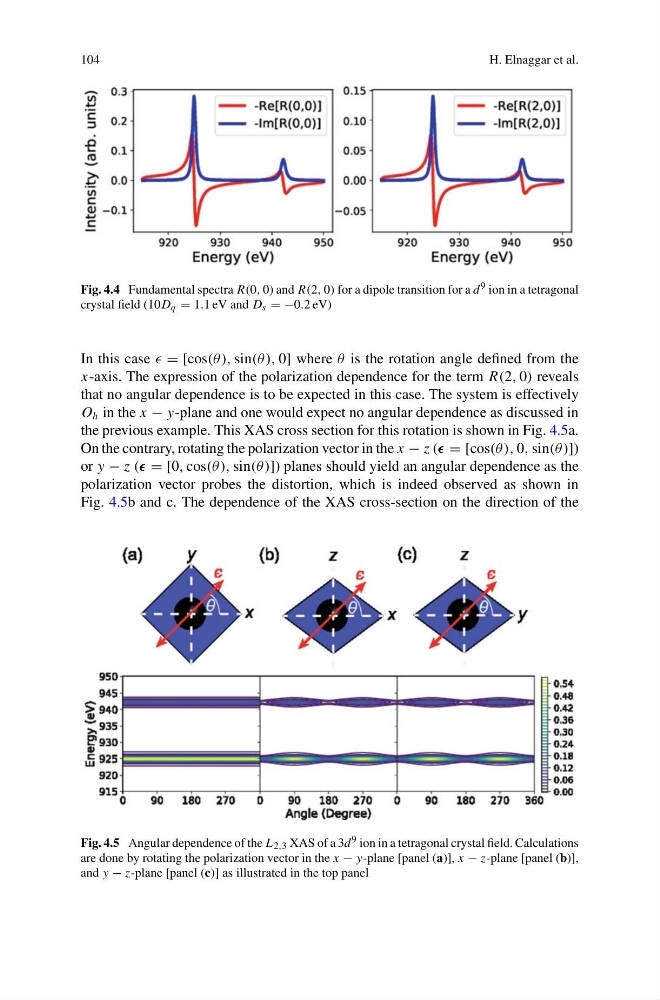
Fig. 4.4 Fundamental spectra R(0, 0) and R(2, 0) for a dipole transition for a d 9 ion in a tetragonal
crystal field (10D q = 1.1 eV and D s = −0.2 eV)
In this case = [cos(θ ), sin(θ ), 0] where θ is the rotation angle defined from the
x-axis. The expression of the polarization dependence for the term R(2, 0) reveals
that no angular dependence is to be expected in this case. The system is effectively
O h in the x − y-plane and one would expect no angular dependence as discussed in
the previous example. This XAS cross section for this rotation is shown in Fig. 4.5a.
On the contrary, rotating the polarization vector in the x − z ( = [cos(θ ), 0, sin(θ )])
or y − z ( = [0, cos(θ ), sin(θ )]) planes should yield an angular dependence as the
polarization vector probes the distortion, which is indeed observed as shown in
Fig. 4.5b and c. The dependence of the XAS cross-section on the direction of the
Fig. 4.5 Angular dependence of the L 2,3 XAS of a 3d 9 ion in a tetragonal crystal field. Calculations
are done by rotating the polarization vector in the x − y-plane [panel (a)], x − z-plane [panel (b)],
and y − z-plane [panel (c)] as illustrated in the top panel
H. Elnaggar et al.
Fig. 4.4 Fundamental spectra R(0, 0) and R(2, 0) for a dipole transition for a d 9 ion in a tetragonal
crystal field (10D q = 1.1 eV and D s = −0.2 eV)
In this case = [cos(θ ), sin(θ ), 0] where θ is the rotation angle defined from the
x-axis. The expression of the polarization dependence for the term R(2, 0) reveals
that no angular dependence is to be expected in this case. The system is effectively
O h in the x − y-plane and one would expect no angular dependence as discussed in
the previous example. This XAS cross section for this rotation is shown in Fig. 4.5a.
On the contrary, rotating the polarization vector in the x − z ( = [cos(θ ), 0, sin(θ )])
or y − z ( = [0, cos(θ ), sin(θ )]) planes should yield an angular dependence as the
polarization vector probes the distortion, which is indeed observed as shown in
Fig. 4.5b and c. The dependence of the XAS cross-section on the direction of the
Fig. 4.5 Angular dependence of the L 2,3 XAS of a 3d 9 ion in a tetragonal crystal field. Calculations
are done by rotating the polarization vector in the x − y-plane [panel (a)], x − z-plane [panel (b)],
and y − z-plane [panel (c)] as illustrated in the top panel