

267
planting, giving people the power to bring nature, biodiversity and food growing to their neighbourhoods. Outreach initiatives such as Woodland Futures
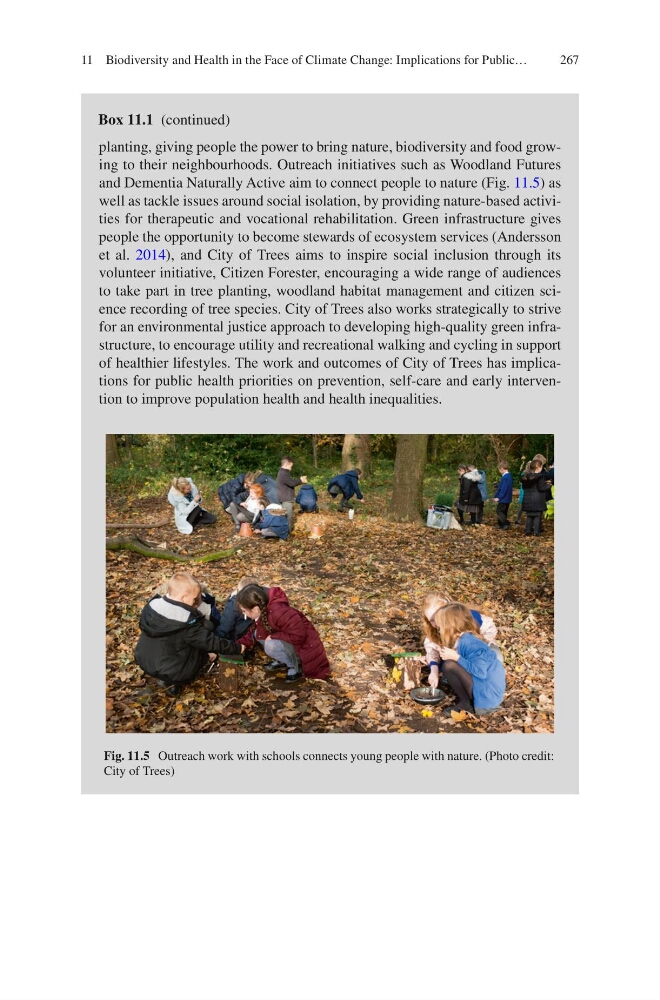
and Dementia Naturally Active aim to connect people to nature (Fig. 11.5) as
well as tackle issues around social isolation, by providing nature-based activities for therapeutic and vocational rehabilitation. Green infrastructure gives
people the opportunity to become stewards of ecosystem services (Andersson
et al. 2014), and City of Trees aims to inspire social inclusion through its
volunteer initiative, Citizen Forester, encouraging a wide range of audiences
to take part in tree planting, woodland habitat management and citizen science recording of tree species. City of Trees also works strategically to strive
for an environmental justice approach to developing high-quality green infrastructure, to encourage utility and recreational walking and cycling in support
of healthier lifestyles. The work and outcomes of City of Trees has implications for public health priorities on prevention, self-care and early intervention to improve population health and health inequalities.
Fig. 11.5 Outreach work with schools connects young people with nature. (Photo credit:
City of Trees)
Box 11.1 (continued)
11 Biodiversity and Health in the Face of Climate Change: Implications for Public…
planting, giving people the power to bring nature, biodiversity and food growing to their neighbourhoods. Outreach initiatives such as Woodland Futures
and Dementia Naturally Active aim to connect people to nature (Fig. 11.5) as
well as tackle issues around social isolation, by providing nature-based activities for therapeutic and vocational rehabilitation. Green infrastructure gives
people the opportunity to become stewards of ecosystem services (Andersson
et al. 2014), and City of Trees aims to inspire social inclusion through its
volunteer initiative, Citizen Forester, encouraging a wide range of audiences
to take part in tree planting, woodland habitat management and citizen science recording of tree species. City of Trees also works strategically to strive
for an environmental justice approach to developing high-quality green infrastructure, to encourage utility and recreational walking and cycling in support
of healthier lifestyles. The work and outcomes of City of Trees has implications for public health priorities on prevention, self-care and early intervention to improve population health and health inequalities.
Fig. 11.5 Outreach work with schools connects young people with nature. (Photo credit:
City of Trees)
Box 11.1 (continued)
11 Biodiversity and Health in the Face of Climate Change: Implications for Public…