

197
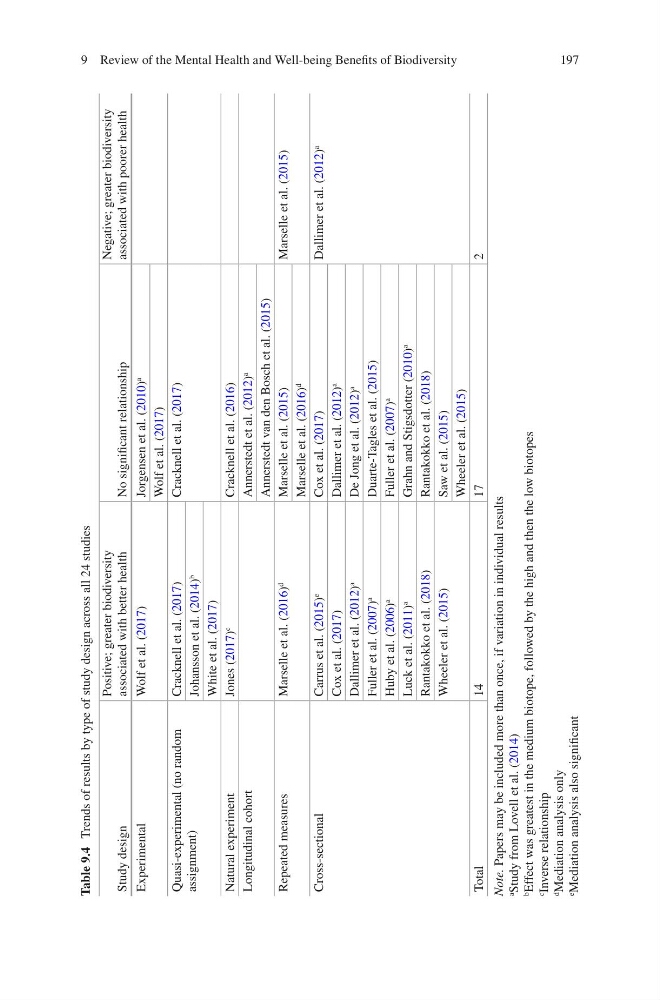
Table 9.4 Trends of results by type of study design across all 24 studies
Study design
Positive; greater biodiversity
associated with better health
No significant relationship
Negative; greater biodiversity
associated with poorer health
Experimental
Wolf et al. (2017)
Jorgensen et al. (2010)
a
Wolf et al. (2017)
Quasi-experimental (no random
assignment)
Cracknell et al. (2017)
Cracknell et al. (2017)
Johansson et al. (2014)
b
White et al. (2017)
Natural experiment
Jones (2017)
c
Cracknell et al. (2016)
Longitudinal cohort
Annerstedt et al. (2012)
a
Annerstedt van den Bosch et al. (2015)
Repeated measures
Marselle et al. (2016)
d
Marselle et al. (2015)
Marselle et al. (2015)
Marselle et al. (2016)
d
Cross-sectional
Carrus et al. (2015)
e
Cox et al. (2017)
Dallimer et al. (2012)
a
Cox et al. (2017)
Dallimer et al. (2012)
a
Dallimer et al. (2012)
a
De Jong et al. (2012)
a
Fuller et al. (2007)
a
Duarte-Tagles et al. (2015)
Huby et al. (2006)
a
Fuller et al. (2007)
a
Luck et al. (2011)
a
Grahn and Stigsdotter (2010)
a
Rantakokko et al. (2018)
Rantakokko et al. (2018)
Wheeler et al. (2015)
Saw et al. (2015)
Wheeler et al. (2015)
Total
14
17
2
Note.
Papers may be included more than once, if variation in individual results
a
Study from Lovell et al. (2014)
b
Effect was greatest in the medium biotope, followed by the high and then the low biotopes
c
Inverse relationship
d
Mediation analysis only
e
Mediation analysis also significant
9 Review of the Mental Health and Well-being Benefits of Biodiversity
Table 9.4 Trends of results by type of study design across all 24 studies
Study design
Positive; greater biodiversity
associated with better health
No significant relationship
Negative; greater biodiversity
associated with poorer health
Experimental
Wolf et al. (2017)
Jorgensen et al. (2010)
a
Wolf et al. (2017)
Quasi-experimental (no random
assignment)
Cracknell et al. (2017)
Cracknell et al. (2017)
Johansson et al. (2014)
b
White et al. (2017)
Natural experiment
Jones (2017)
c
Cracknell et al. (2016)
Longitudinal cohort
Annerstedt et al. (2012)
a
Annerstedt van den Bosch et al. (2015)
Repeated measures
Marselle et al. (2016)
d
Marselle et al. (2015)
Marselle et al. (2015)
Marselle et al. (2016)
d
Cross-sectional
Carrus et al. (2015)
e
Cox et al. (2017)
Dallimer et al. (2012)
a
Cox et al. (2017)
Dallimer et al. (2012)
a
Dallimer et al. (2012)
a
De Jong et al. (2012)
a
Fuller et al. (2007)
a
Duarte-Tagles et al. (2015)
Huby et al. (2006)
a
Fuller et al. (2007)
a
Luck et al. (2011)
a
Grahn and Stigsdotter (2010)
a
Rantakokko et al. (2018)
Rantakokko et al. (2018)
Wheeler et al. (2015)
Saw et al. (2015)
Wheeler et al. (2015)
Total
14
17
2
Note.
Papers may be included more than once, if variation in individual results
a
Study from Lovell et al. (2014)
b
Effect was greatest in the medium biotope, followed by the high and then the low biotopes
c
Inverse relationship
d
Mediation analysis only
e
Mediation analysis also significant
9 Review of the Mental Health and Well-being Benefits of Biodiversity