

190
9.3.1.2 Participants
The number of participants varied considerably among the recently published studies: ranging from 35 (Johansson et al. 2014) through to the millions (with the use of
data from the national census, Wheeler et al. 2015). Participant type also differed,
including university students (Cracknell et al. 2016, 2017; Saw et al. 2015) and staff
(Johansson et al. 2014), adults participating over the internet (White et al. 2017;
Wolf et al. 2017), group walkers over the age of 55 (Marselle et al. 2015; Marselle
et al. 2016), park users (Carrus et al. 2015), visitors to forests (Foo 2016), and residents of specific countries or regions as previously detailed (Annerstedt van den
Bosch 2015; Cox et al. 2017; Duarte-Tagles et al. 2015; Jones 2017; Rantakokko
et al. 2018; Wheeler et al. 2015).
9.3.1.3 Theoretical Position
Where articulated, the theoretical underpinnings largely reflected the dominant
understandings of environment-health linkages (for further discussion on biodiversity and health theories, see Marselle Chap. 7, this volume). Specifically, 9 studies
(Annerstedt van den Bosch, et al. 2015; Cox et al. 2017; Cracknell et al. 2016, 2017;
Foo 2016; Marselle et al. 2015, 2016; Saw et al. 2015; White et al. 2017) used the
Attention Restoration Theory (Kaplan and Kaplan 1989; Kaplan 1995) and the
Stress Reduction Theory (Ulrich 1983; Ulrich et al. 1991) to explain the effects of
biodiversity on mental health and/or well-being. Additionally, the Biophilia hypothesis (Kellert and Wilson 1993) was also mentioned (Annerstedt van den Bosch et al.
Experimental
Quasi-experimental
Natural experiment
Longitudinal (cohort)
Repeated measures
Cross-sectional
0
2
4
Number of studies
Type of study design
6
8
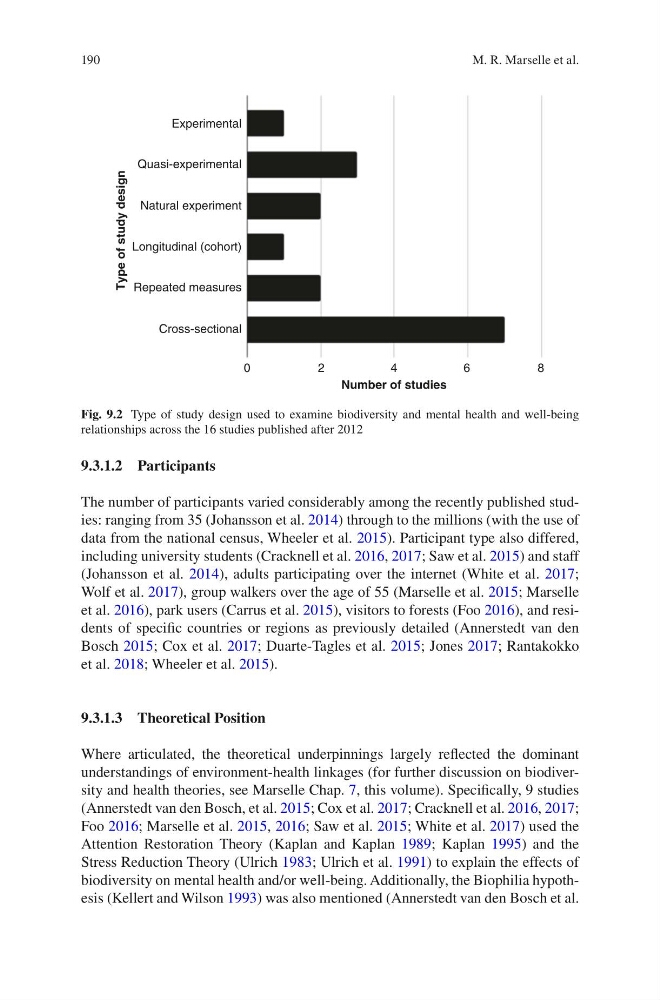
Fig. 9.2 Type of study design used to examine biodiversity and mental health and well-being
relationships across the 16 studies published after 2012
M. R. Marselle et al.
9.3.1.2 Participants
The number of participants varied considerably among the recently published studies: ranging from 35 (Johansson et al. 2014) through to the millions (with the use of
data from the national census, Wheeler et al. 2015). Participant type also differed,
including university students (Cracknell et al. 2016, 2017; Saw et al. 2015) and staff
(Johansson et al. 2014), adults participating over the internet (White et al. 2017;
Wolf et al. 2017), group walkers over the age of 55 (Marselle et al. 2015; Marselle
et al. 2016), park users (Carrus et al. 2015), visitors to forests (Foo 2016), and residents of specific countries or regions as previously detailed (Annerstedt van den
Bosch 2015; Cox et al. 2017; Duarte-Tagles et al. 2015; Jones 2017; Rantakokko
et al. 2018; Wheeler et al. 2015).
9.3.1.3 Theoretical Position
Where articulated, the theoretical underpinnings largely reflected the dominant
understandings of environment-health linkages (for further discussion on biodiversity and health theories, see Marselle Chap. 7, this volume). Specifically, 9 studies
(Annerstedt van den Bosch, et al. 2015; Cox et al. 2017; Cracknell et al. 2016, 2017;
Foo 2016; Marselle et al. 2015, 2016; Saw et al. 2015; White et al. 2017) used the
Attention Restoration Theory (Kaplan and Kaplan 1989; Kaplan 1995) and the
Stress Reduction Theory (Ulrich 1983; Ulrich et al. 1991) to explain the effects of
biodiversity on mental health and/or well-being. Additionally, the Biophilia hypothesis (Kellert and Wilson 1993) was also mentioned (Annerstedt van den Bosch et al.
Experimental
Quasi-experimental
Natural experiment
Longitudinal (cohort)
Repeated measures
Cross-sectional
0
2
4
Number of studies
Type of study design
6
8
Fig. 9.2 Type of study design used to examine biodiversity and mental health and well-being
relationships across the 16 studies published after 2012
M. R. Marselle et al.