

148
7.4 Ecosystem Services Cascade Model
The Ecosystem Service Cascade Model details the links between biodiversity and
human well-being (Haines-Young and Potschin 2010; Potschin and Haines-Young
2011). The model proposes causal pathways through which biodiversity benefits
human well-being through ecosystem functions and services (Potschin and HainesYoung 2011) (see Fig. 7.4). These causal pathways are described as steps that cascade into one another. According to the Cascade Model, biophysical structures or
processes are responsible for ecosystem functions, and ecosystem functions influence ecosystem services, which, in turn, result in ecosystem benefits.
The Ecosystem Service Cascade Model has an anthropocentric and utilitarian
viewpoint of nature, meaning that an ecosystem service can only be a service if
humans experience that service to be useful and beneficial (Haines-Young and
Potschin 2010; Potschin and Haines-Young 2011). Thus, an ecosystem service is
not a fundamental property of the ecosystem itself, but something that is useful to
humans (Haines-Young and Potschin 2010). The Convention of Biological Diversity
(United Nations Convention of Biological Diversity 1992) considers ecosystem services as a matter of societal choice in which different sectors of society may derive
different economic, cultural and societal needs from ecosystems. Therefore, ecosystem services are not isolated from people’s needs (Haines-Young and Potschin
2010) and are defined as “something that changes the level of [human] well-being”
(Haines-Young and Potschin 2010, p. 117). An ecosystem benefit is “something that
directly impacts on the welfare of the people” (Haines-Young and Potschin 2010,
p. 117). Ecosystem benefits represent the many ways biodiversity can contribute to
human well-being (Mace et al. 2012) through, for example, regulation of water
quality for better drinking water, a more satisfying fishing trip (Haines-Young and
Potschin 2010), improved human health (Sandifer et al. 2015) or increased feelings
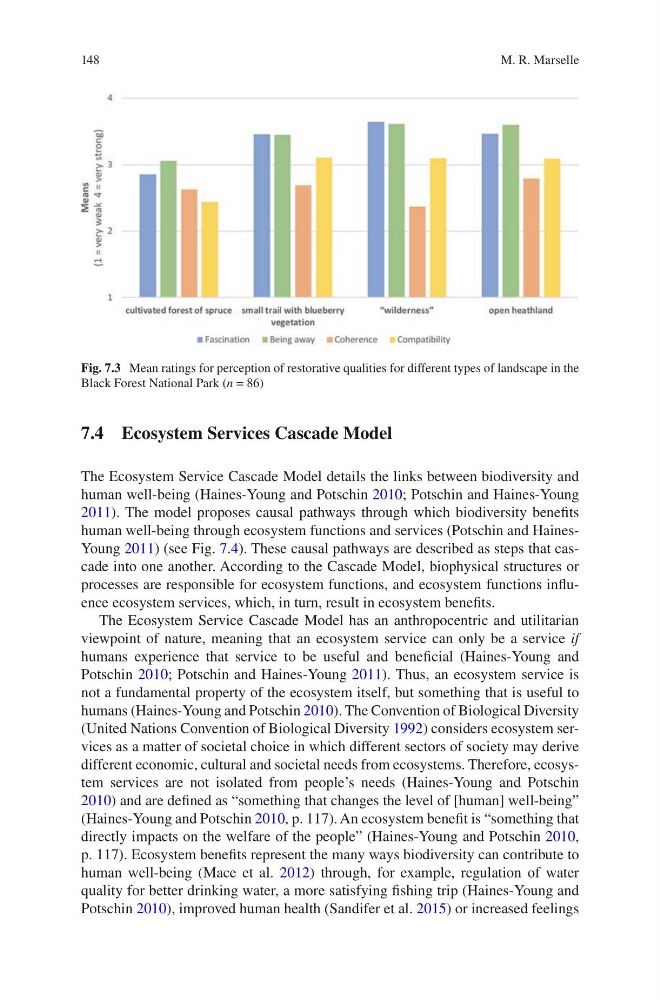
Fig. 7.3 Mean ratings for perception of restorative qualities for different types of landscape in the
Black Forest National Park (n = 86)
M. R. Marselle
7.4 Ecosystem Services Cascade Model
The Ecosystem Service Cascade Model details the links between biodiversity and
human well-being (Haines-Young and Potschin 2010; Potschin and Haines-Young
2011). The model proposes causal pathways through which biodiversity benefits
human well-being through ecosystem functions and services (Potschin and HainesYoung 2011) (see Fig. 7.4). These causal pathways are described as steps that cascade into one another. According to the Cascade Model, biophysical structures or
processes are responsible for ecosystem functions, and ecosystem functions influence ecosystem services, which, in turn, result in ecosystem benefits.
The Ecosystem Service Cascade Model has an anthropocentric and utilitarian
viewpoint of nature, meaning that an ecosystem service can only be a service if
humans experience that service to be useful and beneficial (Haines-Young and
Potschin 2010; Potschin and Haines-Young 2011). Thus, an ecosystem service is
not a fundamental property of the ecosystem itself, but something that is useful to
humans (Haines-Young and Potschin 2010). The Convention of Biological Diversity
(United Nations Convention of Biological Diversity 1992) considers ecosystem services as a matter of societal choice in which different sectors of society may derive
different economic, cultural and societal needs from ecosystems. Therefore, ecosystem services are not isolated from people’s needs (Haines-Young and Potschin
2010) and are defined as “something that changes the level of [human] well-being”
(Haines-Young and Potschin 2010, p. 117). An ecosystem benefit is “something that
directly impacts on the welfare of the people” (Haines-Young and Potschin 2010,
p. 117). Ecosystem benefits represent the many ways biodiversity can contribute to
human well-being (Mace et al. 2012) through, for example, regulation of water
quality for better drinking water, a more satisfying fishing trip (Haines-Young and
Potschin 2010), improved human health (Sandifer et al. 2015) or increased feelings
Fig. 7.3 Mean ratings for perception of restorative qualities for different types of landscape in the
Black Forest National Park (n = 86)
M. R. Marselle