

84
References
Adhami J, Reiter P (1998) Introduction and establishment of Aedes (Stegomyia) albopictus Skuse
(Diptera: Culicidae) in Albania. J Am Mosq Control Assoc 14(3):340–343
Agossa FR, Padonou GG, Koukpo CZ, Zola-Sahossi J, Azondekon R, Akuoko OK, Ahoga J,
N’dombidje B, Akinro B, Fassinou AJYH, Sezonlin M, Sezonlin M (2018) Efficacy of a novel
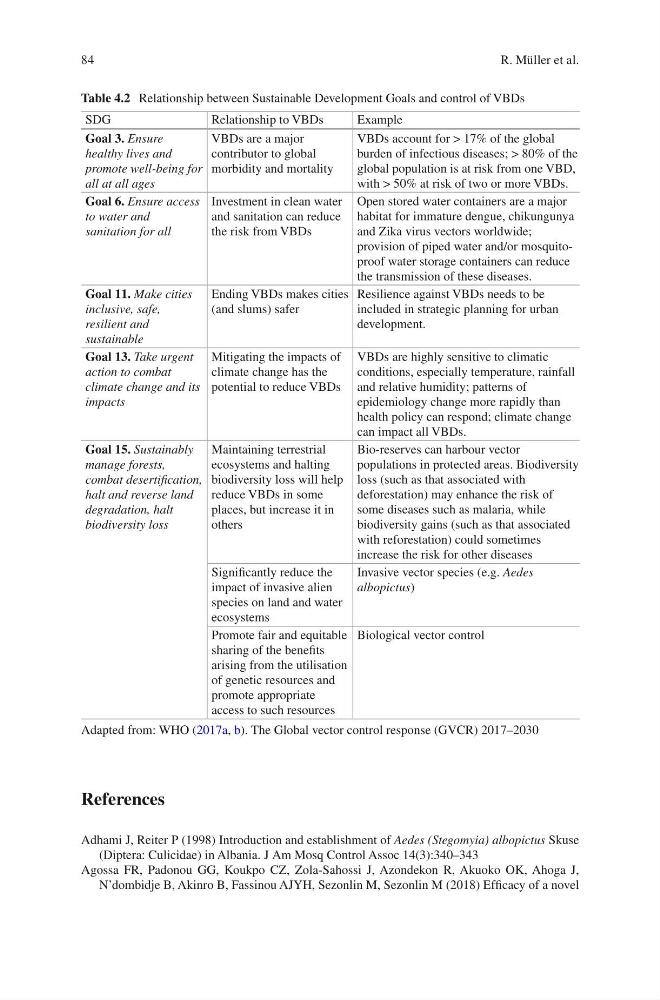
Table 4.2 Relationship between Sustainable Development Goals and control of VBDs
SDG
Relationship to VBDs
Example
Goal 3. Ensure
healthy lives and
promote well- being for
all at all ages
VBDs are a major
contributor to global
morbidity and mortality
VBDs account for > 17% of the global
burden of infectious diseases; > 80% of the
global population is at risk from one VBD,
with > 50% at risk of two or more VBDs.
Goal 6. Ensure access
to water and
sanitation for all
Investment in clean water
and sanitation can reduce
the risk from VBDs
Open stored water containers are a major
habitat for immature dengue, chikungunya
and Zika virus vectors worldwide;
provision of piped water and/or mosquitoproof water storage containers can reduce
the transmission of these diseases.
Goal 11. Make cities
inclusive, safe,
resilient and
sustainable
Ending VBDs makes cities
(and slums) safer
Resilience against VBDs needs to be
included in strategic planning for urban
development.
Goal 13. Take urgent
action to combat
climate change and its
impacts
Mitigating the impacts of
climate change has the
potential to reduce VBDs
VBDs are highly sensitive to climatic
conditions, especially temperature, rainfall
and relative humidity; patterns of
epidemiology change more rapidly than
health policy can respond; climate change
can impact all VBDs.
Goal 15. Sustainably
manage forests,
combat desertification,
halt and reverse land
degradation, halt
biodiversity loss
Maintaining terrestrial
ecosystems and halting
biodiversity loss will help
reduce VBDs in some
places, but increase it in
others
Bio-reserves can harbour vector
populations in protected areas. Biodiversity
loss (such as that associated with
deforestation) may enhance the risk of
some diseases such as malaria, while
biodiversity gains (such as that associated
with reforestation) could sometimes
increase the risk for other diseases
Significantly reduce the
impact of invasive alien
species on land and water
ecosystems
Invasive vector species (e.g. Aedes
albopictus)
Promote fair and equitable
sharing of the benefits
arising from the utilisation
of genetic resources and
promote appropriate
access to such resources
Biological vector control
Adapted from: WHO (2017a, b). The Global vector control response (GVCR) 2017–2030
R. Müller et al.
References
Adhami J, Reiter P (1998) Introduction and establishment of Aedes (Stegomyia) albopictus Skuse
(Diptera: Culicidae) in Albania. J Am Mosq Control Assoc 14(3):340–343
Agossa FR, Padonou GG, Koukpo CZ, Zola-Sahossi J, Azondekon R, Akuoko OK, Ahoga J,
N’dombidje B, Akinro B, Fassinou AJYH, Sezonlin M, Sezonlin M (2018) Efficacy of a novel
Table 4.2 Relationship between Sustainable Development Goals and control of VBDs
SDG
Relationship to VBDs
Example
Goal 3. Ensure
healthy lives and
promote well- being for
all at all ages
VBDs are a major
contributor to global
morbidity and mortality
VBDs account for > 17% of the global
burden of infectious diseases; > 80% of the
global population is at risk from one VBD,
with > 50% at risk of two or more VBDs.
Goal 6. Ensure access
to water and
sanitation for all
Investment in clean water
and sanitation can reduce
the risk from VBDs
Open stored water containers are a major
habitat for immature dengue, chikungunya
and Zika virus vectors worldwide;
provision of piped water and/or mosquitoproof water storage containers can reduce
the transmission of these diseases.
Goal 11. Make cities
inclusive, safe,
resilient and
sustainable
Ending VBDs makes cities
(and slums) safer
Resilience against VBDs needs to be
included in strategic planning for urban
development.
Goal 13. Take urgent
action to combat
climate change and its
impacts
Mitigating the impacts of
climate change has the
potential to reduce VBDs
VBDs are highly sensitive to climatic
conditions, especially temperature, rainfall
and relative humidity; patterns of
epidemiology change more rapidly than
health policy can respond; climate change
can impact all VBDs.
Goal 15. Sustainably
manage forests,
combat desertification,
halt and reverse land
degradation, halt
biodiversity loss
Maintaining terrestrial
ecosystems and halting
biodiversity loss will help
reduce VBDs in some
places, but increase it in
others
Bio-reserves can harbour vector
populations in protected areas. Biodiversity
loss (such as that associated with
deforestation) may enhance the risk of
some diseases such as malaria, while
biodiversity gains (such as that associated
with reforestation) could sometimes
increase the risk for other diseases
Significantly reduce the
impact of invasive alien
species on land and water
ecosystems
Invasive vector species (e.g. Aedes
albopictus)
Promote fair and equitable
sharing of the benefits
arising from the utilisation
of genetic resources and
promote appropriate
access to such resources
Biological vector control
Adapted from: WHO (2017a, b). The Global vector control response (GVCR) 2017–2030
R. Müller et al.