

56
Z. Zhao et al.
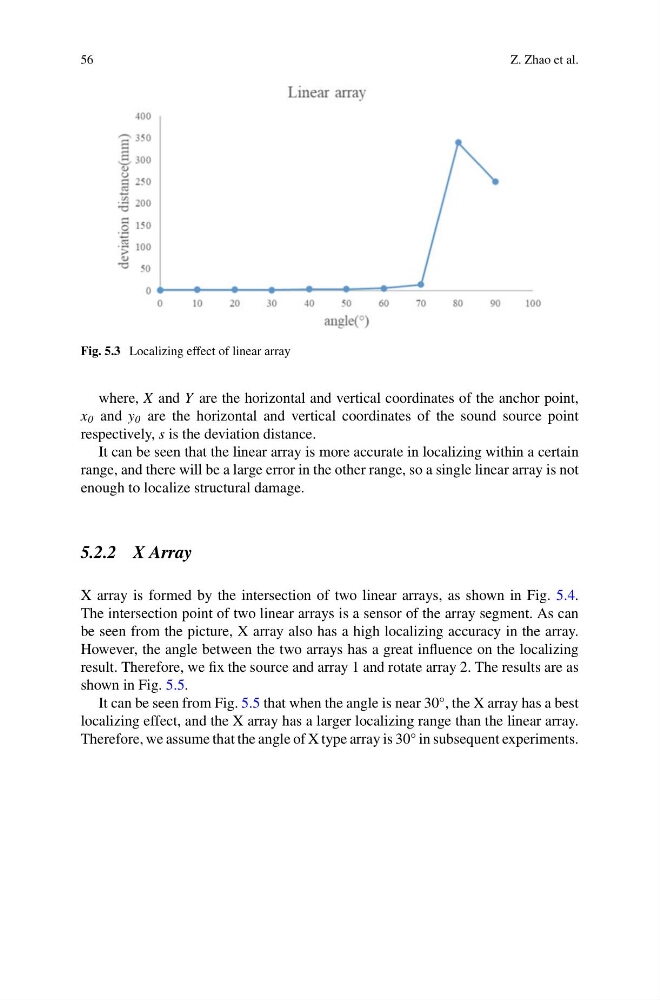
Fig. 5.3 Localizing effect of linear array
where, X and Y are the horizontal and vertical coordinates of the anchor point,
x 0 and y 0 are the horizontal and vertical coordinates of the sound source point
respectively, s is the deviation distance.
It can be seen that the linear array is more accurate in localizing within a certain
range, and there will be a large error in the other range, so a single linear array is not
enough to localize structural damage.
5.2.2 X Array
X array is formed by the intersection of two linear arrays, as shown in Fig. 5.4.
The intersection point of two linear arrays is a sensor of the array segment. As can
be seen from the picture, X array also has a high localizing accuracy in the array.
However, the angle between the two arrays has a great influence on the localizing
result. Therefore, we fix the source and array 1 and rotate array 2. The results are as
shown in Fig. 5.5.
It can be seen from Fig. 5.5 that when the angle is near 30°, the X array has a best
localizing effect, and the X array has a larger localizing range than the linear array.
Therefore, we assume that the angle of X type array is 30° in subsequent experiments.
Z. Zhao et al.
Fig. 5.3 Localizing effect of linear array
where, X and Y are the horizontal and vertical coordinates of the anchor point,
x 0 and y 0 are the horizontal and vertical coordinates of the sound source point
respectively, s is the deviation distance.
It can be seen that the linear array is more accurate in localizing within a certain
range, and there will be a large error in the other range, so a single linear array is not
enough to localize structural damage.
5.2.2 X Array
X array is formed by the intersection of two linear arrays, as shown in Fig. 5.4.
The intersection point of two linear arrays is a sensor of the array segment. As can
be seen from the picture, X array also has a high localizing accuracy in the array.
However, the angle between the two arrays has a great influence on the localizing
result. Therefore, we fix the source and array 1 and rotate array 2. The results are as
shown in Fig. 5.5.
It can be seen from Fig. 5.5 that when the angle is near 30°, the X array has a best
localizing effect, and the X array has a larger localizing range than the linear array.
Therefore, we assume that the angle of X type array is 30° in subsequent experiments.