

46 Bearing Fault Diagnosis Using Grad-CAM …
533
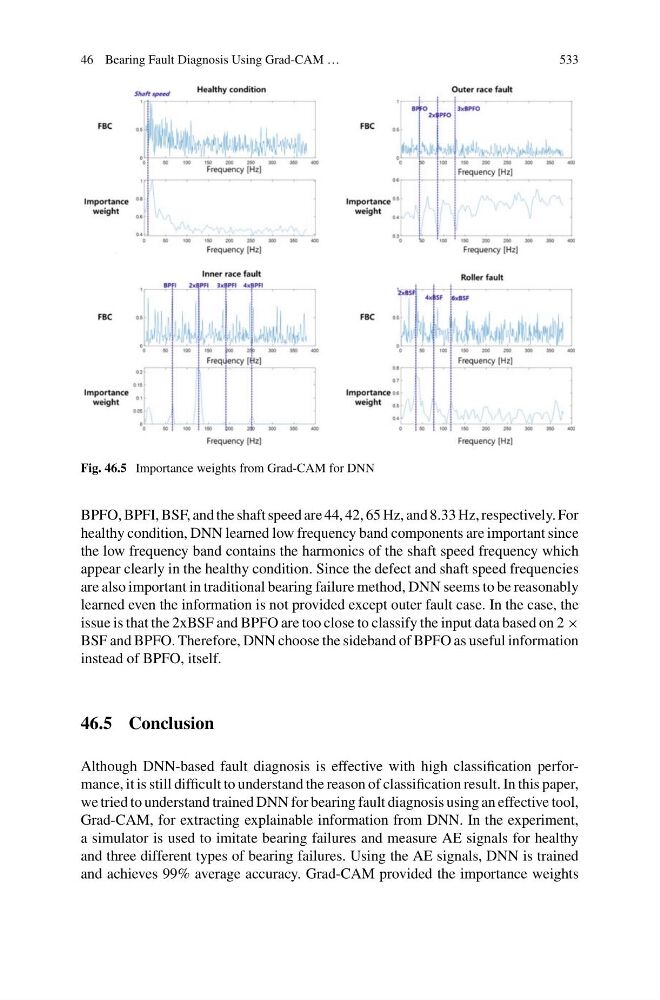
Fig. 46.5 Importance weights from Grad-CAM for DNN
BPFO, BPFI, BSF, and the shaft speed are 44, 42, 65 Hz, and 8.33 Hz, respectively. For
healthy condition, DNN learned low frequency band components are important since
the low frequency band contains the harmonics of the shaft speed frequency which
appear clearly in the healthy condition. Since the defect and shaft speed frequencies
are also important in traditional bearing failure method, DNN seems to be reasonably
learned even the information is not provided except outer fault case. In the case, the
issue is that the 2xBSF and BPFO are too close to classify the input data based on 2 ×
BSF and BPFO. Therefore, DNN choose the sideband of BPFO as useful information
instead of BPFO, itself.
46.5 Conclusion
Although DNN-based fault diagnosis is effective with high classification performance, it is still difficult to understand the reason of classification result. In this paper,
we tried to understand trained DNN for bearing fault diagnosis using an effective tool,
Grad-CAM, for extracting explainable information from DNN. In the experiment,
a simulator is used to imitate bearing failures and measure AE signals for healthy
and three different types of bearing failures. Using the AE signals, DNN is trained
and achieves 99% average accuracy. Grad-CAM provided the importance weights
533
Fig. 46.5 Importance weights from Grad-CAM for DNN
BPFO, BPFI, BSF, and the shaft speed are 44, 42, 65 Hz, and 8.33 Hz, respectively. For
healthy condition, DNN learned low frequency band components are important since
the low frequency band contains the harmonics of the shaft speed frequency which
appear clearly in the healthy condition. Since the defect and shaft speed frequencies
are also important in traditional bearing failure method, DNN seems to be reasonably
learned even the information is not provided except outer fault case. In the case, the
issue is that the 2xBSF and BPFO are too close to classify the input data based on 2 ×
BSF and BPFO. Therefore, DNN choose the sideband of BPFO as useful information
instead of BPFO, itself.
46.5 Conclusion
Although DNN-based fault diagnosis is effective with high classification performance, it is still difficult to understand the reason of classification result. In this paper,
we tried to understand trained DNN for bearing fault diagnosis using an effective tool,
Grad-CAM, for extracting explainable information from DNN. In the experiment,
a simulator is used to imitate bearing failures and measure AE signals for healthy
and three different types of bearing failures. Using the AE signals, DNN is trained
and achieves 99% average accuracy. Grad-CAM provided the importance weights