

11 Improving Bearing Diagnostic Performance …
119
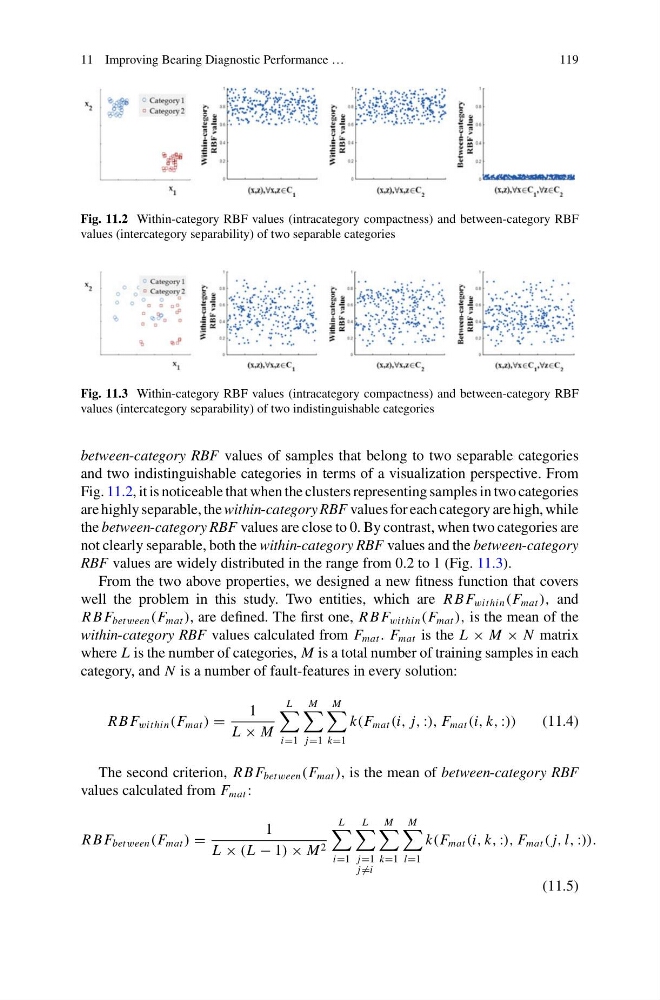
Fig. 11.2 Within-category RBF values (intracategory compactness) and between-category RBF
values (intercategory separability) of two separable categories
Fig. 11.3 Within-category RBF values (intracategory compactness) and between-category RBF
values (intercategory separability) of two indistinguishable categories
between-category RBF values of samples that belong to two separable categories
and two indistinguishable categories in terms of a visualization perspective. From
Fig. 11.2, it is noticeable that when the clusters representing samples in two categories
are highly separable, the within-category RBF values for each category are high, while
the between-category RBF values are close to 0. By contrast, when two categories are
not clearly separable, both the within-category RBF values and the between-category
RBF values are widely distributed in the range from 0.2 to 1 (Fig. 11.3).
From the two above properties, we designed a new fitness function that covers
well the problem in this study. Two entities, which are R B F within (F mat ), and
R B F between (F mat ), are defined. The first one, R B F within (F mat ), is the mean of the
within-category RBF values calculated from F mat . F mat is the L × M × N matrix
where L is the number of categories, M is a total number of training samples in each
category, and N is a number of fault-features in every solution:
R B F within (F mat ) =
1
L × M
L
i=1
M
j=1
M
k=1
k(F mat (i, j, :), F mat (i, k, :))
(11.4)
The second criterion, R B F between (F mat ), is the mean of between-category RBF
values calculated from F mat :
R B F between (F mat ) =
1
L × (L − 1) × M 2
L
i=1
L
j=1
j =i
M
k=1
M
l=1
k(F mat (i, k, :), F mat ( j, l, :)).
(11.5)
119
Fig. 11.2 Within-category RBF values (intracategory compactness) and between-category RBF
values (intercategory separability) of two separable categories
Fig. 11.3 Within-category RBF values (intracategory compactness) and between-category RBF
values (intercategory separability) of two indistinguishable categories
between-category RBF values of samples that belong to two separable categories
and two indistinguishable categories in terms of a visualization perspective. From
Fig. 11.2, it is noticeable that when the clusters representing samples in two categories
are highly separable, the within-category RBF values for each category are high, while
the between-category RBF values are close to 0. By contrast, when two categories are
not clearly separable, both the within-category RBF values and the between-category
RBF values are widely distributed in the range from 0.2 to 1 (Fig. 11.3).
From the two above properties, we designed a new fitness function that covers
well the problem in this study. Two entities, which are R B F within (F mat ), and
R B F between (F mat ), are defined. The first one, R B F within (F mat ), is the mean of the
within-category RBF values calculated from F mat . F mat is the L × M × N matrix
where L is the number of categories, M is a total number of training samples in each
category, and N is a number of fault-features in every solution:
R B F within (F mat ) =
1
L × M
L
i=1
M
j=1
M
k=1
k(F mat (i, j, :), F mat (i, k, :))
(11.4)
The second criterion, R B F between (F mat ), is the mean of between-category RBF
values calculated from F mat :
R B F between (F mat ) =
1
L × (L − 1) × M 2
L
i=1
L
j=1
j =i
M
k=1
M
l=1
k(F mat (i, k, :), F mat ( j, l, :)).
(11.5)