

Laser Induced Micro/Nano …
453
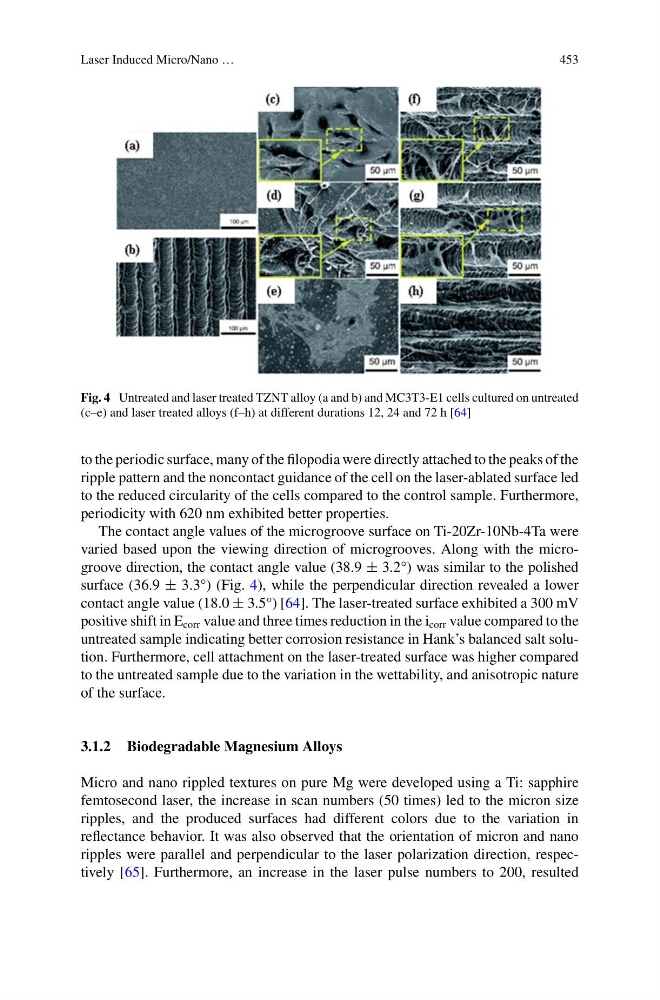
Fig. 4 Untreated and laser treated TZNT alloy (a and b) and MC3T3-E1 cells cultured on untreated
(c–e) and laser treated alloys (f–h) at different durations 12, 24 and 72 h [64]
to the periodic surface, many of the filopodia were directly attached to the peaks of the
ripple pattern and the noncontact guidance of the cell on the laser-ablated surface led
to the reduced circularity of the cells compared to the control sample. Furthermore,
periodicity with 620 nm exhibited better properties.
The contact angle values of the microgroove surface on Ti-20Zr-10Nb-4Ta were
varied based upon the viewing direction of microgrooves. Along with the microgroove direction, the contact angle value (38.9 ± 3.2°) was similar to the polished
surface (36.9 ± 3.3°) (Fig. 4), while the perpendicular direction revealed a lower
contact angle value (18.0 ± 3.5°) [64]. The laser-treated surface exhibited a 300 mV
positive shift in E corr value and three times reduction in the i corr value compared to the
untreated sample indicating better corrosion resistance in Hank’s balanced salt solution. Furthermore, cell attachment on the laser-treated surface was higher compared
to the untreated sample due to the variation in the wettability, and anisotropic nature
of the surface.
3.1.2 Biodegradable Magnesium Alloys
Micro and nano rippled textures on pure Mg were developed using a Ti: sapphire
femtosecond laser, the increase in scan numbers (50 times) led to the micron size
ripples, and the produced surfaces had different colors due to the variation in
reflectance behavior. It was also observed that the orientation of micron and nano
ripples were parallel and perpendicular to the laser polarization direction, respectively [65]. Furthermore, an increase in the laser pulse numbers to 200, resulted
453
Fig. 4 Untreated and laser treated TZNT alloy (a and b) and MC3T3-E1 cells cultured on untreated
(c–e) and laser treated alloys (f–h) at different durations 12, 24 and 72 h [64]
to the periodic surface, many of the filopodia were directly attached to the peaks of the
ripple pattern and the noncontact guidance of the cell on the laser-ablated surface led
to the reduced circularity of the cells compared to the control sample. Furthermore,
periodicity with 620 nm exhibited better properties.
The contact angle values of the microgroove surface on Ti-20Zr-10Nb-4Ta were
varied based upon the viewing direction of microgrooves. Along with the microgroove direction, the contact angle value (38.9 ± 3.2°) was similar to the polished
surface (36.9 ± 3.3°) (Fig. 4), while the perpendicular direction revealed a lower
contact angle value (18.0 ± 3.5°) [64]. The laser-treated surface exhibited a 300 mV
positive shift in E corr value and three times reduction in the i corr value compared to the
untreated sample indicating better corrosion resistance in Hank’s balanced salt solution. Furthermore, cell attachment on the laser-treated surface was higher compared
to the untreated sample due to the variation in the wettability, and anisotropic nature
of the surface.
3.1.2 Biodegradable Magnesium Alloys
Micro and nano rippled textures on pure Mg were developed using a Ti: sapphire
femtosecond laser, the increase in scan numbers (50 times) led to the micron size
ripples, and the produced surfaces had different colors due to the variation in
reflectance behavior. It was also observed that the orientation of micron and nano
ripples were parallel and perpendicular to the laser polarization direction, respectively [65]. Furthermore, an increase in the laser pulse numbers to 200, resulted