

444
S. Arthanari et al.
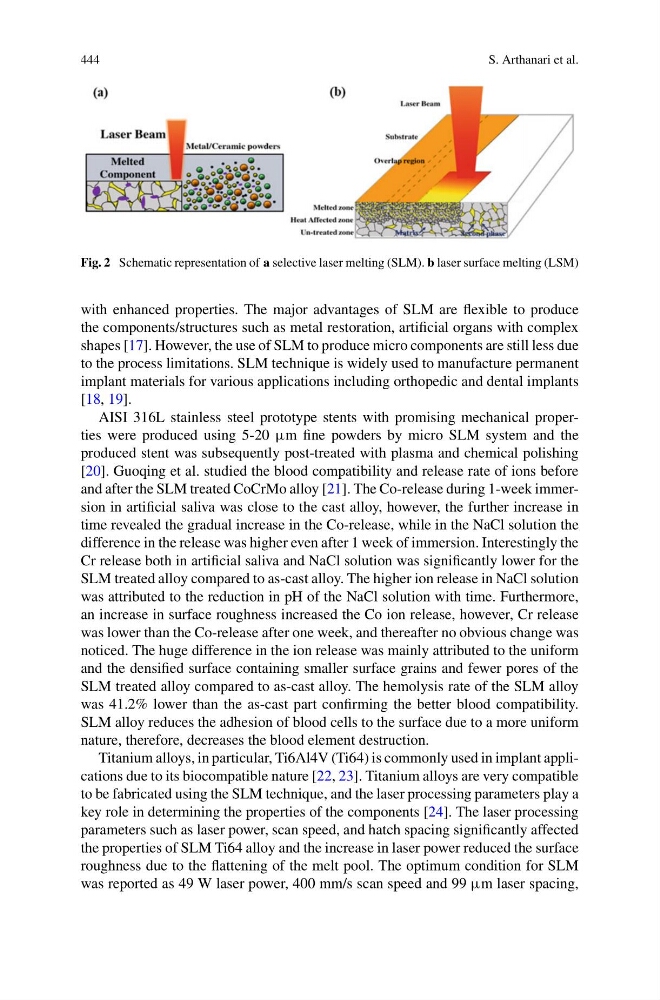
Fig. 2 Schematic representation of a selective laser melting (SLM). b laser surface melting (LSM)
with enhanced properties. The major advantages of SLM are flexible to produce
the components/structures such as metal restoration, artificial organs with complex
shapes [17]. However, the use of SLM to produce micro components are still less due
to the process limitations. SLM technique is widely used to manufacture permanent
implant materials for various applications including orthopedic and dental implants
[18, 19].
AISI 316L stainless steel prototype stents with promising mechanical properties were produced using 5-20 μm fine powders by micro SLM system and the
produced stent was subsequently post-treated with plasma and chemical polishing
[20]. Guoqing et al. studied the blood compatibility and release rate of ions before
and after the SLM treated CoCrMo alloy [21]. The Co-release during 1-week immersion in artificial saliva was close to the cast alloy, however, the further increase in
time revealed the gradual increase in the Co-release, while in the NaCl solution the
difference in the release was higher even after 1 week of immersion. Interestingly the
Cr release both in artificial saliva and NaCl solution was significantly lower for the
SLM treated alloy compared to as-cast alloy. The higher ion release in NaCl solution
was attributed to the reduction in pH of the NaCl solution with time. Furthermore,
an increase in surface roughness increased the Co ion release, however, Cr release
was lower than the Co-release after one week, and thereafter no obvious change was
noticed. The huge difference in the ion release was mainly attributed to the uniform
and the densified surface containing smaller surface grains and fewer pores of the
SLM treated alloy compared to as-cast alloy. The hemolysis rate of the SLM alloy
was 41.2% lower than the as-cast part confirming the better blood compatibility.
SLM alloy reduces the adhesion of blood cells to the surface due to a more uniform
nature, therefore, decreases the blood element destruction.
Titanium alloys, in particular, Ti6Al4V (Ti64) is commonly used in implant applications due to its biocompatible nature [22, 23]. Titanium alloys are very compatible
to be fabricated using the SLM technique, and the laser processing parameters play a
key role in determining the properties of the components [24]. The laser processing
parameters such as laser power, scan speed, and hatch spacing significantly affected
the properties of SLM Ti64 alloy and the increase in laser power reduced the surface
roughness due to the flattening of the melt pool. The optimum condition for SLM
was reported as 49 W laser power, 400 mm/s scan speed and 99 μm laser spacing,
S. Arthanari et al.
Fig. 2 Schematic representation of a selective laser melting (SLM). b laser surface melting (LSM)
with enhanced properties. The major advantages of SLM are flexible to produce
the components/structures such as metal restoration, artificial organs with complex
shapes [17]. However, the use of SLM to produce micro components are still less due
to the process limitations. SLM technique is widely used to manufacture permanent
implant materials for various applications including orthopedic and dental implants
[18, 19].
AISI 316L stainless steel prototype stents with promising mechanical properties were produced using 5-20 μm fine powders by micro SLM system and the
produced stent was subsequently post-treated with plasma and chemical polishing
[20]. Guoqing et al. studied the blood compatibility and release rate of ions before
and after the SLM treated CoCrMo alloy [21]. The Co-release during 1-week immersion in artificial saliva was close to the cast alloy, however, the further increase in
time revealed the gradual increase in the Co-release, while in the NaCl solution the
difference in the release was higher even after 1 week of immersion. Interestingly the
Cr release both in artificial saliva and NaCl solution was significantly lower for the
SLM treated alloy compared to as-cast alloy. The higher ion release in NaCl solution
was attributed to the reduction in pH of the NaCl solution with time. Furthermore,
an increase in surface roughness increased the Co ion release, however, Cr release
was lower than the Co-release after one week, and thereafter no obvious change was
noticed. The huge difference in the ion release was mainly attributed to the uniform
and the densified surface containing smaller surface grains and fewer pores of the
SLM treated alloy compared to as-cast alloy. The hemolysis rate of the SLM alloy
was 41.2% lower than the as-cast part confirming the better blood compatibility.
SLM alloy reduces the adhesion of blood cells to the surface due to a more uniform
nature, therefore, decreases the blood element destruction.
Titanium alloys, in particular, Ti6Al4V (Ti64) is commonly used in implant applications due to its biocompatible nature [22, 23]. Titanium alloys are very compatible
to be fabricated using the SLM technique, and the laser processing parameters play a
key role in determining the properties of the components [24]. The laser processing
parameters such as laser power, scan speed, and hatch spacing significantly affected
the properties of SLM Ti64 alloy and the increase in laser power reduced the surface
roughness due to the flattening of the melt pool. The optimum condition for SLM
was reported as 49 W laser power, 400 mm/s scan speed and 99 μm laser spacing,