

238
G. Keerthiga et al.
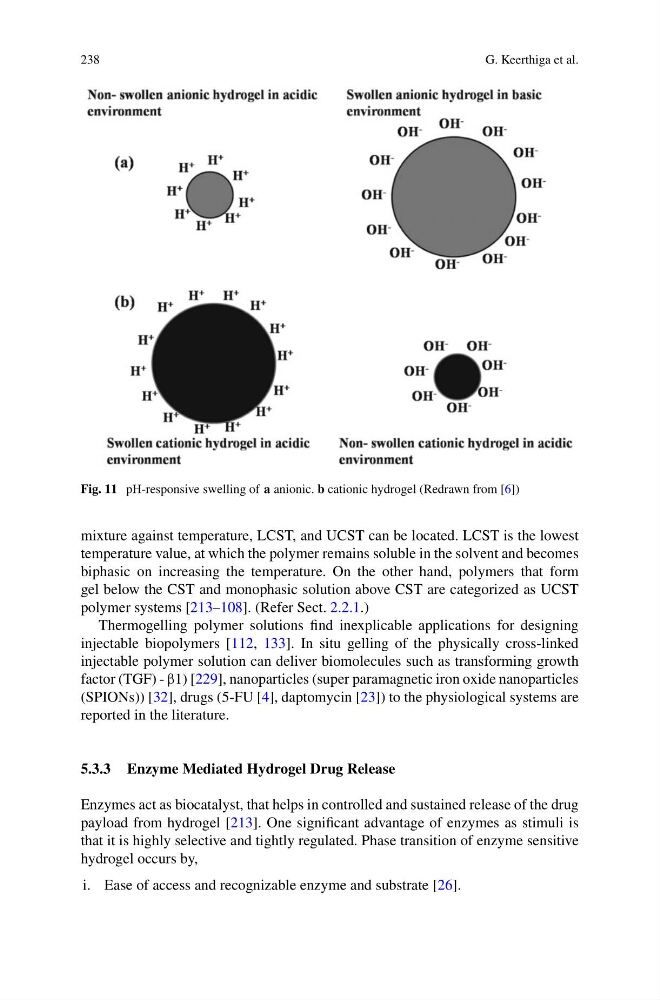
Fig. 11 pH-responsive swelling of a anionic. b cationic hydrogel (Redrawn from [6])
mixture against temperature, LCST, and UCST can be located. LCST is the lowest
temperature value, at which the polymer remains soluble in the solvent and becomes
biphasic on increasing the temperature. On the other hand, polymers that form
gel below the CST and monophasic solution above CST are categorized as UCST
polymer systems [213–108]. (Refer Sect. 2.2.1.)
Thermogelling polymer solutions find inexplicable applications for designing
injectable biopolymers [112, 133]. In situ gelling of the physically cross-linked
injectable polymer solution can deliver biomolecules such as transforming growth
factor (TGF) - β1) [229], nanoparticles (super paramagnetic iron oxide nanoparticles
(SPIONs)) [32], drugs (5-FU [4], daptomycin [23]) to the physiological systems are
reported in the literature.
5.3.3 Enzyme Mediated Hydrogel Drug Release
Enzymes act as biocatalyst, that helps in controlled and sustained release of the drug
payload from hydrogel [213]. One significant advantage of enzymes as stimuli is
that it is highly selective and tightly regulated. Phase transition of enzyme sensitive
hydrogel occurs by,
i. Ease of access and recognizable enzyme and substrate [26].
G. Keerthiga et al.
Fig. 11 pH-responsive swelling of a anionic. b cationic hydrogel (Redrawn from [6])
mixture against temperature, LCST, and UCST can be located. LCST is the lowest
temperature value, at which the polymer remains soluble in the solvent and becomes
biphasic on increasing the temperature. On the other hand, polymers that form
gel below the CST and monophasic solution above CST are categorized as UCST
polymer systems [213–108]. (Refer Sect. 2.2.1.)
Thermogelling polymer solutions find inexplicable applications for designing
injectable biopolymers [112, 133]. In situ gelling of the physically cross-linked
injectable polymer solution can deliver biomolecules such as transforming growth
factor (TGF) - β1) [229], nanoparticles (super paramagnetic iron oxide nanoparticles
(SPIONs)) [32], drugs (5-FU [4], daptomycin [23]) to the physiological systems are
reported in the literature.
5.3.3 Enzyme Mediated Hydrogel Drug Release
Enzymes act as biocatalyst, that helps in controlled and sustained release of the drug
payload from hydrogel [213]. One significant advantage of enzymes as stimuli is
that it is highly selective and tightly regulated. Phase transition of enzyme sensitive
hydrogel occurs by,
i. Ease of access and recognizable enzyme and substrate [26].