

Nanomaterials in Medicine
207
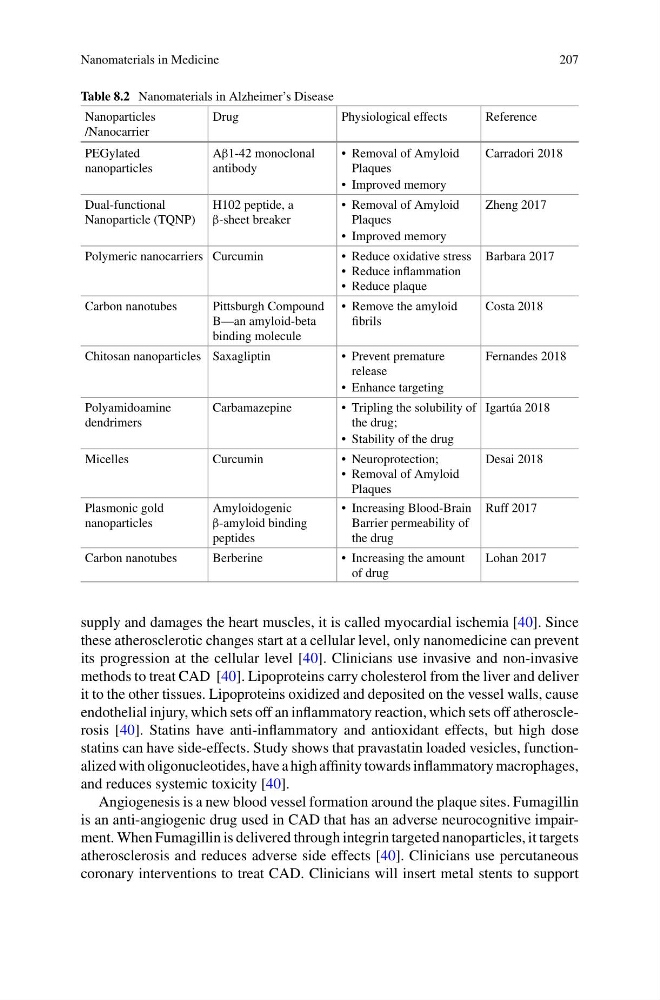
Table 8.2 Nanomaterials in Alzheimer’s Disease
Nanoparticles
/Nanocarrier
Drug
Physiological effects
Reference
PEGylated
nanoparticles
Aβ1-42 monoclonal
antibody
• Removal of Amyloid
Plaques
• Improved memory
Carradori 2018
Dual-functional
Nanoparticle (TQNP)
H102 peptide, a
β-sheet breaker
• Removal of Amyloid
Plaques
• Improved memory
Zheng 2017
Polymeric nanocarriers Curcumin
• Reduce oxidative stress
• Reduce inflammation
• Reduce plaque
Barbara 2017
Carbon nanotubes
Pittsburgh Compound
B—an amyloid-beta
binding molecule
• Remove the amyloid
fibrils
Costa 2018
Chitosan nanoparticles Saxagliptin
• Prevent premature
release
• Enhance targeting
Fernandes 2018
Polyamidoamine
dendrimers
Carbamazepine
• Tripling the solubility of
the drug;
• Stability of the drug
Igartúa 2018
Micelles
Curcumin
• Neuroprotection;
• Removal of Amyloid
Plaques
Desai 2018
Plasmonic gold
nanoparticles
Amyloidogenic
β-amyloid binding
peptides
• Increasing Blood-Brain
Barrier permeability of
the drug
Ruff 2017
Carbon nanotubes
Berberine
• Increasing the amount
of drug
Lohan 2017
supply and damages the heart muscles, it is called myocardial ischemia [40]. Since
these atherosclerotic changes start at a cellular level, only nanomedicine can prevent
its progression at the cellular level [40]. Clinicians use invasive and non-invasive
methods to treat CAD [40]. Lipoproteins carry cholesterol from the liver and deliver
it to the other tissues. Lipoproteins oxidized and deposited on the vessel walls, cause
endothelial injury, which sets off an inflammatory reaction, which sets off atherosclerosis [40]. Statins have anti-inflammatory and antioxidant effects, but high dose
statins can have side-effects. Study shows that pravastatin loaded vesicles, functionalized with oligonucleotides, have a high affinity towards inflammatory macrophages,
and reduces systemic toxicity [40].
Angiogenesis is a new blood vessel formation around the plaque sites. Fumagillin
is an anti-angiogenic drug used in CAD that has an adverse neurocognitive impairment. When Fumagillin is delivered through integrin targeted nanoparticles, it targets
atherosclerosis and reduces adverse side effects [40]. Clinicians use percutaneous
coronary interventions to treat CAD. Clinicians will insert metal stents to support
207
Table 8.2 Nanomaterials in Alzheimer’s Disease
Nanoparticles
/Nanocarrier
Drug
Physiological effects
Reference
PEGylated
nanoparticles
Aβ1-42 monoclonal
antibody
• Removal of Amyloid
Plaques
• Improved memory
Carradori 2018
Dual-functional
Nanoparticle (TQNP)
H102 peptide, a
β-sheet breaker
• Removal of Amyloid
Plaques
• Improved memory
Zheng 2017
Polymeric nanocarriers Curcumin
• Reduce oxidative stress
• Reduce inflammation
• Reduce plaque
Barbara 2017
Carbon nanotubes
Pittsburgh Compound
B—an amyloid-beta
binding molecule
• Remove the amyloid
fibrils
Costa 2018
Chitosan nanoparticles Saxagliptin
• Prevent premature
release
• Enhance targeting
Fernandes 2018
Polyamidoamine
dendrimers
Carbamazepine
• Tripling the solubility of
the drug;
• Stability of the drug
Igartúa 2018
Micelles
Curcumin
• Neuroprotection;
• Removal of Amyloid
Plaques
Desai 2018
Plasmonic gold
nanoparticles
Amyloidogenic
β-amyloid binding
peptides
• Increasing Blood-Brain
Barrier permeability of
the drug
Ruff 2017
Carbon nanotubes
Berberine
• Increasing the amount
of drug
Lohan 2017
supply and damages the heart muscles, it is called myocardial ischemia [40]. Since
these atherosclerotic changes start at a cellular level, only nanomedicine can prevent
its progression at the cellular level [40]. Clinicians use invasive and non-invasive
methods to treat CAD [40]. Lipoproteins carry cholesterol from the liver and deliver
it to the other tissues. Lipoproteins oxidized and deposited on the vessel walls, cause
endothelial injury, which sets off an inflammatory reaction, which sets off atherosclerosis [40]. Statins have anti-inflammatory and antioxidant effects, but high dose
statins can have side-effects. Study shows that pravastatin loaded vesicles, functionalized with oligonucleotides, have a high affinity towards inflammatory macrophages,
and reduces systemic toxicity [40].
Angiogenesis is a new blood vessel formation around the plaque sites. Fumagillin
is an anti-angiogenic drug used in CAD that has an adverse neurocognitive impairment. When Fumagillin is delivered through integrin targeted nanoparticles, it targets
atherosclerosis and reduces adverse side effects [40]. Clinicians use percutaneous
coronary interventions to treat CAD. Clinicians will insert metal stents to support