

180
S. T. Aruna and M. Shilpa
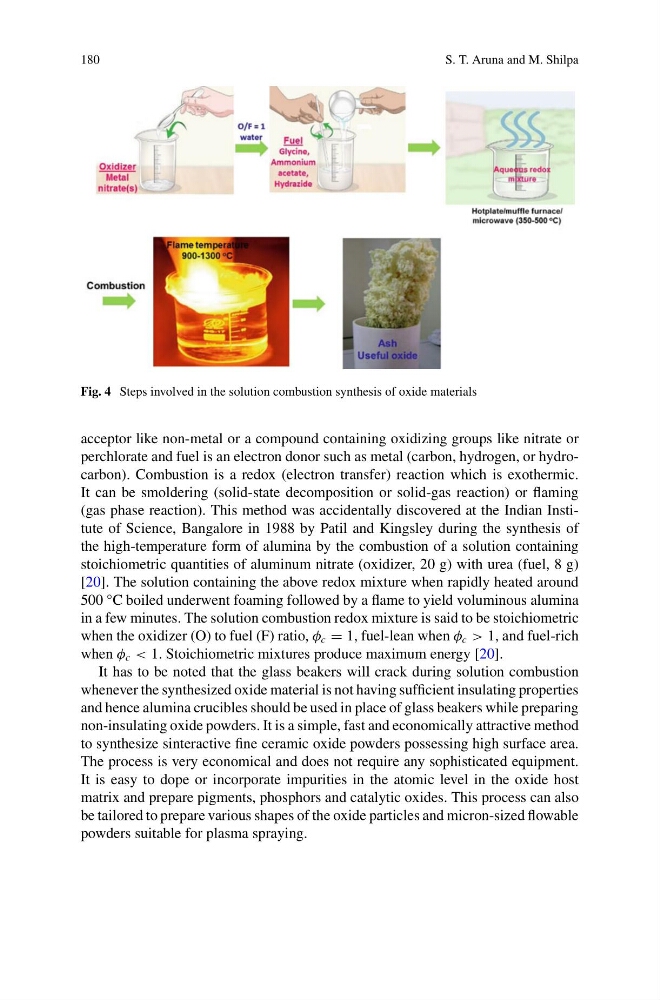
Fig. 4 Steps involved in the solution combustion synthesis of oxide materials
acceptor like non-metal or a compound containing oxidizing groups like nitrate or
perchlorate and fuel is an electron donor such as metal (carbon, hydrogen, or hydrocarbon). Combustion is a redox (electron transfer) reaction which is exothermic.
It can be smoldering (solid-state decomposition or solid-gas reaction) or flaming
(gas phase reaction). This method was accidentally discovered at the Indian Institute of Science, Bangalore in 1988 by Patil and Kingsley during the synthesis of
the high-temperature form of alumina by the combustion of a solution containing
stoichiometric quantities of aluminum nitrate (oxidizer, 20 g) with urea (fuel, 8 g)
[20]. The solution containing the above redox mixture when rapidly heated around
500 °C boiled underwent foaming followed by a flame to yield voluminous alumina
in a few minutes. The solution combustion redox mixture is said to be stoichiometric
when the oxidizer (O) to fuel (F) ratio, φ c = 1, fuel-lean when φ c > 1, and fuel-rich
when φ c < 1. Stoichiometric mixtures produce maximum energy [20].
It has to be noted that the glass beakers will crack during solution combustion
whenever the synthesized oxide material is not having sufficient insulating properties
and hence alumina crucibles should be used in place of glass beakers while preparing
non-insulating oxide powders. It is a simple, fast and economically attractive method
to synthesize sinteractive fine ceramic oxide powders possessing high surface area.
The process is very economical and does not require any sophisticated equipment.
It is easy to dope or incorporate impurities in the atomic level in the oxide host
matrix and prepare pigments, phosphors and catalytic oxides. This process can also
be tailored to prepare various shapes of the oxide particles and micron-sized flowable
powders suitable for plasma spraying.
S. T. Aruna and M. Shilpa
Fig. 4 Steps involved in the solution combustion synthesis of oxide materials
acceptor like non-metal or a compound containing oxidizing groups like nitrate or
perchlorate and fuel is an electron donor such as metal (carbon, hydrogen, or hydrocarbon). Combustion is a redox (electron transfer) reaction which is exothermic.
It can be smoldering (solid-state decomposition or solid-gas reaction) or flaming
(gas phase reaction). This method was accidentally discovered at the Indian Institute of Science, Bangalore in 1988 by Patil and Kingsley during the synthesis of
the high-temperature form of alumina by the combustion of a solution containing
stoichiometric quantities of aluminum nitrate (oxidizer, 20 g) with urea (fuel, 8 g)
[20]. The solution containing the above redox mixture when rapidly heated around
500 °C boiled underwent foaming followed by a flame to yield voluminous alumina
in a few minutes. The solution combustion redox mixture is said to be stoichiometric
when the oxidizer (O) to fuel (F) ratio, φ c = 1, fuel-lean when φ c > 1, and fuel-rich
when φ c < 1. Stoichiometric mixtures produce maximum energy [20].
It has to be noted that the glass beakers will crack during solution combustion
whenever the synthesized oxide material is not having sufficient insulating properties
and hence alumina crucibles should be used in place of glass beakers while preparing
non-insulating oxide powders. It is a simple, fast and economically attractive method
to synthesize sinteractive fine ceramic oxide powders possessing high surface area.
The process is very economical and does not require any sophisticated equipment.
It is easy to dope or incorporate impurities in the atomic level in the oxide host
matrix and prepare pigments, phosphors and catalytic oxides. This process can also
be tailored to prepare various shapes of the oxide particles and micron-sized flowable
powders suitable for plasma spraying.