

176
S. T. Aruna and M. Shilpa
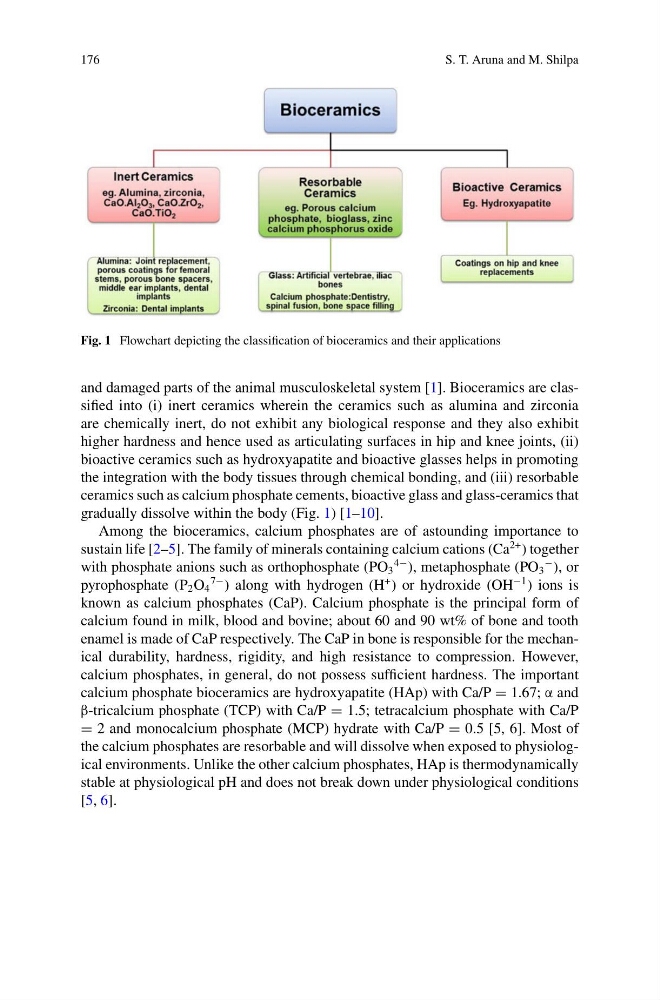
Fig. 1 Flowchart depicting the classification of bioceramics and their applications
and damaged parts of the animal musculoskeletal system [1]. Bioceramics are classified into (i) inert ceramics wherein the ceramics such as alumina and zirconia
are chemically inert, do not exhibit any biological response and they also exhibit
higher hardness and hence used as articulating surfaces in hip and knee joints, (ii)
bioactive ceramics such as hydroxyapatite and bioactive glasses helps in promoting
the integration with the body tissues through chemical bonding, and (iii) resorbable
ceramics such as calcium phosphate cements, bioactive glass and glass-ceramics that
gradually dissolve within the body (Fig. 1) [1–10].
Among the bioceramics, calcium phosphates are of astounding importance to
sustain life [2–5]. The family of minerals containing calcium cations (Ca
2+ ) together
with phosphate anions such as orthophosphate (PO 3
4− ), metaphosphate (PO 3
− ), or
pyrophosphate (P 2 O 4
7− ) along with hydrogen (H
+ ) or hydroxide (OH
−1 ) ions is
known as calcium phosphates (CaP). Calcium phosphate is the principal form of
calcium found in milk, blood and bovine; about 60 and 90 wt% of bone and tooth
enamel is made of CaP respectively. The CaP in bone is responsible for the mechanical durability, hardness, rigidity, and high resistance to compression. However,
calcium phosphates, in general, do not possess sufficient hardness. The important
calcium phosphate bioceramics are hydroxyapatite (HAp) with Ca/P = 1.67; α and
β-tricalcium phosphate (TCP) with Ca/P = 1.5; tetracalcium phosphate with Ca/P
= 2 and monocalcium phosphate (MCP) hydrate with Ca/P = 0.5 [5, 6]. Most of
the calcium phosphates are resorbable and will dissolve when exposed to physiological environments. Unlike the other calcium phosphates, HAp is thermodynamically
stable at physiological pH and does not break down under physiological conditions
[5, 6].
S. T. Aruna and M. Shilpa
Fig. 1 Flowchart depicting the classification of bioceramics and their applications
and damaged parts of the animal musculoskeletal system [1]. Bioceramics are classified into (i) inert ceramics wherein the ceramics such as alumina and zirconia
are chemically inert, do not exhibit any biological response and they also exhibit
higher hardness and hence used as articulating surfaces in hip and knee joints, (ii)
bioactive ceramics such as hydroxyapatite and bioactive glasses helps in promoting
the integration with the body tissues through chemical bonding, and (iii) resorbable
ceramics such as calcium phosphate cements, bioactive glass and glass-ceramics that
gradually dissolve within the body (Fig. 1) [1–10].
Among the bioceramics, calcium phosphates are of astounding importance to
sustain life [2–5]. The family of minerals containing calcium cations (Ca
2+ ) together
with phosphate anions such as orthophosphate (PO 3
4− ), metaphosphate (PO 3
− ), or
pyrophosphate (P 2 O 4
7− ) along with hydrogen (H
+ ) or hydroxide (OH
−1 ) ions is
known as calcium phosphates (CaP). Calcium phosphate is the principal form of
calcium found in milk, blood and bovine; about 60 and 90 wt% of bone and tooth
enamel is made of CaP respectively. The CaP in bone is responsible for the mechanical durability, hardness, rigidity, and high resistance to compression. However,
calcium phosphates, in general, do not possess sufficient hardness. The important
calcium phosphate bioceramics are hydroxyapatite (HAp) with Ca/P = 1.67; α and
β-tricalcium phosphate (TCP) with Ca/P = 1.5; tetracalcium phosphate with Ca/P
= 2 and monocalcium phosphate (MCP) hydrate with Ca/P = 0.5 [5, 6]. Most of
the calcium phosphates are resorbable and will dissolve when exposed to physiological environments. Unlike the other calcium phosphates, HAp is thermodynamically
stable at physiological pH and does not break down under physiological conditions
[5, 6].