

Nanofibers and Nanosurfaces
123
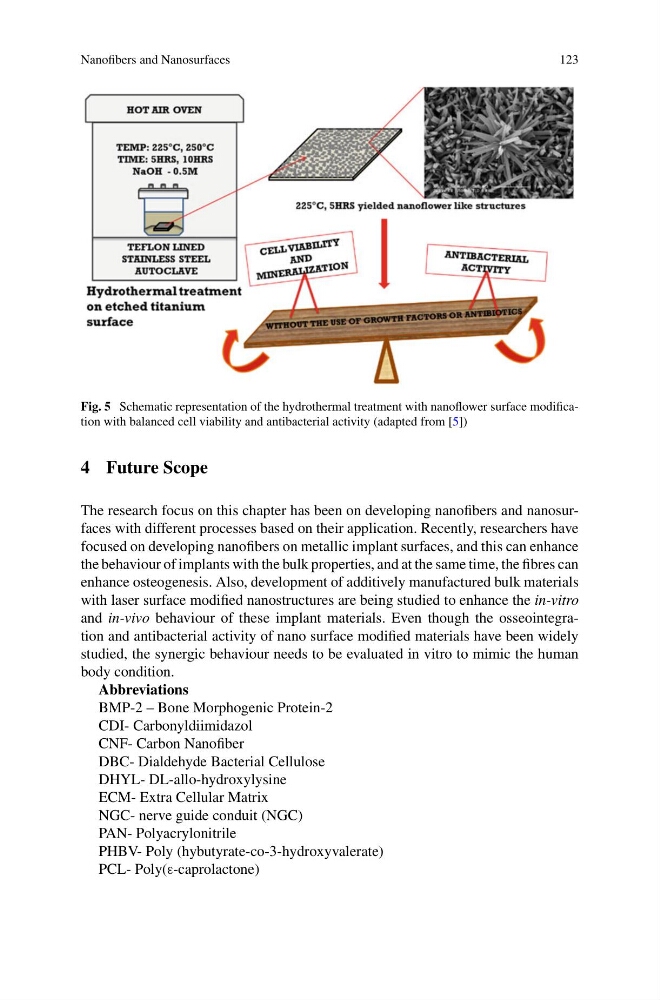
Fig. 5 Schematic representation of the hydrothermal treatment with nanoflower surface modification with balanced cell viability and antibacterial activity (adapted from [5])
4 Future Scope
The research focus on this chapter has been on developing nanofibers and nanosurfaces with different processes based on their application. Recently, researchers have
focused on developing nanofibers on metallic implant surfaces, and this can enhance
the behaviour of implants with the bulk properties, and at the same time, the fibres can
enhance osteogenesis. Also, development of additively manufactured bulk materials
with laser surface modified nanostructures are being studied to enhance the in-vitro
and in-vivo behaviour of these implant materials. Even though the osseointegration and antibacterial activity of nano surface modified materials have been widely
studied, the synergic behaviour needs to be evaluated in vitro to mimic the human
body condition.
Abbreviations
BMP-2 – Bone Morphogenic Protein-2
CDI- Carbonyldiimidazol
CNF- Carbon Nanofiber
DBC- Dialdehyde Bacterial Cellulose
DHYL- DL-allo-hydroxylysine
ECM- Extra Cellular Matrix
NGC- nerve guide conduit (NGC)
PAN- Polyacrylonitrile
PHBV- Poly (hybutyrate-co-3-hydroxyvalerate)
PCL- Poly(ε-caprolactone)
123
Fig. 5 Schematic representation of the hydrothermal treatment with nanoflower surface modification with balanced cell viability and antibacterial activity (adapted from [5])
4 Future Scope
The research focus on this chapter has been on developing nanofibers and nanosurfaces with different processes based on their application. Recently, researchers have
focused on developing nanofibers on metallic implant surfaces, and this can enhance
the behaviour of implants with the bulk properties, and at the same time, the fibres can
enhance osteogenesis. Also, development of additively manufactured bulk materials
with laser surface modified nanostructures are being studied to enhance the in-vitro
and in-vivo behaviour of these implant materials. Even though the osseointegration and antibacterial activity of nano surface modified materials have been widely
studied, the synergic behaviour needs to be evaluated in vitro to mimic the human
body condition.
Abbreviations
BMP-2 – Bone Morphogenic Protein-2
CDI- Carbonyldiimidazol
CNF- Carbon Nanofiber
DBC- Dialdehyde Bacterial Cellulose
DHYL- DL-allo-hydroxylysine
ECM- Extra Cellular Matrix
NGC- nerve guide conduit (NGC)
PAN- Polyacrylonitrile
PHBV- Poly (hybutyrate-co-3-hydroxyvalerate)
PCL- Poly(ε-caprolactone)