

112
P. Hameed et al.
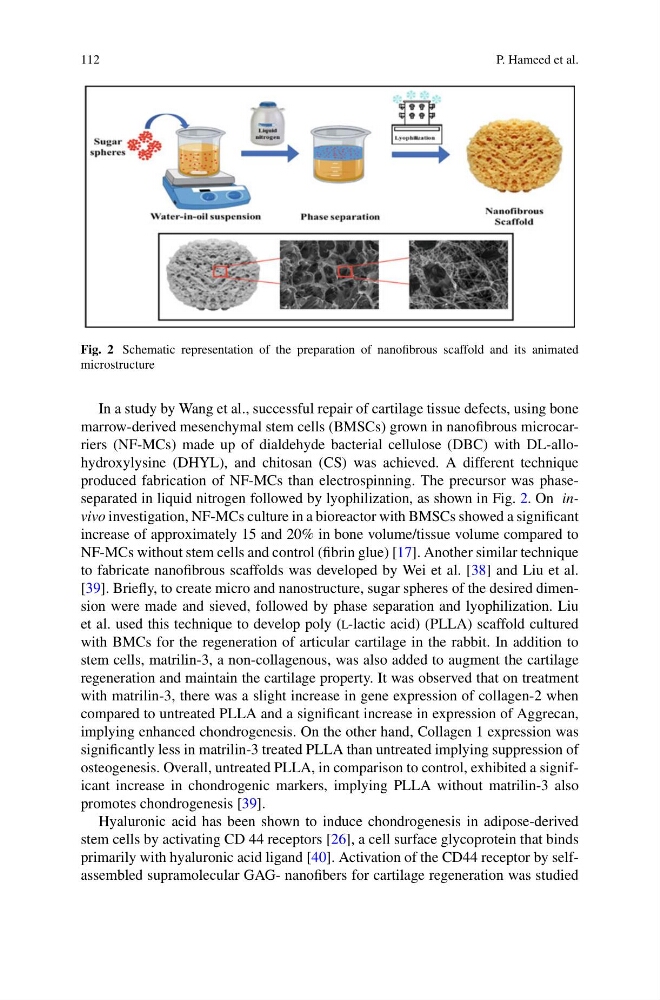
Fig. 2 Schematic representation of the preparation of nanofibrous scaffold and its animated
microstructure
In a study by Wang et al., successful repair of cartilage tissue defects, using bone
marrow-derived mesenchymal stem cells (BMSCs) grown in nanofibrous microcarriers (NF-MCs) made up of dialdehyde bacterial cellulose (DBC) with DL-allohydroxylysine (DHYL), and chitosan (CS) was achieved. A different technique
produced fabrication of NF-MCs than electrospinning. The precursor was phaseseparated in liquid nitrogen followed by lyophilization, as shown in Fig. 2. On invivo investigation, NF-MCs culture in a bioreactor with BMSCs showed a significant
increase of approximately 15 and 20% in bone volume/tissue volume compared to
NF-MCs without stem cells and control (fibrin glue) [17]. Another similar technique
to fabricate nanofibrous scaffolds was developed by Wei et al. [38] and Liu et al.
[39]. Briefly, to create micro and nanostructure, sugar spheres of the desired dimension were made and sieved, followed by phase separation and lyophilization. Liu
et al. used this technique to develop poly (l-lactic acid) (PLLA) scaffold cultured
with BMCs for the regeneration of articular cartilage in the rabbit. In addition to
stem cells, matrilin-3, a non-collagenous, was also added to augment the cartilage
regeneration and maintain the cartilage property. It was observed that on treatment
with matrilin-3, there was a slight increase in gene expression of collagen-2 when
compared to untreated PLLA and a significant increase in expression of Aggrecan,
implying enhanced chondrogenesis. On the other hand, Collagen 1 expression was
significantly less in matrilin-3 treated PLLA than untreated implying suppression of
osteogenesis. Overall, untreated PLLA, in comparison to control, exhibited a significant increase in chondrogenic markers, implying PLLA without matrilin-3 also
promotes chondrogenesis [39].
Hyaluronic acid has been shown to induce chondrogenesis in adipose-derived
stem cells by activating CD 44 receptors [26], a cell surface glycoprotein that binds
primarily with hyaluronic acid ligand [40]. Activation of the CD44 receptor by selfassembled supramolecular GAG- nanofibers for cartilage regeneration was studied
P. Hameed et al.
Fig. 2 Schematic representation of the preparation of nanofibrous scaffold and its animated
microstructure
In a study by Wang et al., successful repair of cartilage tissue defects, using bone
marrow-derived mesenchymal stem cells (BMSCs) grown in nanofibrous microcarriers (NF-MCs) made up of dialdehyde bacterial cellulose (DBC) with DL-allohydroxylysine (DHYL), and chitosan (CS) was achieved. A different technique
produced fabrication of NF-MCs than electrospinning. The precursor was phaseseparated in liquid nitrogen followed by lyophilization, as shown in Fig. 2. On invivo investigation, NF-MCs culture in a bioreactor with BMSCs showed a significant
increase of approximately 15 and 20% in bone volume/tissue volume compared to
NF-MCs without stem cells and control (fibrin glue) [17]. Another similar technique
to fabricate nanofibrous scaffolds was developed by Wei et al. [38] and Liu et al.
[39]. Briefly, to create micro and nanostructure, sugar spheres of the desired dimension were made and sieved, followed by phase separation and lyophilization. Liu
et al. used this technique to develop poly (l-lactic acid) (PLLA) scaffold cultured
with BMCs for the regeneration of articular cartilage in the rabbit. In addition to
stem cells, matrilin-3, a non-collagenous, was also added to augment the cartilage
regeneration and maintain the cartilage property. It was observed that on treatment
with matrilin-3, there was a slight increase in gene expression of collagen-2 when
compared to untreated PLLA and a significant increase in expression of Aggrecan,
implying enhanced chondrogenesis. On the other hand, Collagen 1 expression was
significantly less in matrilin-3 treated PLLA than untreated implying suppression of
osteogenesis. Overall, untreated PLLA, in comparison to control, exhibited a significant increase in chondrogenic markers, implying PLLA without matrilin-3 also
promotes chondrogenesis [39].
Hyaluronic acid has been shown to induce chondrogenesis in adipose-derived
stem cells by activating CD 44 receptors [26], a cell surface glycoprotein that binds
primarily with hyaluronic acid ligand [40]. Activation of the CD44 receptor by selfassembled supramolecular GAG- nanofibers for cartilage regeneration was studied