

370
10 Time-Periodic Quantum Systems
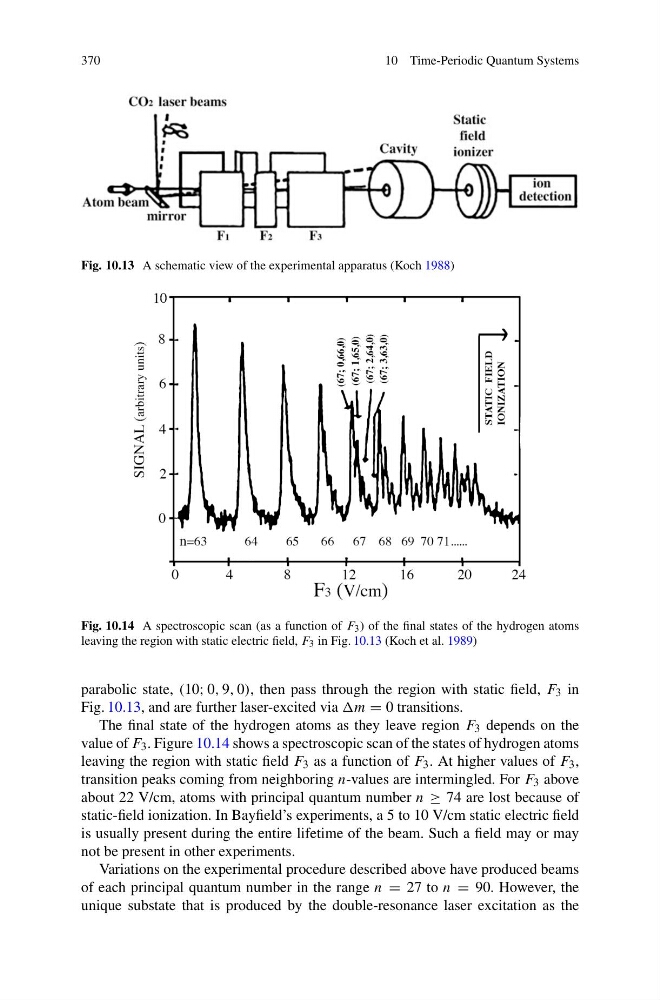
Fig. 10.13 A schematic view of the experimental apparatus (Koch 1988)
Fig. 10.14 A spectroscopic scan (as a function of F 3 ) of the final states of the hydrogen atoms
leaving the region with static electric field, F 3 in Fig. 10.13 (Koch et al. 1989)
parabolic state, (10; 0, 9, 0), then pass through the region with static field, F 3 in
Fig. 10.13, and are further laser-excited via = 0 transitions.
The final state of the hydrogen atoms as they leave region F 3 depends on the
value of F 3 . Figure 10.14 shows a spectroscopic scan of the states of hydrogen atoms
leaving the region with static field F 3 as a function of F 3 . At higher values of F 3 ,
transition peaks coming from neighboring n-values are intermingled. For F 3 above
about 22 V/cm, atoms with principal quantum number n ≥ 74 are lost because of
static-field ionization. In Bayfield’s experiments, a 5 to 10 V/cm static electric field
is usually present during the entire lifetime of the beam. Such a field may or may
not be present in other experiments.
Variations on the experimental procedure described above have produced beams
of each principal quantum number in the range n = 27 to n = 90. However, the
unique substate that is produced by the double-resonance laser excitation as the
10 Time-Periodic Quantum Systems
Fig. 10.13 A schematic view of the experimental apparatus (Koch 1988)
Fig. 10.14 A spectroscopic scan (as a function of F 3 ) of the final states of the hydrogen atoms
leaving the region with static electric field, F 3 in Fig. 10.13 (Koch et al. 1989)
parabolic state, (10; 0, 9, 0), then pass through the region with static field, F 3 in
Fig. 10.13, and are further laser-excited via = 0 transitions.
The final state of the hydrogen atoms as they leave region F 3 depends on the
value of F 3 . Figure 10.14 shows a spectroscopic scan of the states of hydrogen atoms
leaving the region with static field F 3 as a function of F 3 . At higher values of F 3 ,
transition peaks coming from neighboring n-values are intermingled. For F 3 above
about 22 V/cm, atoms with principal quantum number n ≥ 74 are lost because of
static-field ionization. In Bayfield’s experiments, a 5 to 10 V/cm static electric field
is usually present during the entire lifetime of the beam. Such a field may or may
not be present in other experiments.
Variations on the experimental procedure described above have produced beams
of each principal quantum number in the range n = 27 to n = 90. However, the
unique substate that is produced by the double-resonance laser excitation as the