

resolution of the meteorological model should be adapted to that of the AQ model.
For prospective IAM, using meteorological data from a specific year raises the
problem of their representativeness, as it does not permit to catch the inter-annual
variability of the meteorological conditions. To tackle this issue, one option could
be to simulate more years, or in some way to “filter” the effect of the inter-annual
variability in meteorology.
The full deterministic AQ model can be used to estimate contribution of the
main sources on each grid point concentration, for example by cutting-off these
sources one at a time. This method assumes the possibility of “adding” effects in
some way and is time-consuming, as one full model run has to be done for each
estimation of source contributions. Therefore, such calculations are generally limited to estimate large emission contribution over an area (e.g., industry, traffic, etc.).
For some RESPONSES module implementations (as in the case of optimization
approaches) thousands of model runs would be required, for example to minimize
the cost of emission reduction measures. In such cases, the AQ model may be
substituted by a more computational efficient source/receptor model (also called
surrogate model or meta-model) based on simplifications of the AQ model. This
model directly links the activity levels or the emissions to an AQ index calculated
from targeted pollutant concentrations. The level of complexity of the surrogate
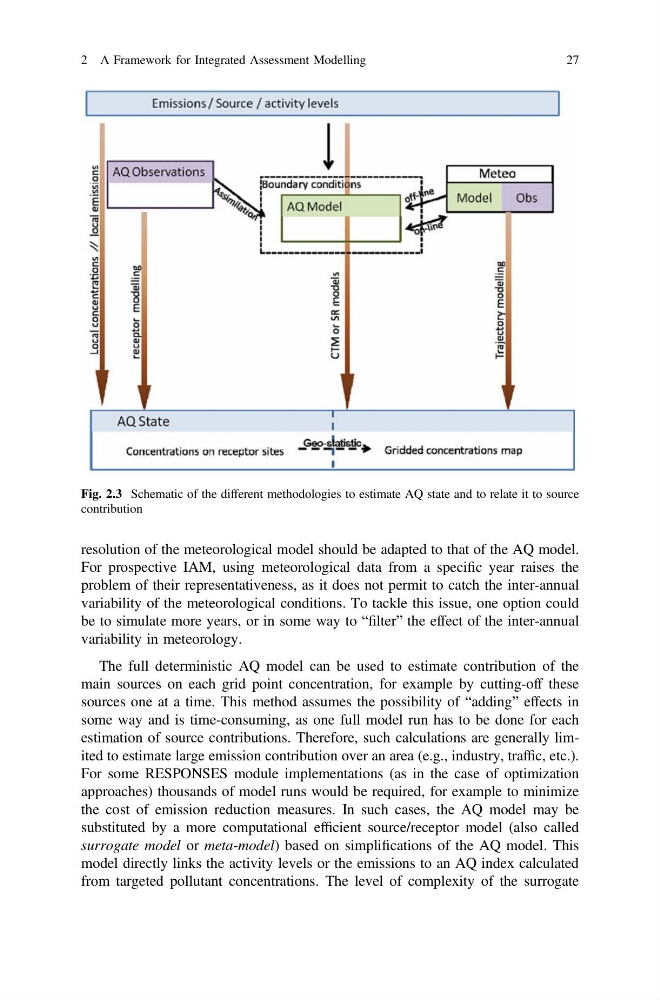
Fig. 2.3 Schematic of the different methodologies to estimate AQ state and to relate it to source
contribution
2 A Framework for Integrated Assessment Modelling
27
For prospective IAM, using meteorological data from a specific year raises the
problem of their representativeness, as it does not permit to catch the inter-annual
variability of the meteorological conditions. To tackle this issue, one option could
be to simulate more years, or in some way to “filter” the effect of the inter-annual
variability in meteorology.
The full deterministic AQ model can be used to estimate contribution of the
main sources on each grid point concentration, for example by cutting-off these
sources one at a time. This method assumes the possibility of “adding” effects in
some way and is time-consuming, as one full model run has to be done for each
estimation of source contributions. Therefore, such calculations are generally limited to estimate large emission contribution over an area (e.g., industry, traffic, etc.).
For some RESPONSES module implementations (as in the case of optimization
approaches) thousands of model runs would be required, for example to minimize
the cost of emission reduction measures. In such cases, the AQ model may be
substituted by a more computational efficient source/receptor model (also called
surrogate model or meta-model) based on simplifications of the AQ model. This
model directly links the activity levels or the emissions to an AQ index calculated
from targeted pollutant concentrations. The level of complexity of the surrogate
Fig. 2.3 Schematic of the different methodologies to estimate AQ state and to relate it to source
contribution
2 A Framework for Integrated Assessment Modelling
27