

31
gives an RVF risk map based on data that were collected during the 2006/2007
outbreak. Not all El Niño events lead to RVF outbreaks; El Niño events recorded in
Kenya in 1964, 1969, 1972–1973, 1981 and 1991–1995, for example, did not lead
to RVF outbreaks.
In West Africa, RVF outbreaks occurred in 1998, 2003, 2010 and 2012 following
an interlude between a dry period, lasting for about a week, and a period of heavy
precipitation (Caminade et al. 2014). The 2009–2010 outbreak, which affected
small ruminants, camels and people was associated with a fourfold increase in rainfall in a desert region in northern Mauritania (Faye et al. 2014). Similar outbreaks
occurred in Senegal in 2013–2014, exacerbated by extensive livestock movements
that aided the dissemination of the virus (Sow et al. 2016).
3.2.1.2 Climate Change and RVF
A few studies have been done to evaluate the expected impacts of climate change on
RVF transmission. These suggest that climate change is likely to expand RVF’s
geographical range due to expansion of the vector niches (Mweya et al. 2017; Taylor
et al. 2016). There are also indications that the average rainfall in eastern Africa,
including the Horn of Africa, is expected to increase, while that for southern Africa
is likely to decline with climate change (Conway 2009). ENSO-related precipitation
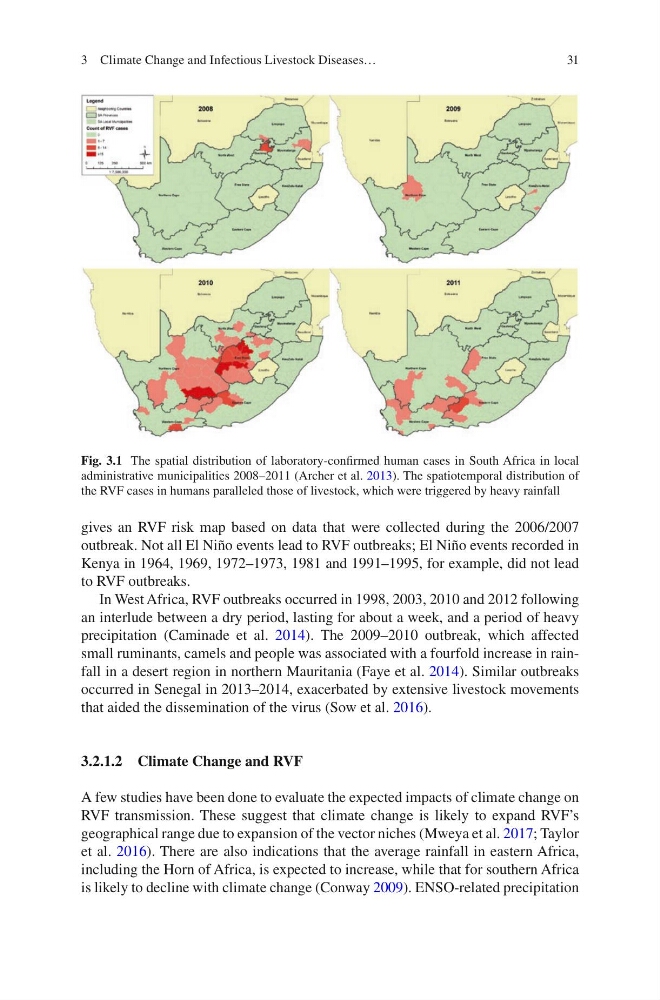
Fig. 3.1 The spatial distribution of laboratory-confirmed human cases in South Africa in local
administrative municipalities 2008–2011 (Archer et al. 2013). The spatiotemporal distribution of
the RVF cases in humans paralleled those of livestock, which were triggered by heavy rainfall
3 Climate Change and Infectious Livestock Diseases…
gives an RVF risk map based on data that were collected during the 2006/2007
outbreak. Not all El Niño events lead to RVF outbreaks; El Niño events recorded in
Kenya in 1964, 1969, 1972–1973, 1981 and 1991–1995, for example, did not lead
to RVF outbreaks.
In West Africa, RVF outbreaks occurred in 1998, 2003, 2010 and 2012 following
an interlude between a dry period, lasting for about a week, and a period of heavy
precipitation (Caminade et al. 2014). The 2009–2010 outbreak, which affected
small ruminants, camels and people was associated with a fourfold increase in rainfall in a desert region in northern Mauritania (Faye et al. 2014). Similar outbreaks
occurred in Senegal in 2013–2014, exacerbated by extensive livestock movements
that aided the dissemination of the virus (Sow et al. 2016).
3.2.1.2 Climate Change and RVF
A few studies have been done to evaluate the expected impacts of climate change on
RVF transmission. These suggest that climate change is likely to expand RVF’s
geographical range due to expansion of the vector niches (Mweya et al. 2017; Taylor
et al. 2016). There are also indications that the average rainfall in eastern Africa,
including the Horn of Africa, is expected to increase, while that for southern Africa
is likely to decline with climate change (Conway 2009). ENSO-related precipitation
Fig. 3.1 The spatial distribution of laboratory-confirmed human cases in South Africa in local
administrative municipalities 2008–2011 (Archer et al. 2013). The spatiotemporal distribution of
the RVF cases in humans paralleled those of livestock, which were triggered by heavy rainfall
3 Climate Change and Infectious Livestock Diseases…