

283
farmers per year at a cost of $65 per farmer. In model 2, an extension worker trains
20 farmer-trainers per year, each of whom trains 20 farmers, amounting to 400
farmers at a cost of $29 per farmer. The cost per farmer trained in the F2FE model
is thus 55% lower than the cost in the conventional approach. If farmer-trainers
trained only 9 farmers instead of 20, the 2 models would have the same costs per
farmer trained. The analysis omits some costs (e.g., training of extension staff and
administrative costs) that are not likely to vary between the different approaches.
24.2.5 The Approach’s Potential for Increasing the Proportion
of Female Extension Providers
Gender imbalance in agricultural extension has been widely recognized as an
important challenge (World Bank, FAO, IFAD 2009; GFRAS 2014). The problem
is generally attributed to two key facts: women make up only a small proportion of
extension staff, and female farmers have less access to extension services than do
male farmers. The low proportion of female staff has been linked to the fact that
relatively few women enroll in the agricultural extension departments of universities and training institutes or choose agricultural extension as a career path (Simpson
et al. 2012).
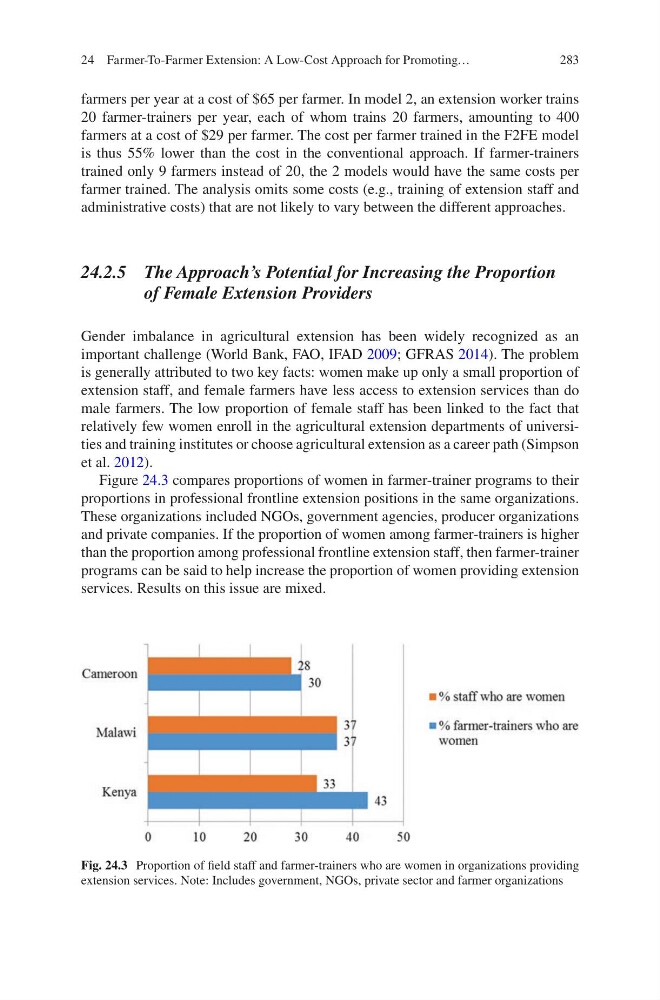
Figure 24.3 compares proportions of women in farmer-trainer programs to their
proportions in professional frontline extension positions in the same organizations.
These organizations included NGOs, government agencies, producer organizations
and private companies. If the proportion of women among farmer-trainers is higher
than the proportion among professional frontline extension staff, then farmer-trainer
programs can be said to help increase the proportion of women providing extension
services. Results on this issue are mixed.
Fig. 24.3 Proportion of field staff and farmer-trainers who are women in organizations providing
extension services. Note: Includes government, NGOs, private sector and farmer organizations
24 Farmer-To-Farmer Extension: A Low-Cost Approach for Promoting…
farmers per year at a cost of $65 per farmer. In model 2, an extension worker trains
20 farmer-trainers per year, each of whom trains 20 farmers, amounting to 400
farmers at a cost of $29 per farmer. The cost per farmer trained in the F2FE model
is thus 55% lower than the cost in the conventional approach. If farmer-trainers
trained only 9 farmers instead of 20, the 2 models would have the same costs per
farmer trained. The analysis omits some costs (e.g., training of extension staff and
administrative costs) that are not likely to vary between the different approaches.
24.2.5 The Approach’s Potential for Increasing the Proportion
of Female Extension Providers
Gender imbalance in agricultural extension has been widely recognized as an
important challenge (World Bank, FAO, IFAD 2009; GFRAS 2014). The problem
is generally attributed to two key facts: women make up only a small proportion of
extension staff, and female farmers have less access to extension services than do
male farmers. The low proportion of female staff has been linked to the fact that
relatively few women enroll in the agricultural extension departments of universities and training institutes or choose agricultural extension as a career path (Simpson
et al. 2012).
Figure 24.3 compares proportions of women in farmer-trainer programs to their
proportions in professional frontline extension positions in the same organizations.
These organizations included NGOs, government agencies, producer organizations
and private companies. If the proportion of women among farmer-trainers is higher
than the proportion among professional frontline extension staff, then farmer-trainer
programs can be said to help increase the proportion of women providing extension
services. Results on this issue are mixed.
Fig. 24.3 Proportion of field staff and farmer-trainers who are women in organizations providing
extension services. Note: Includes government, NGOs, private sector and farmer organizations
24 Farmer-To-Farmer Extension: A Low-Cost Approach for Promoting…