

248
crop availability and changes in consumption patterns) will result in 534,000 deaths
(Springmann et al. 2016). Another study estimates that the number of malnourished
children in developing countries is likely to increase by 8.8–10% due to climate
change (Nelson et al. 2010).
By definition, food value chains include all actors and activities from producer to
consumer, including: inputs into production, crop production, storage and processing, distribution and transportation, food retail and labeling, and consumption. The
vulnerability of value chain activities to climate change could make production
more expensive. Other factors could also affect costs, such as changes in energy or
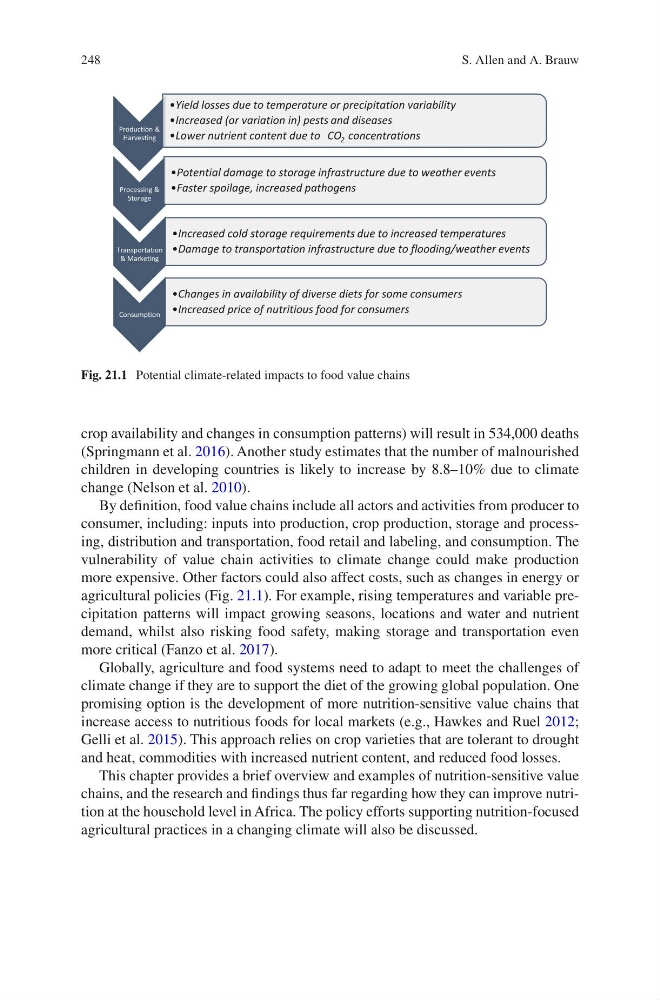
agricultural policies (Fig. 21.1). For example, rising temperatures and variable precipitation patterns will impact growing seasons, locations and water and nutrient
demand, whilst also risking food safety, making storage and transportation even
more critical (Fanzo et al. 2017).
Globally, agriculture and food systems need to adapt to meet the challenges of
climate change if they are to support the diet of the growing global population. One
promising option is the development of more nutrition-sensitive value chains that
increase access to nutritious foods for local markets (e.g., Hawkes and Ruel 2012;
Gelli et al. 2015). This approach relies on crop varieties that are tolerant to drought
and heat, commodities with increased nutrient content, and reduced food losses.
This chapter provides a brief overview and examples of nutrition-sensitive value
chains, and the research and findings thus far regarding how they can improve nutrition at the household level in Africa. The policy efforts supporting nutrition-focused
agricultural practices in a changing climate will also be discussed.
Production &
Harvesting
•Yield losses due to temperature or precipitation variability
•Increased (or variation in) pests and diseases
•Lower nutrient content due to CO 2 concentrations
Processing &
Storage
•Potential damage to storage infrastructure due to weather events
•Faster spoilage, increased pathogens
Transportation
& Marketing
•Increased cold storage requirements due to increased temperatures
•Damage to transportation infrastructure due to flooding/weather events
Consumption
•Changes in availability of diverse diets for some consumers
•Increased price of nutritious food for consumers
Fig. 21.1 Potential climate-related impacts to food value chains
S. Allen and A. Brauw
crop availability and changes in consumption patterns) will result in 534,000 deaths
(Springmann et al. 2016). Another study estimates that the number of malnourished
children in developing countries is likely to increase by 8.8–10% due to climate
change (Nelson et al. 2010).
By definition, food value chains include all actors and activities from producer to
consumer, including: inputs into production, crop production, storage and processing, distribution and transportation, food retail and labeling, and consumption. The
vulnerability of value chain activities to climate change could make production
more expensive. Other factors could also affect costs, such as changes in energy or
agricultural policies (Fig. 21.1). For example, rising temperatures and variable precipitation patterns will impact growing seasons, locations and water and nutrient
demand, whilst also risking food safety, making storage and transportation even
more critical (Fanzo et al. 2017).
Globally, agriculture and food systems need to adapt to meet the challenges of
climate change if they are to support the diet of the growing global population. One
promising option is the development of more nutrition-sensitive value chains that
increase access to nutritious foods for local markets (e.g., Hawkes and Ruel 2012;
Gelli et al. 2015). This approach relies on crop varieties that are tolerant to drought
and heat, commodities with increased nutrient content, and reduced food losses.
This chapter provides a brief overview and examples of nutrition-sensitive value
chains, and the research and findings thus far regarding how they can improve nutrition at the household level in Africa. The policy efforts supporting nutrition-focused
agricultural practices in a changing climate will also be discussed.
Production &
Harvesting
•Yield losses due to temperature or precipitation variability
•Increased (or variation in) pests and diseases
•Lower nutrient content due to CO 2 concentrations
Processing &
Storage
•Potential damage to storage infrastructure due to weather events
•Faster spoilage, increased pathogens
Transportation
& Marketing
•Increased cold storage requirements due to increased temperatures
•Damage to transportation infrastructure due to flooding/weather events
Consumption
•Changes in availability of diverse diets for some consumers
•Increased price of nutritious food for consumers
Fig. 21.1 Potential climate-related impacts to food value chains
S. Allen and A. Brauw