

4
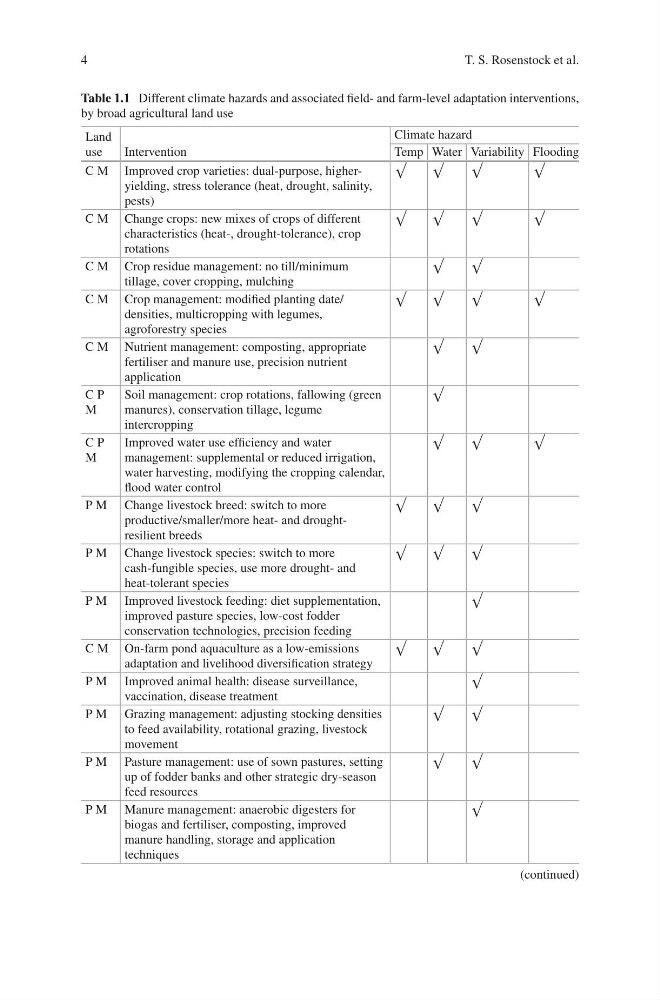
Table 1.1 Different climate hazards and associated field- and farm-level adaptation interventions,
by broad agricultural land use
Land
use
Intervention
Climate hazard
Temp Water Variability Flooding
C M Improved crop varieties: dual-purpose, higheryielding, stress tolerance (heat, drought, salinity,
pests)
√
√
√
√
C M Change crops: new mixes of crops of different
characteristics (heat-, drought-tolerance), crop
rotations
√
√
√
√
C M Crop residue management: no till/minimum
tillage, cover cropping, mulching
√
√
C M Crop management: modified planting date/
densities, multicropping with legumes,
agroforestry species
√
√
√
√
C M Nutrient management: composting, appropriate
fertiliser and manure use, precision nutrient
application
√
√
C P
M
Soil management: crop rotations, fallowing (green
manures), conservation tillage, legume
intercropping
√
C P
M
Improved water use efficiency and water
management: supplemental or reduced irrigation,
water harvesting, modifying the cropping calendar,
flood water control
√
√
√
P M Change livestock breed: switch to more
productive/smaller/more heat- and droughtresilient breeds
√
√
√
P M Change livestock species: switch to more
cash-fungible species, use more drought- and
heat-tolerant species
√
√
√
P M Improved livestock feeding: diet supplementation,
improved pasture species, low-cost fodder
conservation technologies, precision feeding
√
C M On-farm pond aquaculture as a low-emissions
adaptation and livelihood diversification strategy
√
√
√
P M Improved animal health: disease surveillance,
vaccination, disease treatment
√
P M Grazing management: adjusting stocking densities
to feed availability, rotational grazing, livestock
movement
√
√
P M Pasture management: use of sown pastures, setting
up of fodder banks and other strategic dry-season
feed resources
√
√
P M Manure management: anaerobic digesters for
biogas and fertiliser, composting, improved
manure handling, storage and application
techniques
√
(continued)
T. S. Rosenstock et al.
Table 1.1 Different climate hazards and associated field- and farm-level adaptation interventions,
by broad agricultural land use
Land
use
Intervention
Climate hazard
Temp Water Variability Flooding
C M Improved crop varieties: dual-purpose, higheryielding, stress tolerance (heat, drought, salinity,
pests)
√
√
√
√
C M Change crops: new mixes of crops of different
characteristics (heat-, drought-tolerance), crop
rotations
√
√
√
√
C M Crop residue management: no till/minimum
tillage, cover cropping, mulching
√
√
C M Crop management: modified planting date/
densities, multicropping with legumes,
agroforestry species
√
√
√
√
C M Nutrient management: composting, appropriate
fertiliser and manure use, precision nutrient
application
√
√
C P
M
Soil management: crop rotations, fallowing (green
manures), conservation tillage, legume
intercropping
√
C P
M
Improved water use efficiency and water
management: supplemental or reduced irrigation,
water harvesting, modifying the cropping calendar,
flood water control
√
√
√
P M Change livestock breed: switch to more
productive/smaller/more heat- and droughtresilient breeds
√
√
√
P M Change livestock species: switch to more
cash-fungible species, use more drought- and
heat-tolerant species
√
√
√
P M Improved livestock feeding: diet supplementation,
improved pasture species, low-cost fodder
conservation technologies, precision feeding
√
C M On-farm pond aquaculture as a low-emissions
adaptation and livelihood diversification strategy
√
√
√
P M Improved animal health: disease surveillance,
vaccination, disease treatment
√
P M Grazing management: adjusting stocking densities
to feed availability, rotational grazing, livestock
movement
√
√
P M Pasture management: use of sown pastures, setting
up of fodder banks and other strategic dry-season
feed resources
√
√
P M Manure management: anaerobic digesters for
biogas and fertiliser, composting, improved
manure handling, storage and application
techniques
√
(continued)
T. S. Rosenstock et al.