

108
than in unimodal Southern Africa. In drought-prone areas, some farmers with access
to valley bottoms with residual moisture use this land for a second crop. Other farmers water small plots near their homes, and some invest in irrigation. The most common method, however, is to leave roots in the ground, ready to sprout when the rains
start. The drawback is that the roots are often attacked by weevils or other diseases,
which reduces both the quantity and quality of subsequent root output (Gibson et al.
2011).
A method known as Triple S (Storage in Sand and Sprouting) improves upon this
traditional practice. Developed in drought-prone areas of Uganda, the method
selects pest-free roots at harvest, layers them in a container of sand and stores them
in the home for up to 7 months. Some 6–8 weeks before the rains are expected to
start, the sprouted roots are planted in a nursery and watered twice a week, producing approximately 40 cuttings per root. Being ready to plant when the rains begin,
they enable yield gains ranging from 25% to 300% (Namanda et al. 2013). This
technology is now being adapted to local conditions and promoted in six other
countries, including Mozambique. It is a low-cost, knowledge-based technology
that enables farmers to adapt to drought, and the technique can also be used to store
larger roots for consumption for an additional 2–4 months.
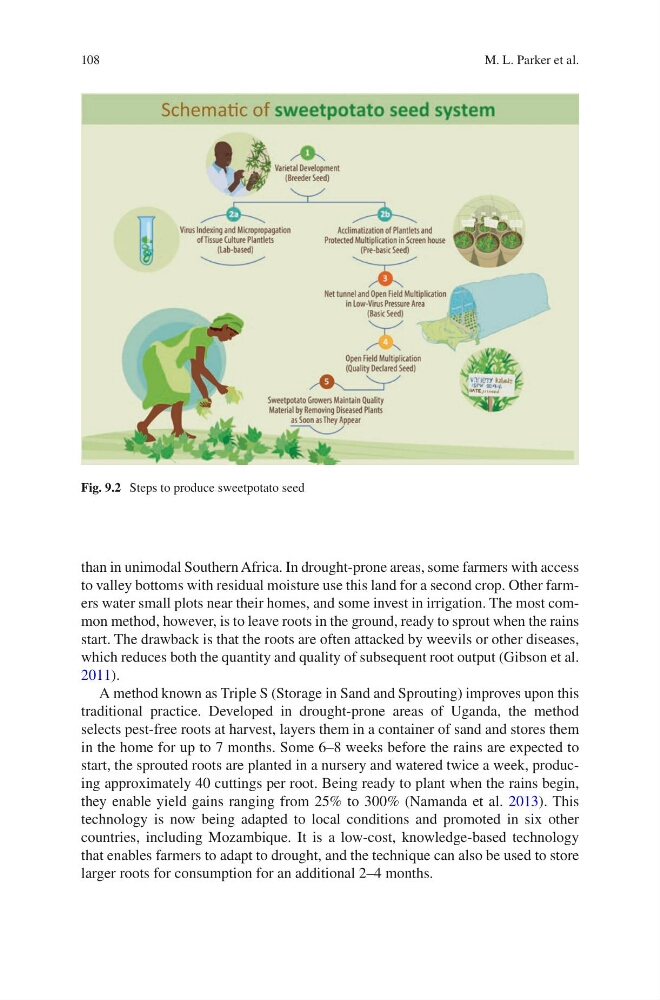
Fig. 9.2 Steps to produce sweetpotato seed
M. L. Parker et al.
than in unimodal Southern Africa. In drought-prone areas, some farmers with access
to valley bottoms with residual moisture use this land for a second crop. Other farmers water small plots near their homes, and some invest in irrigation. The most common method, however, is to leave roots in the ground, ready to sprout when the rains
start. The drawback is that the roots are often attacked by weevils or other diseases,
which reduces both the quantity and quality of subsequent root output (Gibson et al.
2011).
A method known as Triple S (Storage in Sand and Sprouting) improves upon this
traditional practice. Developed in drought-prone areas of Uganda, the method
selects pest-free roots at harvest, layers them in a container of sand and stores them
in the home for up to 7 months. Some 6–8 weeks before the rains are expected to
start, the sprouted roots are planted in a nursery and watered twice a week, producing approximately 40 cuttings per root. Being ready to plant when the rains begin,
they enable yield gains ranging from 25% to 300% (Namanda et al. 2013). This
technology is now being adapted to local conditions and promoted in six other
countries, including Mozambique. It is a low-cost, knowledge-based technology
that enables farmers to adapt to drought, and the technique can also be used to store
larger roots for consumption for an additional 2–4 months.
Fig. 9.2 Steps to produce sweetpotato seed
M. L. Parker et al.