

76
P. Panwaria and A. Das
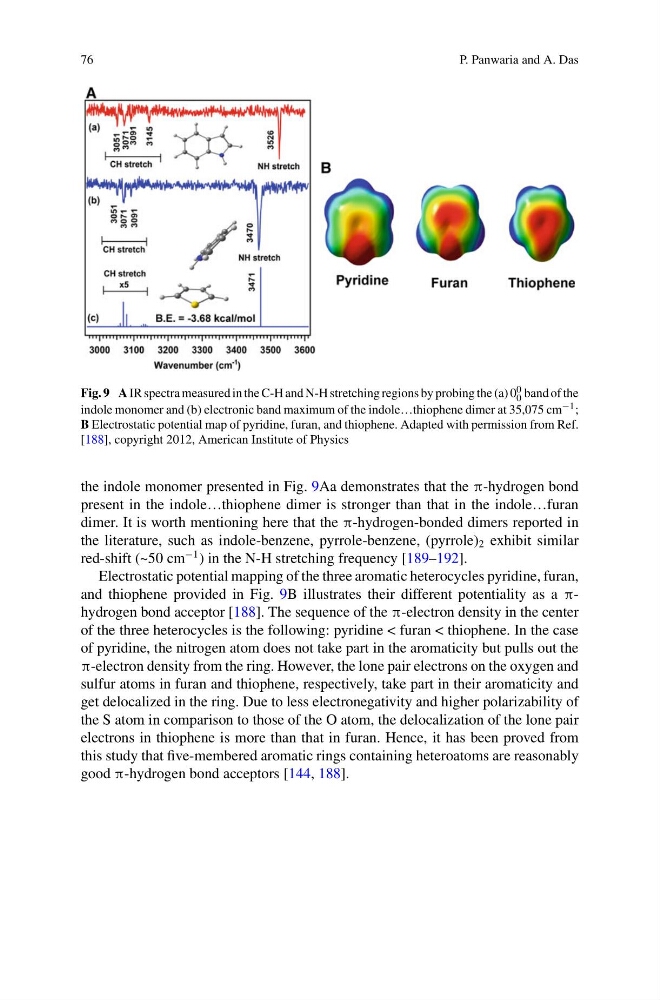
Fig. 9 A IR spectra measured in the C-H and N-H stretching regions by probing the (a) 0 0
0 band of the
indole monomer and (b) electronic band maximum of the indole…thiophene dimer at 35,075 cm −1 ;
B Electrostatic potential map of pyridine, furan, and thiophene. Adapted with permission from Ref.
[188], copyright 2012, American Institute of Physics
the indole monomer presented in Fig. 9Aa demonstrates that the π-hydrogen bond
present in the indole…thiophene dimer is stronger than that in the indole…furan
dimer. It is worth mentioning here that the π-hydrogen-bonded dimers reported in
the literature, such as indole-benzene, pyrrole-benzene, (pyrrole) 2 exhibit similar
red-shift (~50 cm
−1 ) in the N-H stretching frequency [189–192].
Electrostatic potential mapping of the three aromatic heterocycles pyridine, furan,
and thiophene provided in Fig. 9B illustrates their different potentiality as a πhydrogen bond acceptor [188]. The sequence of the π-electron density in the center
of the three heterocycles is the following: pyridine < furan < thiophene. In the case
of pyridine, the nitrogen atom does not take part in the aromaticity but pulls out the
π-electron density from the ring. However, the lone pair electrons on the oxygen and
sulfur atoms in furan and thiophene, respectively, take part in their aromaticity and
get delocalized in the ring. Due to less electronegativity and higher polarizability of
the S atom in comparison to those of the O atom, the delocalization of the lone pair
electrons in thiophene is more than that in furan. Hence, it has been proved from
this study that five-membered aromatic rings containing heteroatoms are reasonably
good π-hydrogen bond acceptors [144, 188].
P. Panwaria and A. Das
Fig. 9 A IR spectra measured in the C-H and N-H stretching regions by probing the (a) 0 0
0 band of the
indole monomer and (b) electronic band maximum of the indole…thiophene dimer at 35,075 cm −1 ;
B Electrostatic potential map of pyridine, furan, and thiophene. Adapted with permission from Ref.
[188], copyright 2012, American Institute of Physics
the indole monomer presented in Fig. 9Aa demonstrates that the π-hydrogen bond
present in the indole…thiophene dimer is stronger than that in the indole…furan
dimer. It is worth mentioning here that the π-hydrogen-bonded dimers reported in
the literature, such as indole-benzene, pyrrole-benzene, (pyrrole) 2 exhibit similar
red-shift (~50 cm
−1 ) in the N-H stretching frequency [189–192].
Electrostatic potential mapping of the three aromatic heterocycles pyridine, furan,
and thiophene provided in Fig. 9B illustrates their different potentiality as a πhydrogen bond acceptor [188]. The sequence of the π-electron density in the center
of the three heterocycles is the following: pyridine < furan < thiophene. In the case
of pyridine, the nitrogen atom does not take part in the aromaticity but pulls out the
π-electron density from the ring. However, the lone pair electrons on the oxygen and
sulfur atoms in furan and thiophene, respectively, take part in their aromaticity and
get delocalized in the ring. Due to less electronegativity and higher polarizability of
the S atom in comparison to those of the O atom, the delocalization of the lone pair
electrons in thiophene is more than that in furan. Hence, it has been proved from
this study that five-membered aromatic rings containing heteroatoms are reasonably
good π-hydrogen bond acceptors [144, 188].